
# VFFS vs FFS Packaging Machine: Which One Do You Need?
If you're researching food packaging equipment, you've almost certainly encountered the acronyms VFFS and FFS. Both are foundational technologies in the food packaging industry, and both can produce high-quality packages—but they're designed for fundamentally different applications. Choosing between them is a decision that affects your production speed, labor requirements, packaging costs, and even the types of products you can run.
This guide breaks down exactly what each technology does, where they overlap, and how to decide which one belongs in your facility.
## Table of Contents
1. [What Is VFFS?](#section1)
2. [What Is FFS?](#section2)
3. [Key Differences at a Glance](#section3)
4. [When to Choose VFFS](#section4)
5. [When to Choose FFS](#section5)
6. [Total Cost Comparison](#section6)
7. [Conclusion](#conclusion)
---
## 1. What Is VFFS? {#section1}
**Vertical Form Fill Seal (VFFS)** is a continuous-motion packaging technology where the bag is formed, filled, and sealed in a vertical orientation. The packaging film is pulled from a roll, shaped around a forming collar (or "tube") to create a cylindrical bag shape, the bottom seal is made, product drops into the bag from above, and the top seal completes the package—all in a single vertical motion.
VFFS machines are among the most versatile and widely deployed packaging technologies in the food industry. They handle everything from chips and nuts to frozen vegetables and powdered drink mixes. The format flexibility is exceptional: VFFS can produce pillow bags, quad-seal bags, flat-bottom bags, and gusseted pouches simply by changing the forming collar and sealing jaws.
Modern VFFS machines range from compact semi-automatic units suitable for small batch production to high-speed lines capable of 200+ bags per minute. The technology scales well, making it a common choice for manufacturers at every stage of growth.
The key mechanical components include:
- **Film unwind stand** with tension control
- **Forming collar** that shapes flat film into a tube
- **Vertical sealer** (longitudinal seal running the length of the bag)
- **Horizontal sealer** (creates top and bottom seals)
- **Cutting or perforating system** for separation
---
## 2. What Is FFS? {#section2}
**Form Fill Seal (FFS)** is a broader category that technically includes VFFS, but in industry usage it most commonly refers to **Horizontal Form Fill Seal (HFFS)** machines or pre-made pouch packaging systems. The distinction is important: when buyers say "FFS," they usually mean either a horizontal machine or a system that fills pre-formed pouches.
**Horizontal Form Fill Seal (HFFS)** machines form, fill, and seal packages in a horizontal orientation. The film is pulled flat, formed into a tube or pouch shape on a horizontal plane, filled with product, and sealed. HFFS excels at packaging products into flow-wrapped wraps (like candy bars or frozen meals) or into pouches that are then sealed.
**Pre-made pouch packaging machines** represent another common FFS interpretation. These machines pick up pre-formed pouches (stand-up pouches, quad pouches, retort pouches) from a magazine, open them, fill them with product, and seal them. This technology is increasingly popular for premium food products where the pouch format itself is a differentiator.
FFS machines typically require more changeover time than VFFS machines when switching between package sizes or formats, but they excel at running certain formats that VFFS cannot efficiently produce.
---
## 3. Key Differences at a Glance {#section3}
| Factor | VFFS | FFS (HFFS / Pre-made Pouch) |
|--------|------|------------------------------|
| Package orientation | Vertical | Horizontal |
| Film form | Creates bag from flat roll | Creates bag or uses pre-made pouch |
| Speed potential | Up to 200+ bags/min | Up to 120 pouches/min |
| Format flexibility | High (pillow, quad, flat-bottom) | Moderate (format fixed at form) |
| Material cost | Lower (flat film roll) | Higher (pre-made pouches) |
| Changeover time | Moderate to low | Moderate to high |
| Best for bag styles | Pillow, quad, flat-bottom, gusseted | Stand-up pouches, flow wrap, sachets |
| Product types | Free-flowing, powders, granules, snacks | liquids, pastes, irregular solids |
| Entry-level cost | $25,000–$80,000 | $40,000–$150,000 |
---
## 4. When to Choose VFFS {#section4}
VFFS is the right choice for the majority of small and mid-sized food manufacturers. Specifically, consider VFFS when:
**Your primary package format is a pillow bag, quad-seal bag, or flat-bottom bag.** These formats dominate the retail shelf space for snacks, grains, frozen foods, and many other categories. VFFS produces them at the lowest material cost per package because you're buying flat film rolls rather than pre-made pouches.
**You need high production speeds at a manageable cost.** A mid-range VFFS running at 80 bags per minute produces 4,800 bags per hour. At that speed, a single machine can supply significant retail volume. The cost per bag on a VFFS is typically30–50% lower than equivalent output on pre-made pouch equipment.
**You run multiple SKUs and need reasonable changeover times.** Modern VFFS machines with tool-free changeover systems can switch between two bag sizes in 20–40 minutes. If you're running 5–10 SKUs regularly, this flexibility is essential.
**You have a tight budget for packaging materials.** Film rolls are the most cost-effective packaging substrate for high-volume production. As your volume grows, the cost advantage of flat film versus pre-made pouches becomes increasingly significant.
**You're packaging free-flowing products or powders.** VFFS machines integrate naturally with multi-head weighers and auger fillers for precise portioning of granular and powdered products.
---
## 5. When to Choose FFS {#section5}
FFS (particularly pre-made pouch packaging) becomes the better choice in specific scenarios:
**You need premium packaging that commands shelf presence.** Stand-up pouches with spouted closures, retort pouches for shelf-stable meals, and quad pouches with premium print quality are produced on pre-made pouch systems. These formats are increasingly expected in specialty food categories and command higher retail margins.
**Your product is a liquid, paste, or highly irregular solid.** Horizontal machines and pouch fillers handle these product types more reliably than VFFS, which depends on gravity-assisted filling. Liquids that splash or products that tangle are better managed in a horizontal flow.
**You require high-barrier packaging for extended shelf life.** Multi-layer pre-made pouches can be engineered with specific oxygen barriers, moisture barriers, and UV protection that are difficult to achieve with VFFS film alone. If shelf life beyond 12 months is required, pre-made pouches with barrier layers are often the better choice.
**Your product has specific retort or sterilization requirements.** Retort pouches require specialized equipment and cannot be produced on standard VFFS lines. If you're entering the ready meals category, pre-made retort pouches are non-negotiable.
**Your branding demands full-color, high-resolution graphics that are expensive to print on VFFS film.** Pre-made pouches are typically printed via rotogravure or flexographic processes that achieve higher print quality, and you can order smaller quantities without the massive minimum orders that VFFS film printing requires.
---
## 6. Total Cost Comparison {#section6}
Beyond the purchase price, the operating economics of VFFS versus FFS differ substantially:
**Packaging material cost** is the largest differentiator at scale. A flat film roll for VFFS costs $0.003–$0.015 per bag in material (depending on film type, size, and print). A pre-made stand-up pouch costs $0.05–$0.25 per unit—often 5–15x higher. For a manufacturer running 50,000 bags per month, this difference can represent $2,000–$10,000 in monthly material cost savings with VFFS.
**Machine cost and ROI timeline** favors VFFS at entry level. A capable semi-automatic to mid-speed VFFS line starts at $25,000–$60,000. A comparable pre-made pouch line starts at $60,000–$120,000. The lower capital entry point means faster ROI, which is critical for small manufacturers with limited capital.
**Labor cost considerations** depend on your automation level. Semi-automatic VFFS machines require more manual intervention (film loading, product feeding, package removal), while fully automatic lines and pre-made pouch systems can run with minimal operator involvement. Factor in your labor cost per hour when calculating the true operating cost.
**Maintenance cost** is roughly comparable between well-built machines of either type. Both require periodic replacement of wear parts (sealing jaws, film guides, sensors). The total cost of maintenance over a 10-year period typically runs 8–15% of the original purchase price.
---
---
### Recommended Equipment
 ---
### Recommended Equipment
---
### Recommended Equipment
 ## Conclusion {#conclusion}
For most small food manufacturers, VFFS is the right starting point. It offers the best combination of format flexibility, material economy, speed, and scalability. The lower cost of packaging materials alone can justify the investment within12–24 months for any manufacturer running meaningful production volumes.
Pre-made pouch FFS makes sense when your product category demands it (retort meals, high-barrier packaging), your retail positioning requires premium shelf presence, or your production volume is high enough to justify the premium packaging cost. The technology is excellent—it just comes at a price premium that only makes sense when your product or brand strategy requires it.
Not sure which technology fits your product? Our packaging specialists can help you evaluate your options and find the equipment that delivers the best return on your investment. [Request a quote](/request-quote/) to start the conversation.
---
## Related Products
- [VFFS Packaging Machines](/food-packaging-machines/) — Full range of vertical form fill seal solutions
- [Labeling Machines](/labeling-machines/) — Automated labeling solutions for all package formats
- [Pre-Made Pouch Packaging Systems](/solutions/) — Premium packaging for high-value food products
- [Complete Production Lines](/production-lines/) — End-to-end packaging line configurations
- [HFFS Flow Wrappers](/food-packaging-machines/) — Horizontal solutions for specialty packaging needs
## Conclusion {#conclusion}
For most small food manufacturers, VFFS is the right starting point. It offers the best combination of format flexibility, material economy, speed, and scalability. The lower cost of packaging materials alone can justify the investment within12–24 months for any manufacturer running meaningful production volumes.
Pre-made pouch FFS makes sense when your product category demands it (retort meals, high-barrier packaging), your retail positioning requires premium shelf presence, or your production volume is high enough to justify the premium packaging cost. The technology is excellent—it just comes at a price premium that only makes sense when your product or brand strategy requires it.
Not sure which technology fits your product? Our packaging specialists can help you evaluate your options and find the equipment that delivers the best return on your investment. [Request a quote](/request-quote/) to start the conversation.
---
## Related Products
- [VFFS Packaging Machines](/food-packaging-machines/) — Full range of vertical form fill seal solutions
- [Labeling Machines](/labeling-machines/) — Automated labeling solutions for all package formats
- [Pre-Made Pouch Packaging Systems](/solutions/) — Premium packaging for high-value food products
- [Complete Production Lines](/production-lines/) — End-to-end packaging line configurations
- [HFFS Flow Wrappers](/food-packaging-machines/) — Horizontal solutions for specialty packaging needs
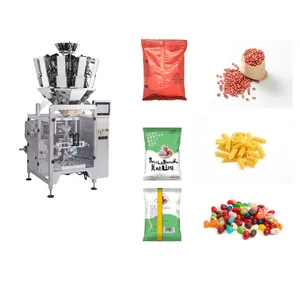
Vertical Form Fill Seal Machine
The industry-standard VFFS — compact footprint, versatile bag formats, ideal for most food products.
View Details →
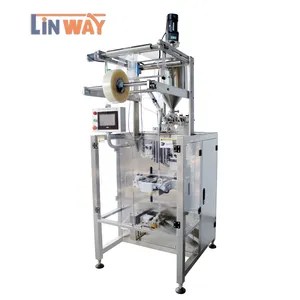
Automatic FFS Packaging Machine
High-speed FFS machine for pillow bags and gusseted bags — the horizontal alternative to VFFS.
View Details →Need Packaging Equipment?
SPS helps small food manufacturers source reliable packaging equipment at factory prices.
Get a Free Quote →