
# Top 5 Packaging Machines Every Small Food Manufacturer Needs
Walk through any small food manufacturer's production floor and you'll see a familiar pattern: a few essential machines doing the heavy lifting, surrounded by hand-packed product, manual labeling stations, and operators moving quickly to keep up. The right equipment can transform that picture — cutting labor costs, increasing throughput, and freeing up your team to focus on the things humans do best.
But with so many machine types on the market, where do you start? This guide identifies the five packaging machines that deliver the highest return on investment for small food manufacturers, the problems they solve, and the order in which most successful manufacturers add them to their operation.
## Table of Contents
1. [What "Small Manufacturer" Really Means](#section1)
2. [Why Equipment Investment Pays Off Faster Than You Think](#section2)
3. [#1: Vertical Form Fill Seal (VFFS) Machine](#section3)
4. [#2: Automatic Labeling Machine](#section4)
5. [#3: Multi-Head Weigher](#section5)
6. [#4: Checkweigher and Metal Detector](#section6)
7. [#5: Case Packer or Carton Sealer](#section7)
8. [The Order of Investment That Works](#section8)
9. [Conclusion](#conclusion)
---
## 1. What "Small Manufacturer" Really Means {#section1}
The term "small food manufacturer" covers a lot of ground. It includes one-person operations selling at farmers markets, growing brands doing $500,000 in annual revenue, and established regional players with 50+ employees shipping nationwide. The equipment needs vary, but the underlying logic is the same: every dollar of capital equipment must pay for itself faster than the same dollar spent on labor, packaging materials, or outsourced services.
For the purposes of this guide, "small food manufacturer" means companies with annual revenue under $5 million, 5–30 employees, and a production volume in the range of 5,000 to 500,000 units per year. Within that range, the equipment decisions are remarkably consistent — the difference between a $500,000 and a $5,000,000 brand is more about how many machines they run in parallel than what machines they run.
If you fit that profile, the five machines below are the foundation of a modern small food packaging operation. Some you may already have. Others you'll add as you grow. The order matters less than getting started.
---
## 2. Why Equipment Investment Pays Off Faster Than You Think {#section2}
Most small manufacturers underestimate how quickly packaging equipment pays for itself. The typical mental model is: "This machine costs $40,000 — I need to run it for years to recover that." But that mental model ignores the labor cost of doing the same job by hand.
Consider a simple example: hand-filling and hand-sealing 30,000 bags of granola per month. At a typical manual rate of 4–6 bags per minute (including weighing, filling, sealing, and label application), one operator produces 1,920 to 2,880 bags per 8-hour shift. To produce 30,000 bags, you need 10–16 shifts — roughly 1.5 to 2 full-time operators dedicated solely to packaging.
At a fully-loaded labor cost of $25 per hour, that's roughly $7,000 to $10,000 per month in direct labor. Add the cost of inconsistent fill weights (which means you're giving away free product), the cost of occasional operator error, and the cost of supervisory oversight. The annual labor cost of hand-packaging 30,000 bags per month easily reaches $90,000 to $120,000.
A VFFS machine that runs the same volume typically costs $40,000 to $70,000 and replaces that labor almost entirely. The payback period is often under 12 months — sometimes under 6 months for high-volume operations. That's the math that drives equipment investment at the small manufacturer level.
---
## 3. #1: Vertical Form Fill Seal (VFFS) Machine {#section3}
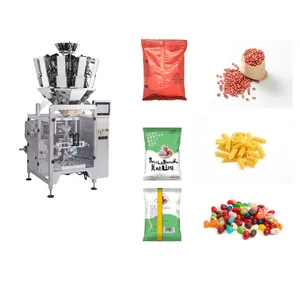
The [Vertical Form Fill Seal (VFFS) machine](/food-packaging-machines/vffs-machines/) is the undisputed workhorse of small food manufacturing. It forms a bag from flat packaging film, fills it with your product, and seals it — all in one continuous, automated process. For products like snacks, grains, candy, coffee, frozen vegetables, and powdered drink mixes, there's no faster path from bulk product to shelf-ready package.
**Why it's #1:** A VFFS machine is the single biggest labor replacement you can make in a packaging operation. A mid-range VFFS running at 30–60 bags per minute replaces 3–5 manual packaging operators. At higher speeds (80–120 bags per minute), it replaces even more.
**What to look for:** Servo-driven film pulling (more accurate than mechanical drives), tool-free changeover (lets you switch bag sizes in 20–40 minutes), stainless steel construction in food contact zones, and compatibility with multiple film types. For entry-level operations, a semi-automatic VFFS that still requires an operator to load product can be a good starting point, but most manufacturers outgrow this within 12–18 months.
**Typical investment:** $25,000 to $80,000 for a new mid-range VFFS machine. Used and refurbished machines in good condition are available for $12,000 to $30,000.
**Payback period:** 6 to 18 months for most operations running 20,000+ units per month.
---
## 4. #2: Automatic Labeling Machine {#section4}
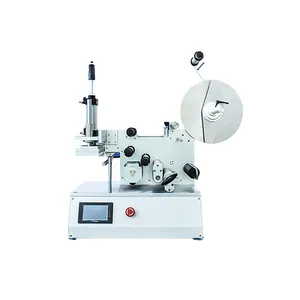
Once you can fill bags at 60 units per minute, hand-applying labels becomes your next bottleneck. An [automatic labeling machine](/labeling-machines/) applies product labels at line speed, with consistent placement, orientation, and pressure. It's one of the most affordable pieces of automation you can add, and it delivers visible quality improvements immediately.
**Why it's #2:** Hand-applied labels are inconsistent — they're placed at different heights, different angles, and with different amounts of pressure. This is the first thing retail buyers notice when they compare your product to competitors'. Automatic labeling delivers the kind of crisp, professional appearance that gets your product onto store shelves and keeps it there.
**What to look for:** Compatibility with your label format (wrap-around, top/front, flat surface), label dispensing accuracy, integration capability with your existing line, and the ability to handle multiple label sizes with quick changeover. For round bottles, a [wrap-around labeling machine](/labeling-machines/automatic-labeling/automatic-wrap-around-labeling-machine/) is the standard solution. For flat boxes and pouches, a [top/front labeling machine](/labeling-machines/automatic-labeling/automatic-top-front-labeling-machine/) is the better fit.
**Typical investment:** $8,000 to $30,000 for a semi-automatic or entry-level automatic labeler. $30,000 to $60,000 for a high-speed automatic system.
**Payback period:** 4 to 12 months, largely through labor savings and reduced label waste from misapplication.
---
## 5. #3: Multi-Head Weigher {#section5}
A [multi-head weigher](/food-packaging-machines/multihead-weighers/) is the precision weighing system that pairs with your VFFS machine to deliver accurate, consistent fill weights at high speed. Instead of measuring product by volume (which is highly variable for irregularly shaped products), a multi-head weigher combines multiple small portions to reach the target weight with gram-level accuracy.
**Why it's #3:** Every gram of product you over-fill is money you give away. For a snack product packed at 100 grams target weight, even a 2-gram average overfill across 50,000 units per month means giving away 100 kg of product — roughly $500 to $2,000 in direct product cost. Over a year, those small overfills add up to tens of thousands of dollars. A multi-head weigher typically achieves accuracy within 0.5 grams, eliminating the giveaway and quickly paying for itself.
**What to look for:** Number of weigh heads (10-head, 14-head, and 16-head are the most common for small manufacturers), maximum weighing speed, accuracy specifications, construction materials (stainless steel food contact surfaces), and the type of product it's designed to handle (granular products, chunky products, sticky products, etc.). A [multi-head weigher + VFFS system](/food-packaging-machines/multihead-weighers/multi-head-weigher-vffs-system/) bundles the components for easier integration.
**Typical investment:** $20,000 to $60,000 for a quality multi-head weigher. A complete system including the weigher, VFFS machine, and conveyor is typically $50,000 to $120,000.
**Payback period:** 12 to 24 months through giveaway reduction alone, with additional savings from reduced labor and increased throughput.
---
## 6. #4: Checkweigher and Metal Detector {#section6}
A checkweigher verifies the weight of every package coming off your line, rejecting underweight and overweight packages automatically. A [metal detector](/food-packaging-machines/) identifies any metallic contaminants that may have entered the product during processing. Together, these two machines form the foundation of a complete quality control and food safety system.
**Why they're #4:** Beyond the food safety benefits, checkweighers catch fill weight problems that would otherwise reach your customers. Underweight packages trigger regulatory action (the FDA requires accurate net weight declaration) and damage customer trust. Overweight packages are direct profit loss. A checkweigher running at line speed gives you 100% inspection — something no human sampling can match.
**What to look for:** Weight accuracy class (look for OIML or NIST-traceable accuracy), conveyor integration with your existing line, reject mechanism reliability, and metal detector sensitivity specifications. For most food products, a metal detector with ferrous, non-ferrous, and stainless steel detection capability is sufficient. For higher-risk products (ready-to-eat meals, baby food, ready meals), an X-ray inspection system is the better choice.
**Typical investment:** $15,000 to $35,000 for a checkweigher. $8,000 to $25,000 for a metal detector. Combined systems start around $20,000.
**Payback period:** 12 to 36 months, depending on the value of giveaway product you recover and the cost of any recall you avoid.
---
## 7. #5: Case Packer or Carton Sealer {#section7}
Once your primary packaging is automated, the final step is getting finished product into shipping cases efficiently. A [case packer](/production-lines/) or even a simple automatic carton sealer can dramatically reduce the labor required for the last step in the packaging process.
**Why it's #5:** Hand-packing finished product into shipping cases is one of the most labor-intensive and physically demanding tasks on a production floor. Workers bend, lift, and reach hundreds of times per shift, leading to fatigue, injury, and turnover. Automating this step protects your workers, speeds up the end of your line, and makes the entire production flow more predictable.
**What to look for:** For small operations, a semi-automatic case sealer (the operator places the case but the machine tapes it automatically) is an affordable starting point at $3,000 to $8,000. As volumes grow, fully automatic case packers that pick products from the conveyor and place them into cases range from $50,000 to $200,000+.
**Typical investment:** $3,000 to $15,000 for entry-level automation. $50,000+ for fully automatic systems.
**Payback period:** 6 to 18 months for entry-level equipment. 18 to 36 months for fully automatic systems.
---
## 8. The Order of Investment That Works {#section8}
The five machines above don't all need to be purchased at once. The order of investment that works for most small manufacturers is:
**Phase 1 (Month 1–6):** VFFS machine. This is your single biggest impact. Replace hand-filling and hand-sealing with automated bag-making.
**Phase 2 (Month 4–9):** Automatic labeling machine. Add this once your VFFS is running smoothly and you're consistently producing shelf-ready packages. It addresses the most visible quality issue (label consistency) and removes another labor-intensive manual step.
**Phase 3 (Month 8–18):** Multi-head weigher. Once your line is running at higher speeds, the giveaway on a volumetric filler (if you're using one) becomes more apparent. A multi-head weigher pays for itself through giveaway reduction.
**Phase 4 (Month 12–24):** Checkweigher and metal detector. As you approach regulatory compliance deadlines or land larger retail customers, these become required. Add them once you have consistent throughput to justify the integration.
**Phase 5 (Month 18–36):** Case packer / carton sealer. The last step in the automation journey. Add it once your primary packaging line is running smoothly and you have predictable, high-volume production.
The exact timing depends on your specific products, volumes, and capital availability. But the order of priorities is consistent: start with the equipment that replaces the most labor and delivers the fastest visible quality improvement.
---
---
### Recommended Equipment
 ---
### Recommended Equipment
---
### Recommended Equipment
 ## Conclusion {#conclusion}
For small food manufacturers, the five machines above represent the foundation of a modern, scalable packaging operation. You don't need all of them on day one — most successful manufacturers add equipment in phases as their volume and capital allow. What matters is having a clear roadmap of where you're headed, so each piece of equipment you buy integrates with the next.
If you package a particular product type, the exact equipment mix may differ. Bakery operations have different needs than snack operations, and frozen food packaging has different requirements than liquid filling. The [SPS solutions pages](/solutions/) break down equipment recommendations by product category, which can help you build a more specific plan.
**Ready to map out your packaging line?** SPS specializes in helping small food manufacturers design equipment configurations that match their products, volumes, and growth trajectory. [Request a quote](/request-quote/) and our team will help you identify the right starting point.
---
## Related Products
- [Vertical Form Fill Seal Machine](/food-packaging-machines/vffs-machines/vertical-form-fill-seal-machine/) — The foundation of most small food packaging operations
- [Multi-Head Weigher + VFFS System](/food-packaging-machines/multihead-weighers/multi-head-weigher-vffs-system/) — Precision weighing integrated with bag-making
- [Snack Packaging Solutions](/solutions/snacks/) — Complete line configurations for snack manufacturers
## Conclusion {#conclusion}
For small food manufacturers, the five machines above represent the foundation of a modern, scalable packaging operation. You don't need all of them on day one — most successful manufacturers add equipment in phases as their volume and capital allow. What matters is having a clear roadmap of where you're headed, so each piece of equipment you buy integrates with the next.
If you package a particular product type, the exact equipment mix may differ. Bakery operations have different needs than snack operations, and frozen food packaging has different requirements than liquid filling. The [SPS solutions pages](/solutions/) break down equipment recommendations by product category, which can help you build a more specific plan.
**Ready to map out your packaging line?** SPS specializes in helping small food manufacturers design equipment configurations that match their products, volumes, and growth trajectory. [Request a quote](/request-quote/) and our team will help you identify the right starting point.
---
## Related Products
- [Vertical Form Fill Seal Machine](/food-packaging-machines/vffs-machines/vertical-form-fill-seal-machine/) — The foundation of most small food packaging operations
- [Multi-Head Weigher + VFFS System](/food-packaging-machines/multihead-weighers/multi-head-weigher-vffs-system/) — Precision weighing integrated with bag-making
- [Snack Packaging Solutions](/solutions/snacks/) — Complete line configurations for snack manufacturers
Vertical Form Fill Seal Machine
The #1 essential — VFFS handles the widest range of products and bag formats.
View Details →
Automatic Round Bottle Wrap-Around Labeler
Automated labeling eliminates hand-application errors and speeds up compliance labeling.
View Details →Need Packaging Equipment?
SPS helps small food manufacturers source reliable packaging equipment at factory prices.
Get a Free Quote →