
# Packaging Machine for Seafood: Semi-Auto Solutions for Small Processors & Fishermen
Seafood packaging presents a unique set of challenges that most food manufacturers never have to think about. The products are perishable, wet, irregularly shaped, and often come with strict regulatory requirements from the FDA and NOAA. For small seafood processors, commercial fishermen running direct-to-consumer operations, and regional smoked fish producers, finding packaging equipment that handles these realities without requiring a six-figure investment is a real struggle.
If you're hand-packing fish fillets, shrimp, or smoked salmon into trays and bags, you already know the pain points: inconsistent weights leading to regulatory trouble, labor-intensive processes that can't keep up with a fresh catch, and packaging failures that cause costly spoilage. The good news is that semi-automatic packaging equipment can solve each of these problems at a price point that makes sense for small operations.
## Table of Contents
1. [Why Seafood Packaging Is Different](#section1)
2. [Common Pain Points for Small Seafood Processors](#section2)
3. [Manual vs Semi-Auto: The Real Cost of Hand Packing](#section3)
4. [Equipment Recommendations for Seafood Operations](#section4)
5. [Regulatory Compliance and Traceability](#section5)
6. [ROI Insights: What Small Processors Can Expect](#section6)
7. [Conclusion](#conclusion)
---
## 1. Why Seafood Packaging Is Different {#section1}
Unlike shelf-stable snacks or dry goods, seafood requires packaging that performs under pressure—literally. The cold chain is unforgiving: a packaging failure that lets warm air reach a fresh fillet can mean a full product recall, not just a dissatisfied customer. Several factors make seafood fundamentally different from other food packaging applications.
**Moisture management** is the primary challenge. Fresh and thawed seafood releases liquid during packaging, whether it's drip loss from fillets or melt water from frozen shrimp. Your packaging equipment must handle wet products without slipping, dripping into sealing zones, or compromising the integrity of the seal. Machines designed for dry snacks simply aren't built for this environment.
**Product irregularity** adds another layer of complexity. A batch of wild-caught salmon fillets might range from 4 ounces to 12 ounces per piece, with wildly different shapes. Unlike uniform products like nuts or granola, seafood can't be fed through a volumetric system with predictable results. You need equipment that accommodates variation while still delivering accurate fill weights.
**Shelf life urgency** means there's zero tolerance for delays. A fresh catch that sits unpackaged for even an extra hour loses value. Semi-automatic equipment that reduces packing time from 45 seconds per package to 15 seconds per package doesn't just improve efficiency—it directly extends the usable shelf life of every product you handle.
**Regulatory scrutiny** is higher for seafood than almost any other food category. The FDA's Seafood HACCP (Hazard Analysis and Critical Control Points) program requires documented packaging processes, and the country-of-origin labeling (COOL) requirements add another layer of traceability that your packaging system must support.
---
## 2. Common Pain Points for Small Seafood Processors {#section2}
Small seafood processors face a specific set of challenges that larger operations solve with expensive fully automated lines. Here are the most common pain points we hear from small producers:
**Inconsistent fill weights** create both regulatory and profitability problems. Under-filled packages violate FDA net weight requirements and can result in warning letters or fines. Over-filled packages give away profit on every unit. When you're packing by hand, weight variation of ±15% is common. Semi-automatic weighing systems can bring that down to ±2–3%, which adds up fast at scale.
**Labor dependency** is a critical bottleneck. During peak season—a salmon run, a shrimp harvest, or the holiday smoked fish rush—small processors often can't find enough workers to keep up with demand. Hand packing requires one operator per station, and fatigue leads to errors. A semi-automatic line lets one operator manage what previously required three or four.
**Spoilage and shrink** eat into margins. Every package that sits too long, every fillet that gets damaged during handling, and every batch that has to be repackaged due to seal failure is lost revenue. Semi-automatic equipment reduces handling time, improves seal consistency, and minimizes the physical manipulation that damages delicate products.
**Labeling compliance** is surprisingly complex for seafood. Between product names, weight declarations, ingredient lists, allergen warnings, nutrition facts, country of origin, and catch method statements, a seafood label can easily exceed 30 square inches of required information. Applying these labels manually and consistently is tedious and error-prone.
**Frozen product challenges** compound every other issue. Frozen shrimp, fish sticks, and IQF fillets are rigid, heavy, and difficult to handle without specialized feeding systems. They also generate frost buildup on equipment surfaces that can interfere with sealing and labeling.
---
## 3. Manual vs Semi-Auto: The Real Cost of Hand Packing {#section3}
Let's put real numbers to the comparison. Consider a small smoked salmon producer packing 2,000 packages per week.
**Manual packing** typically involves:
- An operator placing fillets into trays by hand
- Visual estimation or a separate scale for weight checks
- Manual bag sealing or heat sealing
- Hand-applied labels
At this volume, manual packing typically requires 2 full-time operators working 8-hour shifts, 5 days per week. At $18/hour with benefits, that's roughly **$75,000–$80,000 per year in labor costs** for a single packaging station. Error rates run 5–8%, meaning 100–160 packages per week need rework or disposal.
**Semi-automatic packing** with the right equipment typically involves:
- A semi-automatic multi-head weigher for precise portioning
- A semi-auto tray sealer or bag sealer
- An automatic label applicator
This setup lets **one operator** manage the same 2,000 packages per week in roughly 60% of the time, with error rates below 1%. The annual labor cost drops to approximately **$30,000–$35,000**, and rework/shrink costs fall by 80% or more.
The equipment investment for a basic semi-automatic seafood line typically ranges from **$25,000–$60,000** depending on configuration, which means most small processors see a full payback within 8–14 months.
---
## 4. Equipment Recommendations for Seafood Operations {#section4}
Here's what we recommend for different types of small seafood operations:
### For Fresh Fish & Fillets (Tray Packaging)
A semi-automatic tray sealing line is your best starting point. This typically includes:
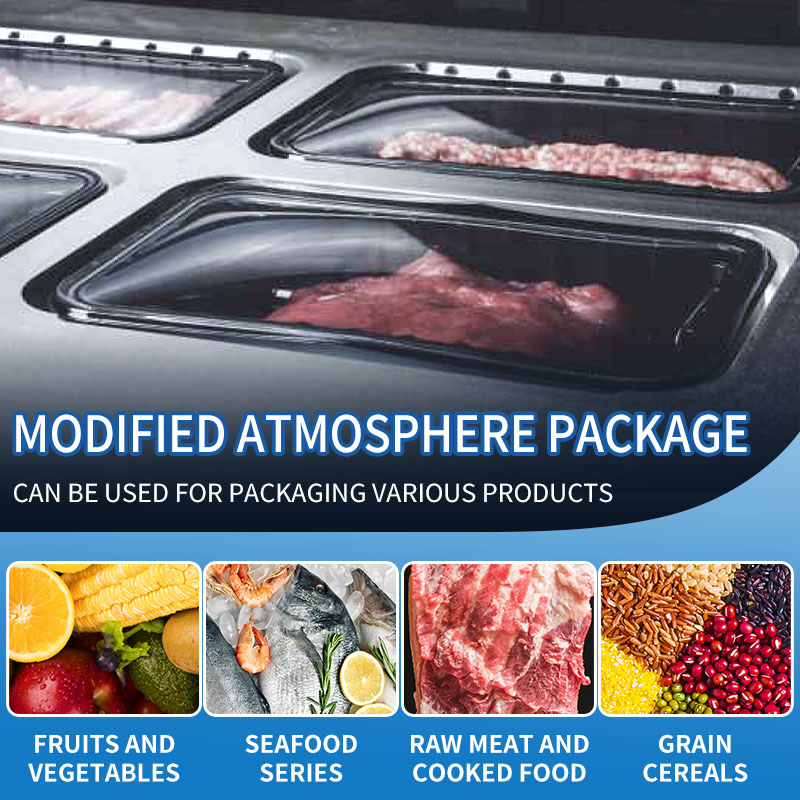
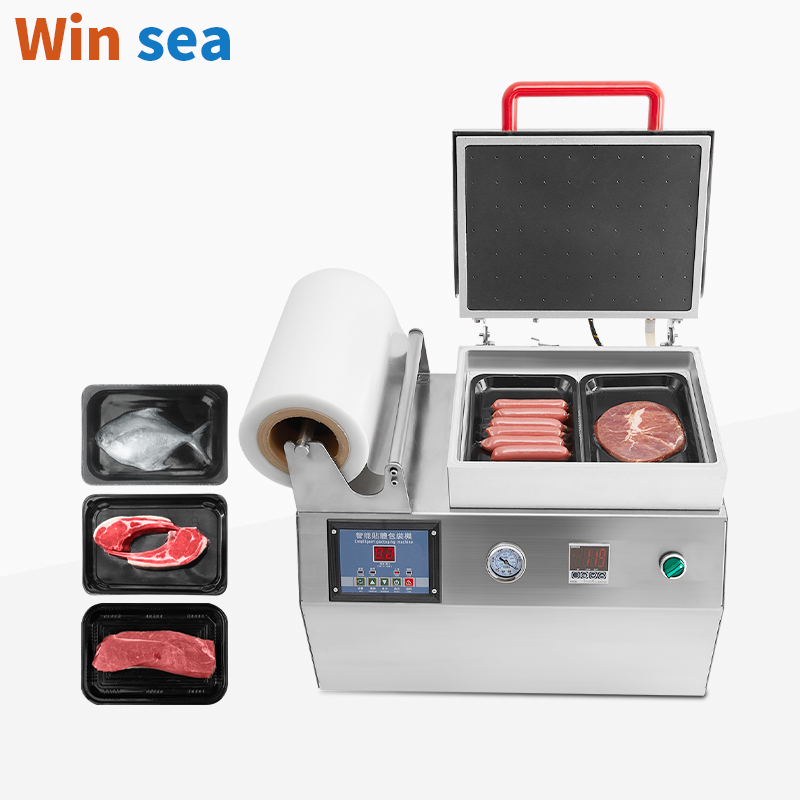
- **[Semi-automatic tray sealer](/food-packaging-machines/)** — Places pre-formed trays under a film sealing head. The operator loads the tray with product, and the machine applies a secure MAP (Modified Atmosphere Packaging) or skin-tight seal. MAP capability is critical for extending the shelf life of fresh fish from 3–5 days to 7–10 days.
- **Multi-head weigher** — A compact 10-head or 14-head combination weigher sits above the tray sealer, automatically dispensing the correct weight of product into each tray. This eliminates the guesswork of manual portioning and ensures consistent net weights across every package.
- **[Labeling machine](/labeling-machines/)** — A top-and-bottom or wrap-around label applicator that handles the complex regulatory labels required for seafood. Look for a system that can print variable data (weight, price, date codes) inline.
### For Frozen Seafood (Bag Packaging)
Frozen shrimp, fish portions, and IQF products work best with a VFFS or pre-made pouch system:
- **[VFFS packaging machine](/food-packaging-machines/)** — Creates bags from a roll of printed film, fills with frozen product, and seals. For frozen seafood, look for machines with heated sealing jaws rated for frost-resistant film and optional nitrogen flush for MAP packaging.
- **Multi-head weigher** — Essential for frozen product due to the irregular shapes and weight variation in frozen seafood. A 14-head weigher handles frozen shrimp, scallops, and portions with accuracy that manual packing can't match.
- **Metal detector** — Industry standard for seafood processing. Integrates inline after the VFFS machine to catch any metal contamination before it reaches the consumer.
### For Smoked & Specialty Fish
Smoked salmon, gravlax, and specialty preparations often use pre-made pouches or vacuum packaging:
- **Semi-automatic vacuum sealer** — Creates an airtight seal that preserves the quality and appearance of smoked products. Chamber vacuum sealers handle bags up to 12 inches wide, which covers most retail smoked fish formats.
- **[Semi-automatic labeling system](/labeling-machines/)** — Smoked fish packaging relies heavily on premium appearance. A precision label applicator ensures every package looks professional and meets all regulatory requirements.
### Building a Complete Line
For processors ready to invest in a [complete packaging line](/production-lines/), the combination of a multi-head weigher, VFFS or tray sealer, labeler, and checkweigher creates a semi-automatic system that can handle 20–60 packages per minute depending on product type. This throughput is typically 3–5x faster than manual packing while requiring fewer operators.
---
## 5. Regulatory Compliance and Traceability {#section5}
Seafood packaging carries heavier regulatory obligations than most food categories. Your equipment must support compliance with several key regulations:
**FDA Seafood HACCP** requires that your packaging process be documented as a critical control point. This means your packaging equipment should support consistent, repeatable processes with documented parameters—something semi-automatic equipment excels at compared to manual packing where every operator does it slightly differently.
**Country of Origin Labeling (COOL)** requires specific information on every package of seafood sold in the US. Your labeling system must accommodate variable data fields including country of origin, production method (wild-caught vs. farmed), and the species name. A [semi-automatic labeling machine](/labeling-machines/) with inline printing capability handles this efficiently.
**Net weight compliance** is strictly enforced for seafood. The FDA requires that the average quantity in a lot not fall below the labeled weight, and individual packages can't deviate more than a small tolerance. Semi-automatic weighing systems provide the documentation trail needed to prove compliance during inspections.
**Traceability requirements** under the FDA's FSMA 204 rule (effective January 2026) require specific lot and batch tracking information for certain foods, including fresh and frozen seafood. Your packaging equipment should support barcode generation and printing that links each package to its production lot.
---
## 6. ROI Insights: What Small Processors Can Expect {#section6}
Here's a realistic ROI model for a small smoked salmon producer transitioning from manual to semi-automatic packaging:
**Current State (Manual):**
- Production: 2,000 packages/week
- Labor: 2 operators × 40 hours × $18/hour = $74,880/year
- Error/shrink rate: 6% = $18,000/year in lost product
- Total packaging cost: ~$93,000/year
**Semi-Automatic State:**
- Production: 2,000 packages/week (with capacity for 4,000+)
- Labor: 1 operator × 28 hours × $18/hour = $26,208/year
- Error/shrink rate: 1.5% = $4,500/year in lost product
- Equipment cost: $35,000 (amortized over 5 years = $7,000/year)
- Maintenance & consumables: $3,000/year
- Total packaging cost: ~$40,700/year
**Annual Savings: $52,300**
**Payback Period: ~8 months**
**5-Year Net Benefit: $226,500**
These numbers are conservative. Most small processors also benefit from increased production capacity (allowing them to take on more orders), improved product appearance (commanding premium pricing), and reduced labor headaches during peak season.
---
---
### Recommended Equipment
 ---
### Recommended Equipment
---
### Recommended Equipment
 ## Conclusion {#conclusion}
Seafood packaging demands equipment that can handle moisture, irregular products, tight regulatory requirements, and the relentless pressure of perishability. Semi-automatic packaging machines offer small seafood processors a realistic path to better efficiency, lower costs, and full compliance—without requiring the investment or floor space of fully automated lines.
Whether you're a smoked salmon producer packaging 500 units a week or a frozen shrimp processor handling 5,000, the right semi-automatic equipment combination will pay for itself quickly while freeing your team to focus on what they do best: producing great seafood.
**Ready to upgrade your seafood packaging operation?** [Request a free quote](/request-quote/) from SPS and let our team design a semi-automatic packaging solution tailored to your specific products and production volumes.
---
## Related Resources
- [Semi-Automatic Packaging Machines for Small Businesses](/solutions/) — Our complete lineup of entry-level automation
- [VFFS Packaging Machines](/food-packaging-machines/) — Vertical form fill seal solutions for frozen and fresh seafood
- [Labeling Machines](/labeling-machines/) — Compliance-ready labeling for seafood products
- [Complete Production Lines](/production-lines/) — End-to-end packaging solutions for growing operations
## Conclusion {#conclusion}
Seafood packaging demands equipment that can handle moisture, irregular products, tight regulatory requirements, and the relentless pressure of perishability. Semi-automatic packaging machines offer small seafood processors a realistic path to better efficiency, lower costs, and full compliance—without requiring the investment or floor space of fully automated lines.
Whether you're a smoked salmon producer packaging 500 units a week or a frozen shrimp processor handling 5,000, the right semi-automatic equipment combination will pay for itself quickly while freeing your team to focus on what they do best: producing great seafood.
**Ready to upgrade your seafood packaging operation?** [Request a free quote](/request-quote/) from SPS and let our team design a semi-automatic packaging solution tailored to your specific products and production volumes.
---
## Related Resources
- [Semi-Automatic Packaging Machines for Small Businesses](/solutions/) — Our complete lineup of entry-level automation
- [VFFS Packaging Machines](/food-packaging-machines/) — Vertical form fill seal solutions for frozen and fresh seafood
- [Labeling Machines](/labeling-machines/) — Compliance-ready labeling for seafood products
- [Complete Production Lines](/production-lines/) — End-to-end packaging solutions for growing operations
YH-320Q Airflow Nitrogen Filling MAP Packaging Machine
MAP packaging with nitrogen flush — extends fresh seafood shelf life by 3–5×.
View Details →
FZ-400T Vacuum Skin Packaging Machine
Vacuum skin packaging for premium fresh fish and smoked salmon presentation.
View Details →Need Packaging Equipment?
SPS helps small food manufacturers source reliable packaging equipment at factory prices.
Get a Free Quote →