
# How to Calculate ROI on Your Packaging Equipment Investment
Every packaging equipment purchase is a bet — you're trading a known upfront cost for an unknown future benefit. The question every small food manufacturer needs to answer is: when does this bet pay off, and what does the math actually look like?
The good news is that packaging equipment ROI is one of the more straightforward investment calculations in food manufacturing. Unlike marketing spend or new product development, the benefits of equipment investment are usually quantifiable: labor savings, material savings, increased throughput, and reduced waste. The hard part is doing the math rigorously enough to make a confident decision.
This guide walks through a complete ROI framework for packaging equipment — what costs to include, what savings to count, and how to combine them into a payback period and net present value calculation you can take to your bank or investors.
## Table of Contents
1. [Why ROI Matters More Than Ever for Small Manufacturers](#section1)
2. [The Five Categories of Cost](#section2)
3. [The Five Categories of Benefit](#section3)
4. [Building a Simple Payback Period Calculation](#section4)
5. [Net Present Value: A More Complete Picture](#section5)
6. [Common Mistakes That Inflate or Understate ROI](#section6)
7. [A Worked Example: VFFS Machine Purchase](#section7)
8. [When ROI Calculations Get Fuzzy](#section8)
9. [Conclusion](#conclusion)
---
## 1. Why ROI Matters More Than Ever for Small Manufacturers {#section1}
Small food manufacturers operate on tight margins and limited capital. A $50,000 equipment purchase represents weeks or months of operating cash for many small companies. Getting the ROI calculation right is the difference between a strategic investment that compounds for years and a financial mistake that constrains your business for the next decade.
The challenge is that packaging equipment ROI is often more nuanced than a simple payback calculation suggests. Labor savings are easy to estimate. Material savings depend on product mix and supplier pricing. Throughput gains are tied to operational factors that are hard to predict. Maintenance costs, training costs, and downtime during installation all affect the calculation.
A rigorous ROI analysis accounts for all of these factors, including the ones that are easy to forget. The manufacturers who do this work upfront consistently make better equipment decisions than those who rely on a vendor's quoted payback period or a gut-feel estimate.
---
## 2. The Five Categories of Cost {#section2}
Every packaging equipment purchase has five cost categories, and missing even one can dramatically change your ROI calculation.
**Category 1: Equipment purchase price.** The most obvious cost. For most small food manufacturers, this is the dealer's quoted price for the base machine, plus any options or accessories specified. Quoted prices are usually negotiable, so the final number may be 5–15% below the initial quote.
**Category 2: Installation and commissioning.** This is the most commonly underestimated cost. Installation typically includes electrical work (especially if you need 480V three-phase power), compressed air supply, foundation work for heavy equipment, conveyor integration, and the actual commissioning process. Budget $5,000 to $20,000 for a typical VFFS or labeling machine installation, more for complex integrated lines.
**Category 3: Training.** Most equipment vendors include basic operator training in the purchase price, but adequate training rarely fits in the standard 1–2 day session. Budget for additional on-site training days as your operators become more familiar with the equipment, and budget for follow-up training when you bring on new operators. Typical training costs run $1,000 to $3,000 per session.
**Category 4: Initial spare parts and consumables.** Most machines come with a small spare parts kit, but it's rarely sufficient for the first year of operation. Budget $2,000 to $5,000 for additional wear parts (sealing jaws, sensors, belts) and consumables (lubricants, cleaning supplies specific to the machine).
**Category 5: Working capital for the transition period.** During installation and the first few weeks of operation, your production line typically runs at reduced capacity. The lost production during this transition can cost $10,000 to $50,000 depending on your product value and the length of the transition. This cost is real, even if it doesn't appear on the equipment vendor's invoice.
---
## 3. The Five Categories of Benefit {#section3}
Just as costs are easy to underestimate, benefits are easy to overstate. A rigorous analysis separates the genuine savings from the speculative ones.
**Category 1: Direct labor savings.** The largest and most reliable benefit of most packaging equipment. Calculate based on the number of operators the machine replaces, their fully-loaded labor cost (wages plus benefits plus payroll taxes), and the number of shifts the operation runs. Direct labor savings are typically 60–80% of the equipment ROI for high-volume operations.
**Category 2: Material savings.** A multi-head weigher reduces product giveaway. A VFFS machine uses less film per package than a hand-sealed equivalent. A checkweigher eliminates overweight packages. Material savings are real but variable — they depend on your product mix, current fill accuracy, and the cost of the materials being saved.
**Category 3: Increased throughput and capacity.** A faster line means you can produce more product in the same time, capturing sales that would otherwise be lost to capacity constraints. This benefit only applies if you have unmet demand — if your current capacity is adequate, faster throughput doesn't translate to additional revenue. Be honest about this category.
**Category 4: Quality improvement and reduced waste.** Consistent filling, sealing, and labeling reduce the number of rejected packages. If your current rejection rate is 2% and the new equipment brings it to 0.5%, the savings on product, packaging materials, and labor to rework rejected product can be significant.
**Category 5: Labor redeployment and morale.** When operators are freed from repetitive manual tasks, they can be redeployed to higher-value activities — quality control, equipment maintenance, process improvement, training new operators. These benefits are real but hard to quantify. Be careful not to count labor cost savings in this category if you've already counted them in direct labor savings.
---
## 4. Building a Simple Payback Period Calculation {#section4}
The payback period is the simplest and most widely used ROI metric. It answers the question: how many months or years until the cumulative benefits equal the upfront cost?
**Formula:** Payback period (months) = Total upfront cost ÷ Monthly net benefit
**Worked example:** A VFFS machine purchase with the following profile:
- Equipment cost: $50,000
- Installation: $12,000
- Initial spare parts: $3,000
- Training: $2,000
- **Total upfront cost: $67,000**
Monthly benefits:
- Direct labor savings: $8,000/month (replacing 1.5 operators across two shifts)
- Material savings: $1,500/month (reduced giveaway and film waste)
- Quality improvement: $800/month (reduced rejection rate)
- **Total monthly benefit: $10,300**
**Payback period: $67,000 ÷ $10,300 = 6.5 months**
This is a healthy payback period for packaging equipment. Most small manufacturers target payback under 18 months for capital equipment, and under 12 months is exceptional.
---
## 5. Net Present Value: A More Complete Picture {#section5}
Payback period is useful but limited. It tells you when you break even, but not the total financial impact over the equipment's life. A piece of equipment that pays back in 8 months and lasts 15 years has dramatically different value than one that pays back in 8 months and lasts 3 years.
Net present value (NPV) accounts for the time value of money and the full life of the equipment. The formula is:
**NPV = -Initial investment + Σ (Annual net benefit ÷ (1 + r)^t)**
Where r is your discount rate (typically your cost of capital or required return) and t is the year. For most small manufacturers, a discount rate of 8–12% is appropriate.
**Continuing the example:** $67,000 investment, $123,600 annual benefit ($10,300 × 12), 10-year equipment life, 10% discount rate.
Using standard NPV tables, the present value of $123,600 per year for 10 years at 10% discount rate is approximately $770,000. Subtracting the initial investment of $67,000 gives an NPV of $703,000. This is a strong investment by any measure.
The internal rate of return (IRR) — the discount rate at which NPV equals zero — is also useful. For the example above, the IRR works out to approximately 184%, indicating a very high return. In practice, IRR over 25–30% for capital equipment is considered excellent for small food manufacturers.
---
## 6. Common Mistakes That Inflate or Understate ROI {#section6}
**Mistake 1: Forgetting installation and transition costs.** The equipment vendor quotes the machine price, but the real cost is 20–50% higher once installation, training, and transition downtime are added. Always build a complete cost picture.
**Mistake 2: Counting throughput gains without corresponding demand.** If your line is currently running 60% utilized, a faster machine doesn't add revenue — it just adds capacity. Only count throughput gains that translate to actual additional sales.
**Mistake 3: Using the optimistic speed rating.** Equipment vendors typically rate machines at peak theoretical speed. Real-world throughput is usually 60–80% of the rated speed after accounting for changeovers, minor stoppages, and operator intervention. Use realistic numbers.
**Mistake 4: Ignoring maintenance cost increases.** A new machine will require maintenance. Some of it is covered in the warranty period, but the long-term maintenance cost averages 8–15% of the purchase price over a 10-year life. Include this in your annual cost projections.
**Mistake 5: Double-counting labor savings.** If you've counted direct labor savings (Category 1 in benefits), don't also count "labor redeployment" savings (Category 5) for the same workers. Pick the more conservative estimate.
**Mistake 6: Using the vendor's payback period as gospel.** Equipment vendors have an incentive to make their machines look like great investments. Their payback calculations often use optimistic assumptions about labor cost, throughput, and benefits. Build your own model with conservative numbers.
---
## 7. A Worked Example: VFFS Machine Purchase {#section7}
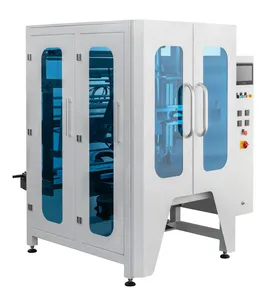
Let's run through a complete ROI calculation for a typical [VFFS packaging machine](/food-packaging-machines/vffs-machines/) purchase for a small snack manufacturer.
**Scenario:** A small snack manufacturer is currently packaging product by hand — operators fill pre-made bags, weigh them on a check scale, and heat-seal them on a manual band sealer. They produce 25,000 bags per month across two SKUs.
**Current operation costs (monthly):**
- 3 direct labor operators: $18,000
- Material giveaway (average 3g overfill on 50g target): $1,500
- Rejected/returned product: $2,200
- Band sealer maintenance and film scrap: $600
- **Total monthly cost: $22,300**
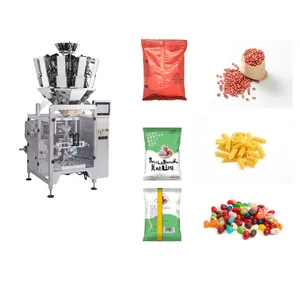
**Proposed investment:** VFFS machine with multi-head weigher and integrated checkweigher.
**Total upfront cost:** $95,000
- Equipment: $80,000
- Installation: $10,000
- Training: $2,000
- Spare parts: $3,000
**New operation costs (monthly):**
- 1 direct labor operator: $6,000
- Material giveaway (less than 0.5g overfill): $250
- Rejected/returned product: $400
- Machine maintenance: $400
- Packaging film (slightly more efficient): $300
- **Total monthly cost: $7,350**
**Monthly savings:** $22,300 - $7,350 = $14,950
**Annual savings:** $179,400
**Payback period:** $95,000 ÷ $14,950 = 6.4 months
**5-year net benefit (undiscounted):** $895,000
This is a strong investment by any standard. The manufacturer would recoup the full cost in under 7 months and benefit by nearly $900,000 over 5 years.
---
## 8. When ROI Calculations Get Fuzzy {#section8}
Some equipment investments are harder to calculate than others. Here are the common scenarios where the standard ROI approach needs adjustment:
**Scenario 1: Equipment that enables new products.** If you're considering equipment that lets you launch a new product line (e.g., a new packaging format for retail), the ROI calculation has to include projected sales of the new product, which are inherently uncertain. Use a range of scenarios (conservative, expected, optimistic) and consider the strategic value of the optionality.
**Scenario 2: Equipment for compliance.** If your current equipment doesn't meet a new regulatory requirement, the ROI calculation isn't just about savings — it's about avoiding penalties, lost sales, or forced shutdown. The cost of non-compliance becomes the "savings" of investing in compliant equipment.
**Scenario 3: Capacity expansion for known future demand.** If you've signed contracts with major retailers that require additional capacity, the ROI calculation is more straightforward — you need the capacity to fulfill the contracts, and the cost of not having it is the lost contract revenue.
**Scenario 4: Equipment for quality or food safety.** If your current operation has quality issues that lead to customer complaints or returns, the ROI calculation has to factor in the cost of those issues (including the risk of losing key customers). Quality investments are often hard to quantify upfront but pay for themselves through customer retention.
In all of these scenarios, the basic ROI framework still applies, but the inputs are more uncertain. Use conservative estimates, consider the strategic context, and recognize that the financial calculation is just one input into the decision.
---
---
### Recommended Equipment
 ---
### Recommended Equipment
---
### Recommended Equipment
 ## Conclusion {#conclusion}
Calculating ROI on packaging equipment isn't glamorous work, but it's the foundation of confident capital investment decisions. A rigorous ROI analysis accounts for all five cost categories and all five benefit categories, uses realistic assumptions about throughput and labor, and produces a payback period and NPV you can defend to your banker, your partners, or your board.
The good news: for most small food manufacturers considering packaging equipment, the ROI math is strong. Labor costs are typically the largest expense in hand-packaging operations, and equipment that replaces hand labor usually pays for itself in 6–18 months. The risk isn't usually that the investment is bad — it's that the investment is sized incorrectly (buying too much or too little) or that the assumptions are unrealistic.
**Ready to model the ROI on equipment for your operation?** SPS can help you build a detailed cost-benefit analysis based on your specific products, volumes, and labor costs. [Request a quote](/request-quote/) and our team will provide the equipment specifications and integration guidance you need to make a confident decision.
---
## Related Products
- [Labeling Machines](/labeling-machines/) — Automated labeling for consistent brand presentation
- [Packaging Solutions by Industry](/solutions/) — Tailored solutions for your product category
- [Complete Production Lines](/production-lines/) — End-to-end packaging line configurations
- [Automatic FFS Packaging Machine](/food-packaging-machines/ffs-machines/automatic-ffs-packaging-machine/) — High-volume snack and food packaging with strong ROI
- [Multi-Head Weigher + VFFS System](/food-packaging-machines/multihead-weighers/multi-head-weigher-vffs-system/) — Reduces giveaway to maximize material savings
- [VFFS Packaging Solutions](/food-packaging-machines/vffs-machines/) — Full range of vertical form fill seal equipment
## Conclusion {#conclusion}
Calculating ROI on packaging equipment isn't glamorous work, but it's the foundation of confident capital investment decisions. A rigorous ROI analysis accounts for all five cost categories and all five benefit categories, uses realistic assumptions about throughput and labor, and produces a payback period and NPV you can defend to your banker, your partners, or your board.
The good news: for most small food manufacturers considering packaging equipment, the ROI math is strong. Labor costs are typically the largest expense in hand-packaging operations, and equipment that replaces hand labor usually pays for itself in 6–18 months. The risk isn't usually that the investment is bad — it's that the investment is sized incorrectly (buying too much or too little) or that the assumptions are unrealistic.
**Ready to model the ROI on equipment for your operation?** SPS can help you build a detailed cost-benefit analysis based on your specific products, volumes, and labor costs. [Request a quote](/request-quote/) and our team will provide the equipment specifications and integration guidance you need to make a confident decision.
---
## Related Products
- [Labeling Machines](/labeling-machines/) — Automated labeling for consistent brand presentation
- [Packaging Solutions by Industry](/solutions/) — Tailored solutions for your product category
- [Complete Production Lines](/production-lines/) — End-to-end packaging line configurations
- [Automatic FFS Packaging Machine](/food-packaging-machines/ffs-machines/automatic-ffs-packaging-machine/) — High-volume snack and food packaging with strong ROI
- [Multi-Head Weigher + VFFS System](/food-packaging-machines/multihead-weighers/multi-head-weigher-vffs-system/) — Reduces giveaway to maximize material savings
- [VFFS Packaging Solutions](/food-packaging-machines/vffs-machines/) — Full range of vertical form fill seal equipment
2-in-1 Weigher + Packaging Machine
The lowest-cost entry point — combines weighing and packing for startups under $10K.
View Details →
Vertical Form Fill Seal Machine
VFFS machines typically pay for themselves within 8–14 months at moderate volumes.
View Details →Need Packaging Equipment?
SPS helps small food manufacturers source reliable packaging equipment at factory prices.
Get a Free Quote →