
# Pharmaceutical & Nutraceutical Packaging Automation Guide
The pharmaceutical and nutraceutical industries operate under some of the strictest packaging regulations in the world. Every capsule, tablet, powder sachet, and supplement packet must meet exacting standards for labeling accuracy, tamper evidence, dosage precision, and traceability. For small to mid-sized pharmaceutical and supplement manufacturers, meeting these requirements while remaining cost-competitive is an ongoing battle.
Manual and semi-manual packaging processes create compliance risks that can trigger FDA warning letters, costly recalls, or lost retail placements. At the same time, fully automated pharmaceutical packaging lines can cost $200,000 or more—prohibitive for many growing companies. The solution lies in understanding which specific automation investments deliver the highest compliance and efficiency returns at a manageable price point.
This guide walks pharmaceutical and nutraceutical manufacturers through the key packaging challenges, the regulatory landscape, and practical automation strategies that improve quality while controlling costs.
## Table of Contents
1. [Why Pharmaceutical Packaging Is Different](#section1)
2. [Regulatory Requirements You Can't Ignore](#section2)
3. [Common Packaging Bottlenecks in Pharmaceutical Operations](#section3)
4. [Automation Solutions That Make Sense for Small Manufacturers](#section4)
5. [Cost-Benefit Analysis: Semi-Auto vs. Fully Automated](#section5)
6. [Building a Compliant Packaging Line on a Budget](#section6)
7. [Conclusion](#conclusion)
---
## 1. Why Pharmaceutical Packaging Is Different {#section1}
Packaging pharmaceutical and nutraceutical products isn't just another food packaging application with different labels. The entire process operates under a different set of rules, consequences, and expectations.
**Dosage precision** is non-negotiable. When you're packaging dietary supplements into stick packs or capsules into bottles, the fill weight directly affects the dosage the consumer receives. An underfilled supplement sachet isn't just a weight violation—it could mean a customer isn't getting the active ingredient they paid for. FDA regulations under 21 CFR Part 111 require documented evidence that your filling process consistently delivers the labeled amount.
**Tamper evidence** is mandated by federal law. The Dietary Supplement and Nonprescription Drug Consumer Protection Act requires that dietary supplements be packaged with a tamper-evident feature. This adds a layer of packaging complexity that doesn't exist in most food applications.
**Cleanroom compatibility** matters for many pharmaceutical applications. Equipment used in supplement manufacturing must be compatible with sanitary environments and cleanroom protocols. Materials, surfaces, and machine design must support the hygiene standards your facility requires.
**Batch traceability** creates documentation requirements that manual processes struggle to support. Every batch of packaged product must be traceable through the entire manufacturing and packaging chain. If your packaging process can't link specific packages to specific production runs, you have a compliance gap.
---
## 2. Regulatory Requirements You Can't Ignore {#section2}
Pharmaceutical and nutraceutical manufacturers face a layered regulatory landscape that directly impacts packaging operations.
**FDA Current Good Manufacturing Practices (cGMP)** apply to all dietary supplement manufacturers under 21 CFR Part 111. These regulations require that packaging operations be performed under controlled conditions with documented processes, equipment maintenance records, and personnel training documentation.
**Weight and measure compliance** is enforced by the FDA and state agencies. Net quantity declarations on supplement packages must accurately represent the contents. Consistent underfilling triggers regulatory action, while excessive overfilling erodes profit margins.
**Lot tracking and recall readiness** are legal requirements. When a product must be recalled, you need to know exactly which packages came from which batch, when they were produced, and where they were distributed. Manual packaging processes make this traceability difficult and error-prone.
**Label accuracy requirements** are among the most stringent in any industry. Supplement facts panels, ingredient lists, allergen declarations, and marketing claims must all be accurate and compliant with FTC and FDA guidelines. Misapplied or illegible labels create regulatory risk and consumer confusion.
---
## 3. Common Packaging Bottlenecks in Pharmaceutical Operations {#section3}
Small pharmaceutical and supplement manufacturers report remarkably similar operational challenges.
**Inconsistent sachet filling** is the most common complaint. When operators hand-fill or semi-manually fill stick packs and sachets, weight variation is typically ±8–12%. For a supplement with a labeled amount of 1,000mg, that variation could mean customers receive as little as 880mg—well outside acceptable tolerances.
**Slow labeling throughput** creates backlogs during peak production. Pharmaceutical labels often carry extensive information—supplement facts, ingredient lists, allergen warnings, dosage instructions, and manufacturer details. Applying these multi-panel labels consistently and quickly requires precision equipment that hand application simply cannot deliver.
**Manual coding and dating** introduces errors that can become serious. Lot numbers, expiration dates, and batch codes must be printed on every package with absolute accuracy. A transposed digit in an expiration date isn't just embarrassing—it's a potential recall trigger.
**Changeover time** between different products or package formats eats into productive hours. When your labeling or packaging equipment requires extensive retooling to switch from one supplement product to another, small batch sizes become inefficient.
**Documentation gaps** develop when manual processes don't generate the records that cGMP requires. Without automated data capture, you're relying on paper records that can be lost, incomplete, or difficult to cross-reference during an audit.
---
## 4. Automation Solutions That Make Sense for Small Manufacturers {#section4}
You don't need a $500,000 packaging line to dramatically improve your pharmaceutical packaging operation. Several targeted automation investments deliver outsized returns for small manufacturers.
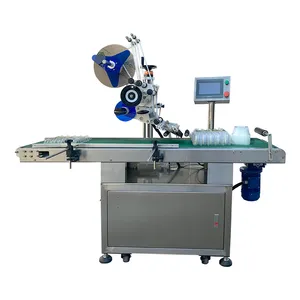
**High-speed pharmaceutical labelers** are the single highest-ROI investment for most supplement companies. These machines apply labels at speeds of 150+ units per minute with precision that eliminates misalignment and ensures every label is perfectly positioned. For a supplement company packaging 10,000 units per day, a pharmaceutical-grade labeler can reduce labeling labor by 70% while improving accuracy.
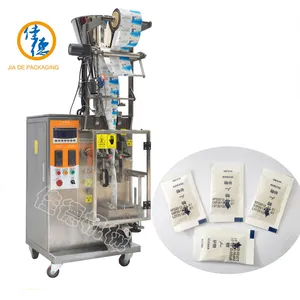
**6-Column Stick Pack Machines** are purpose-designed for supplement packaging. They form, fill, and seal stick packs at high speed while maintaining precise fill weights. For companies packaging individual-serving supplement sticks—a format that's exploding in popularity—this type of machine transforms production capacity from a few hundred to several thousand packs per hour.
**Automated coding systems** eliminate date and lot number errors by programmatically printing compliant codes on every package. These systems integrate with your batch management software to ensure that every code matches your production records.
**Semi-automatic filling stations** bridge the gap between hand filling and fully automated lines. They provide the precision of automated weighing with the flexibility to handle multiple product formats without extensive changeover.
---
## 5. Cost-Benefit Analysis: Semi-Auto vs. Fully Automated {#section5}
The financial case for pharmaceutical packaging automation is compelling, especially when you factor in the cost of non-compliance.
**Cost of a labeling error:** An FDA warning letter related to labeling non-compliance can cost $10,000–$50,000 in corrective actions, legal fees, and lost production time. A single recall triggered by labeling errors can cost $500,000 or more. An automated labeling system that eliminates these errors has immediate value beyond its production benefits.
**Labor savings comparison:**
- Manual labeling: 2 operators labeling 1,200 units/hour combined
- Semi-auto labeler: 1 operator labeling 150 units/minute (9,000/hour)
- Annual labor savings: $35,000–$50,000 per shift
**Equipment investment and payback:**
- Semi-automatic labeling system: $3,000–$8,000
- High-speed pharmaceutical labeler: $15,000–$30,000
- 6-column stick pack machine: $20,000–$40,000
- Typical payback period: 4–8 months for semi-auto, 8–14 months for high-speed equipment
**Hidden savings from reduced waste:**
- Improved fill accuracy: 3–5% reduction in product overfill
- Fewer rejected packages: 90% reduction in labeling errors
- Faster changeovers: 50% reduction in downtime between batches
---
## 6. Building a Compliant Packaging Line on a Budget {#section6}
Here's a practical roadmap for small pharmaceutical and nutraceutical manufacturers building their first automated packaging setup.
**Phase 1 — Labeling first.** Start with a pharmaceutical-grade labeling system. This delivers the highest immediate compliance improvement and the fastest ROI. A machine that consistently applies accurate, professional labels eliminates your biggest regulatory risk while improving your product's appearance.
**Phase 2 — Add precision filling.** Once your labeling is automated, invest in a precision filling and packaging system for your primary format—whether that's stick packs, sachets, bottles, or pouches. This addresses dosage accuracy and production speed.
**Phase 3 — Integrate coding and tracking.** Add automated date/batch coding and consider a basic track-and-trace system that links production data to each batch. This completes your compliance infrastructure.
**Phase 4 — Scale up.** As demand grows, add capacity by upgrading to higher-speed equipment or adding parallel stations. The modular approach means each phase builds on the previous one without wasted investment.
---
### Recommended Equipment
 ## Conclusion {#conclusion}
Pharmaceutical and nutraceutical packaging isn't a place where shortcuts are acceptable. Regulatory compliance, dosage accuracy, and brand reputation all depend on getting your packaging right—every single time. For small manufacturers, the smart strategy is to invest incrementally in automation that addresses your highest-risk processes first, then scale up as demand justifies further investment.
The equipment you need is more affordable than you might think, and the cost of not having it—in regulatory risk, wasted product, and lost productivity—is almost certainly higher than the investment. Start with what hurts most, automate that process, and build from there.
**Need help choosing the right pharmaceutical packaging equipment?** [Request a free consultation](/request-quote/) from SPS Packaging. Our team will analyze your current operation and recommend a practical automation roadmap that fits your budget and regulatory requirements.
---
## Related Resources
- [Food Packaging Machines](/food-packaging-machines/) — Sachet, stick pack, and VFFS machines for supplement packaging
- [Labeling Machines](/labeling-machines/) — Pharmaceutical-grade labeling solutions for compliance-ready operations
- [Production Lines](/production-lines/) — Integrated packaging lines for growing supplement manufacturers
- [Solutions by Industry](/solutions/) — Packaging automation solutions tailored to your industry
## Conclusion {#conclusion}
Pharmaceutical and nutraceutical packaging isn't a place where shortcuts are acceptable. Regulatory compliance, dosage accuracy, and brand reputation all depend on getting your packaging right—every single time. For small manufacturers, the smart strategy is to invest incrementally in automation that addresses your highest-risk processes first, then scale up as demand justifies further investment.
The equipment you need is more affordable than you might think, and the cost of not having it—in regulatory risk, wasted product, and lost productivity—is almost certainly higher than the investment. Start with what hurts most, automate that process, and build from there.
**Need help choosing the right pharmaceutical packaging equipment?** [Request a free consultation](/request-quote/) from SPS Packaging. Our team will analyze your current operation and recommend a practical automation roadmap that fits your budget and regulatory requirements.
---
## Related Resources
- [Food Packaging Machines](/food-packaging-machines/) — Sachet, stick pack, and VFFS machines for supplement packaging
- [Labeling Machines](/labeling-machines/) — Pharmaceutical-grade labeling solutions for compliance-ready operations
- [Production Lines](/production-lines/) — Integrated packaging lines for growing supplement manufacturers
- [Solutions by Industry](/solutions/) — Packaging automation solutions tailored to your industry
High-Speed Pharmaceutical Labeler
Precision labeling at 150+ units/minute — purpose-built for pharmaceutical and supplement bottles with compliance-ready accuracy.
View Details →
6-Column Stick Pack Machine
High-speed stick pack production for supplement powders and granular pharmaceuticals — 6 lanes of simultaneous filling and sealing.
View Details →Need Packaging Equipment?
SPS helps small food manufacturers source reliable packaging equipment at factory prices.
Get a Free Quote →