
# Packaging Machine for Pet Food & Treats: Semi-Auto Solutions
The pet food industry is booming. American pet owners spent over $136 billion on their pets in 2023, and a significant portion of that goes to premium treats, specialty foods, and functional supplements. For small pet food manufacturers—whether you're producing artisanal dog treats, small-batch cat treats, or specialty dietary supplements for pets—the opportunity is enormous, but so is the competition.
Getting your product onto pet store shelves requires packaging that looks professional, keeps the product fresh, and meets the labeling requirements that retailers and regulators demand. Hand-packing pet treats might work when you're selling at the local farmers market, but scaling to retail distribution means investing in equipment that can keep up with demand while maintaining consistent quality.
The good news is that semi-automatic packaging machines designed for small-scale food production are perfectly suited for pet food and treat packaging. These machines handle the unique characteristics of pet food products—irregular shapes, oily surfaces, variable densities—while delivering the production speeds and professional appearance that retail buyers expect.
## Table of Contents
1. [The Pet Food Packaging Landscape](#section1)
2. [Unique Challenges of Packaging Pet Food & Treats](#section2)
3. [Why Semi-Automatic Equipment Fits Small Pet Food Brands](#section3)
4. [Packaging Formats That Sell in Pet Retail](#section4)
5. [Equipment Selection Guide for Pet Food Manufacturers](#section5)
6. [ROI and Growth: From Kitchen to Retail Shelf](#section6)
7. [Conclusion](#conclusion)
---
## 1. The Pet Food Packaging Landscape {#section1}
The pet food market has evolved dramatically over the past decade. What was once dominated by a few large brands has fragmented into hundreds of niche producers offering everything from freeze-dried raw treats to organic dental chews. This fragmentation creates opportunity for small manufacturers, but it also means your packaging must compete on the shelf with well-funded national brands.
**Retailer requirements** are increasingly demanding. Major pet retail chains like Petco, PetSmart, and independent pet boutiques all have specific packaging standards. Bags must be properly sealed with consistent fill weights. Labels must include guaranteed analysis statements, ingredient lists, feeding guidelines, and manufacturer information. UPC codes must be present and scannable. Packages that don't meet these standards get rejected at receiving.
**E-commerce growth** adds another packaging dimension. Direct-to-consumer pet treat brands need packaging that survives shipping, looks good in unboxing photos, and maintains product freshness through extended transit times. Doypacks with resealable zippers have become the standard format for DTC pet treats, and for good reason—they're functional, attractive, and cost-effective.
**Premium positioning** demands premium packaging. Pet owners increasingly view their pets as family members, and they're willing to pay premium prices for treats and foods that look as high-quality as the ingredients inside. Crinkly bags with amateur labels signal low quality, while crisp, professionally sealed packages with clean labeling justify higher price points.
---
## 2. Unique Challenges of Packaging Pet Food & Treats {#section2}
Pet food and treats present specific packaging challenges that differ from typical food products.
**Oil and grease migration** is a persistent problem. Many pet treats—especially those made with real meat, peanut butter, or salmon oil—contain significant fat content that migrates through packaging materials over time. This creates visible grease spots on bags, compromises seal integrity, and can lead to product spoilage. Packaging equipment must accommodate barrier films and ensure complete seals that prevent oil from wicking through closure points.
**Irregular product shapes** make automated feeding difficult. Unlike uniform products like nuts or granola, pet treats come in bones, rings, sticks, hearts, and other novelty shapes. These irregular shapes don't flow smoothly through standard volumetric filling systems and can jam in narrow feed throats. Equipment with wider feed openings and gentle product handling is essential.
**Product density variation** affects fill accuracy. Freeze-dried treats are extremely light and bulky, while dehydrated jerky treats are dense and compact. A machine calibrated for one type will overfill or underfill the other. Flexible filling systems with adjustable parameters handle this variation.
**Strong odors** can accumulate in packaging equipment and affect product quality. Fish-based treats, liver-flavored snacks, and other aromatic products leave residue on machine surfaces that requires regular cleaning and may transfer to other products during changeovers.
---
## 3. Why Semi-Automatic Equipment Fits Small Pet Food Brands {#section3}
Semi-automatic packaging equipment is the sweet spot for pet food and treat manufacturers for several compelling reasons.
**Production volume matching.** Most small pet food brands produce between 500 and 5,000 units per day. This volume range is too high for hand packing but doesn't justify the $100,000+ investment of fully automated lines. Semi-automatic equipment handles this production range efficiently, typically achieving 300–800 units per hour depending on package format and product type.
**Format flexibility.** Small pet food brands typically offer multiple product varieties—different flavors, sizes, and formulations. Semi-automatic machines can be adjusted for different product types without extensive retooling. You might run chicken treats in the morning and salmon treats in the afternoon, with a quick clean and adjustment between runs.
**Investment accessibility.** A complete semi-automatic packaging setup—weighing/filling machine, sealing equipment, and labeling—typically costs between $8,000 and $25,000. For a pet food business generating $200,000+ in annual revenue, this investment is manageable and pays for itself quickly through labor savings and improved throughput.
**Quality consistency.** Semi-automatic equipment delivers fill weight accuracy within ±2–3%, compared to ±10–15% for hand packing. For products sold by weight, this consistency ensures compliance and prevents the give-away that comes with overfilling.
---
## 4. Packaging Formats That Sell in Pet Retail {#section4}
Understanding which packaging formats perform best in pet retail helps you choose the right equipment.
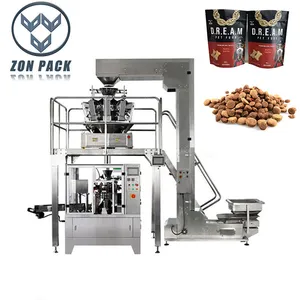
**Stand-up doypacks** are the dominant format for premium pet treats. They stand upright on shelves, display branding effectively, and many include resealable zippers that keep treats fresh after opening. Doypack machines that form, fill, and seal these packages are the primary investment for most small pet food brands.
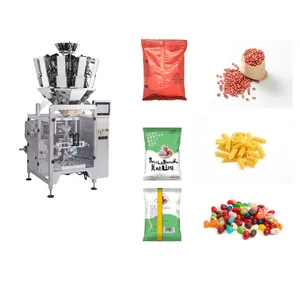
**Pillow bags from VFFS machines** are the standard for larger-format pet foods. Vertical form fill seal machines create bags from film rolls, which reduces per-package material costs compared to pre-made pouches. For dry kibble, jerky strips, and bulk treats, VFFS offers excellent value.
**Flat-bottom bags** offer premium shelf presence with excellent branding surface. These bags combine the stand-up capability of doypacks with a wider base for better stability and more design real estate.
**Sachets and stick packs** work well for single-serving treat samples, supplement powders, and travel-size portions. The stick pack format is growing rapidly in the pet supplement market.
---
## 5. Equipment Selection Guide for Pet Food Manufacturers {#section5}
Here's how to match your specific pet food products to the right packaging equipment.
**For treat bags (1–16 oz):** A Doypack Form Fill Seal machine is your best starting point. It handles the stand-up pouch format that pet retail buyers expect, and the resealable zipper option keeps treats fresh. Look for machines with wider feed openings to accommodate irregular treat shapes.
**For larger bags (1–10 lbs):** A Vertical Form Fill Seal machine handles larger volumes efficiently. The film-forming process reduces material costs, and the vertical configuration works well with gravity-fed products like kibble and jerky strips.
**For single-serve portions:** A 6-column stick pack machine creates individual treat packets at high speed. This format is ideal for sampling programs, travel packs, and supplement powders.
**For labeling:** A round bottle labeler or wraparound labeler handles cylindrical containers. For bags and pouches, inline labeling systems apply labels as packages move through the packaging line.
---
## 6. ROI and Growth: From Kitchen to Retail Shelf {#section6}
The financial case for upgrading from hand packing to semi-automatic equipment is clear for pet food manufacturers.
**Immediate cost savings:**
- Reduce packaging labor from 3 operators to 1: saves $30,000–$40,000 annually
- Eliminate product overfill waste: saves $5,000–$15,000 annually
- Reduce package rejects: saves $3,000–$8,000 annually
**Revenue growth potential:**
- 3× production capacity increase enables taking on new retail accounts
- Professional packaging quality meets retailer acceptance standards
- Faster order fulfillment improves customer satisfaction and repeat orders
**Typical payback timeline:** Small pet food manufacturers report paying off their semi-automatic equipment investment within 4–8 months through labor and waste savings alone, before accounting for revenue growth from new accounts.
**Scaling pathway:** Start with a doypack or VFFS machine and a labeler. As volume grows, add a second packaging station or upgrade to higher-speed equipment. Many successful pet food brands have scaled from 500 units/day to 5,000+ units/day using this incremental approach.
---
### Recommended Equipment
 ## Conclusion {#conclusion}
The pet food industry rewards brands that invest in quality—from ingredients to packaging. Semi-automatic packaging equipment gives small pet food manufacturers the production capacity, consistency, and professional appearance needed to compete with established brands and meet retailer standards. With equipment payback measured in months and production capacity gains measured in multiples, the investment makes strategic sense for any pet food business ready to grow.
**Ready to upgrade your pet food packaging operation?** [Request a free quote](/request-quote/) from SPS Packaging and let our team recommend the right equipment combination for your treats, your volumes, and your growth goals.
---
## Related Resources
- [Food Packaging Machines](/food-packaging-machines/) — VFFS, doypack, and sachet machines for pet food packaging
- [Labeling Machines](/labeling-machines/) — Labeling solutions for pet food bags, bottles, and containers
- [Production Lines](/production-lines/) — Integrated packaging lines for growing pet food operations
- [Solutions by Industry](/solutions/) — Packaging automation organized by industry and application
## Conclusion {#conclusion}
The pet food industry rewards brands that invest in quality—from ingredients to packaging. Semi-automatic packaging equipment gives small pet food manufacturers the production capacity, consistency, and professional appearance needed to compete with established brands and meet retailer standards. With equipment payback measured in months and production capacity gains measured in multiples, the investment makes strategic sense for any pet food business ready to grow.
**Ready to upgrade your pet food packaging operation?** [Request a free quote](/request-quote/) from SPS Packaging and let our team recommend the right equipment combination for your treats, your volumes, and your growth goals.
---
## Related Resources
- [Food Packaging Machines](/food-packaging-machines/) — VFFS, doypack, and sachet machines for pet food packaging
- [Labeling Machines](/labeling-machines/) — Labeling solutions for pet food bags, bottles, and containers
- [Production Lines](/production-lines/) — Integrated packaging lines for growing pet food operations
- [Solutions by Industry](/solutions/) — Packaging automation organized by industry and application
Doypack Form Fill Seal Machine
Automates stand-up pouch packaging with resealable zipper options — the go-to format for premium pet treats and snacks.
View Details →
Vertical Form Fill Seal Machine
Forms bags from film rolls for cost-effective packaging of dry pet food, kibble, and bulk treats in pillow bag format.
View Details →Need Packaging Equipment?
SPS helps small food manufacturers source reliable packaging equipment at factory prices.
Get a Free Quote →