
# 7 Common Packaging Machine Maintenance Tips to Maximize Uptime
Every packaging machine eventually breaks down. The question isn't whether it will happen, but when, and how quickly you can get back to production. For small food manufacturers running a single line with no backup, a multi-day breakdown can mean lost customers and missed delivery windows that are difficult to recover from.
The good news: most packaging machine downtime is preventable. Industry data suggests that 60–80% of packaging line failures are caused by inadequate maintenance, not by equipment defects. The manufacturers with the highest uptime aren't running exotic machines — they're running standard equipment with disciplined maintenance programs.
This guide covers the seven maintenance practices that have the biggest impact on packaging line uptime, based on input from hundreds of small food manufacturers and equipment service technicians.
## Table of Contents
1. [Why Maintenance Discipline Matters More Than Equipment Quality](#section1)
2. [Tip 1: Build a Written Preventive Maintenance Schedule](#section2)
3. [Tip 2: Stock Critical Spare Parts On-Site](#section3)
4. [Tip 3: Keep Detailed Maintenance Logs](#section4)
5. [Tip 4: Train Operators to Be First-Line Maintainers](#section5)
6. [Tip 5: Follow Lubrication Schedules Religiously](#section6)
7. [Tip 6: Schedule Major Maintenance During Planned Downtime](#section7)
8. [Tip 7: Invest in Predictive Maintenance Where It Pays Off](#section8)
9. [Conclusion](#conclusion)
---
## 1. Why Maintenance Discipline Matters More Than Equipment Quality {#section1}
It's tempting to think that buying a higher-quality packaging machine will solve your uptime problems. Sometimes it does — better-built machines do fail less frequently. But the biggest determinant of uptime isn't the machine quality; it's the quality of the maintenance program.
A poorly maintained high-end machine will have more downtime than a well-maintained mid-range machine. The data is consistent across industries: facilities with disciplined preventive maintenance programs achieve 95–99% uptime, while facilities with reactive maintenance (fix it when it breaks) typically achieve 80–90% uptime. That difference — 10–15 percentage points — translates to days of additional production per month, or hundreds of thousands of dollars per year in a small food manufacturer context.
The challenge for small manufacturers is that maintenance often falls through the cracks. There's no dedicated maintenance manager. Operators are busy keeping production running. When something breaks, the response is reactive: fix the immediate problem, get back to production, and worry about prevention later. The pattern repeats until a major failure forces a different approach.
The good news: building a disciplined maintenance program doesn't require a large team or expensive systems. It requires a written plan, basic spare parts inventory, trained operators, and consistent execution. The seven tips below cover the essential elements.
---
## 2. Tip 1: Build a Written Preventive Maintenance Schedule {#section2}
A preventive maintenance schedule is the foundation of any uptime-focused program. It documents what maintenance needs to be done, how often, and by whom. Without a written schedule, maintenance happens inconsistently — usually only when a problem becomes obvious.
Most packaging machine manufacturers provide recommended maintenance schedules in their equipment documentation. These schedules specify daily, weekly, monthly, and annual maintenance tasks. A typical VFFS machine maintenance schedule includes:
**Daily tasks:**
- Visual inspection of sealing jaws, film path, and product contact surfaces
- Cleaning of product contact zones per sanitation SOP
- Check lubricant levels on gearboxes and bearings
- Verify air pressure and electrical connections
- Listen for unusual sounds during operation
**Weekly tasks:**
- Inspect and clean film tensioning components
- Check drive belts for tension and wear
- Verify sensor alignment and operation
- Test emergency stop and safety systems
- Clean air filters and drains
**Monthly tasks:**
- Inspect electrical connections for signs of wear or overheating
- Check alignment of all conveyor and timing systems
- Test and calibrate checkweighers and metal detectors
- Inspect wear parts (sealing jaws, film rollers, scrapers)
- Review and analyze any error logs or stoppages
**Quarterly tasks:**
- Replace high-wear parts (filters, belts, scrapers)
- Comprehensive cleaning of areas not accessible during daily cleaning
- Lubricate per detailed schedule
- Inspect for corrosion or wear on stainless steel components
- Verify all safety interlocks and guards
**Annual tasks:**
- Major inspection of mechanical systems
- Load cell calibration and verification
- Servo motor inspection and bearing service
- Comprehensive electrical inspection
- Equipment teardown for inspection of internal components
The schedule is only valuable if it's actually followed. Post the schedule prominently near the equipment, assign responsibility for each task, and review completion weekly. The most effective programs make maintenance visible — when operators see the schedule and see that tasks are being completed, the program becomes self-reinforcing.
---
## 3. Tip 2: Stock Critical Spare Parts On-Site {#section2}
The most frustrating type of downtime is the one where the failure is trivial but the part isn't available. A $50 sensor or a $200 drive belt can shut down a $50,000 machine for days while the part ships from across the country. The lost production during the wait often costs more than the entire annual maintenance budget.
The solution is to maintain an on-site inventory of critical spare parts. For most packaging machines, the critical parts fall into a few categories:
**Wear parts** that are replaced on a known schedule: sealing jaws, scraper blades, drive belts, O-rings, gaskets, filter elements. Stock at least 2–3x the typical replacement interval for each.
**Failure-prone components** that have a known failure history: sensors (photoelectric, proximity, temperature), relays, contactors, fuses, control board fuses. Stock 2–3 of each common type.
**Critical assemblies** that, if they fail, would stop production: load cells, servo motors, key sensors, drive components. For these, you have a choice — keep them in inventory (high upfront cost, fast recovery) or rely on expedited shipping (lower upfront cost, slower recovery).
The right inventory level depends on your risk tolerance and the cost of downtime. As a rule of thumb, budget 5–8% of the machine's purchase price for the initial spare parts inventory. For a $50,000 machine, that's $2,500 to $4,000 in critical spares.
Coordinate your spare parts inventory with your equipment supplier. Most suppliers can provide a recommended spare parts list tailored to your specific machine and operating environment. This list is the starting point for your inventory — adjust quantities based on your experience and the availability of expedited shipping from the supplier.
---
## 4. Tip 3: Keep Detailed Maintenance Logs {#section4}
Every maintenance activity, every failure, and every unusual observation should be logged. The log serves three purposes: it provides a record of what was done when, it helps identify patterns in equipment behavior, and it provides documentation for warranty claims and insurance purposes.
A simple paper log book works fine for small operations. More sophisticated operations use computerized maintenance management systems (CMMS) that automate work orders, track parts usage, and generate maintenance reports. The format matters less than the consistency — the log only helps if it's actually used.
What to record in the maintenance log:
- Date and time of the activity
- Name of the person performing the activity
- Description of what was done
- Parts replaced or repaired
- Any unusual observations about equipment condition
- Time required for the activity
- Production state during the activity (running, down, etc.)
The log entries should be detailed enough that another technician could understand what was done. "Replaced sealing jaw" is less useful than "Replaced front sealing jaw after 14 days of service; old jaw showed 0.5mm wear on contact surface; no other damage observed." The detail matters when patterns emerge over time.
Review the maintenance log monthly. Look for patterns: are certain parts failing more frequently than expected? Are certain types of failures occurring at specific production conditions? Are some operators reporting issues that others aren't? The patterns are where the maintenance improvements live.
---
## 5. Tip 4: Train Operators to Be First-Line Maintainers {#section5}
Operators are the eyes and ears of the packaging line. They see the equipment running every day, they hear the sounds it makes, and they notice the small changes that often precede a major failure. A trained operator can identify an emerging problem and escalate it before it causes downtime. An untrained operator only notices when the machine stops.
Training operators to be first-line maintainers involves three elements: visual inspection skills, basic troubleshooting, and clear escalation procedures.
**Visual inspection skills** teach operators what to look for during normal operation. This includes unusual sounds, vibrations, smells (burning, overheating, lubricant), visible wear on components, and changes in product quality that may indicate equipment issues. A 1–2 hour training session with a qualified technician is usually sufficient to cover the basics.
**Basic troubleshooting** covers the most common minor issues — sensor misalignment, simple jams, basic adjustment procedures, and the most common error codes. Operators should be able to handle 70–80% of the minor stoppages without calling maintenance. The 20–30% they can't handle, they should be able to accurately describe to the maintenance team, dramatically reducing the time to resolution.
**Escalation procedures** define when an operator should attempt to fix an issue, when they should call for help, and who they should call. The procedures should be written, posted near the equipment, and reviewed with operators regularly.
The most common reason operator training fails is that it's done once and never repeated. Refresh training every 6–12 months keeps the skills sharp and introduces new operators to the procedures. Some facilities build maintenance skill assessments into the operator certification process, which signals that maintenance is a core competency, not an optional extra.
---
## 6. Tip 5: Follow Lubrication Schedules Religiously {#section6}
Lubrication is the single most important maintenance activity for mechanical equipment. Proper lubrication extends the life of bearings, gears, chains, and seals. Improper lubrication — or no lubrication — is the leading cause of mechanical failure in packaging equipment.
The challenge with lubrication in food packaging equipment is the dual requirement: the lubricant must work as a lubricant AND must be food-grade (NSF H1 or equivalent) in areas where incidental food contact is possible. The wrong lubricant in the wrong place can trigger a product recall. The right lubricant in the right place keeps the equipment running for years.
Lubrication schedules vary by machine type, but typical elements include:
**Daily:** Check lubricant levels on gearboxes, central lubrication reservoirs, and oil sight glasses. Top off as needed.
**Weekly:** Grease accessible bearings, guides, and chains. Verify automatic lubricators are operating.
**Monthly:** Inspect for lubricant leaks. Check for lubricant contamination (water, product, debris). Verify the lubricant type is correct for the application.
**Quarterly:** Sample and analyze lubricant from critical gearboxes. Replace lubricant per manufacturer specifications.
**Annually:** Comprehensive lubrication system service. Replace all lubricants, replace filters, and inspect for wear.
The food-grade lubricant you use must be NSF H1 registered. Popular choices include Klüber, Mobil, and Chemtrend brands, but the specific product depends on the equipment manufacturer's specifications. Never substitute industrial lubricants in food packaging equipment — the cost savings are trivial compared to the recall risk.
---
## 7. Tip 6: Schedule Major Maintenance During Planned Downtime {#section6}
Major maintenance — the kind that requires several hours of equipment teardown, parts replacement, and reassembly — is best scheduled during planned production downtime. For most small food manufacturers, the natural planned downtime is weekends, holidays, or seasonal production lulls.
The alternative — performing major maintenance during unplanned downtime — costs 2–3x more than the same maintenance performed during a planned window. During unplanned downtime, you're paying for emergency parts shipping, overtime labor, lost production, and the stress of getting the line back up as quickly as possible. During planned downtime, you have time to order parts, schedule labor, and work methodically.
Build a 12-month major maintenance calendar that identifies when each major maintenance activity will occur. The calendar should align with your production schedule — schedule the heaviest maintenance during your lowest-volume periods. Share the calendar with your production planning team so they can account for the downtime in their schedules.
Common major maintenance activities for packaging equipment include:
- Annual load cell calibration and certification
- Servo motor inspection and bearing service
- Major electrical system inspection
- Heat sealer jaw replacement
- Major drive system service
- Comprehensive safety system testing
Some of these activities can be done during weekend downtimes. Others require the line to be down for 1–3 days. Plan accordingly. The cost of a planned 3-day shutdown is typically much less than the cost of an unplanned 1-day shutdown.
---
## 8. Tip 7: Invest in Predictive Maintenance Where It Pays Off {#section7}
Predictive maintenance uses sensor data and analytics to anticipate equipment failures before they occur. The most common applications in packaging equipment are:
**Vibration analysis** for motors, bearings, and gearboxes. Sensors detect vibration patterns that indicate wear, misalignment, or impending failure. A typical implementation costs $500–$2,000 per machine and can prevent 50–80% of catastrophic bearing failures.
**Thermal imaging** for electrical systems. Periodic thermal scans of electrical panels, motor starters, and control cabinets identify hot spots that indicate loose connections, overloaded circuits, or failing components. A basic thermal camera costs $500–$2,000.
**Oil analysis** for gearboxes and hydraulic systems. Periodic oil samples are analyzed for wear metals, contamination, and lubricant condition. The analysis costs $50–$200 per sample and can identify developing problems months before failure.
**Ultrasonic detection** for compressed air leaks, steam leaks, and electrical discharge. A basic ultrasonic detector costs $500–$2,000 and can identify leaks and partial discharge that would otherwise go undetected.
Not every small manufacturer needs a full predictive maintenance program. But for the most critical equipment in your operation, the cost of basic predictive maintenance is small compared to the cost of catastrophic failure. A $1,000 vibration analysis system on a $50,000 machine pays for itself with the first prevented failure.
The key is to start small. Pick one or two predictive maintenance technologies, apply them to your most critical equipment, and expand from there based on results. The manufacturers who get the most value from predictive maintenance treat it as a long-term investment, not a quick fix.
---
---
### Recommended Equipment
 ---
### Recommended Equipment
---
### Recommended Equipment
 ## Conclusion {#conclusion}
The seven maintenance tips above aren't exotic or expensive. They're the basic disciplines that separate high-uptime operations from low-uptime ones. The pattern is consistent: written schedules, on-site spare parts, detailed logs, trained operators, proper lubrication, planned downtime, and targeted predictive maintenance.
None of these practices require a large investment. What they require is discipline — the consistent execution of basic maintenance activities over time. The manufacturers who do this consistently achieve 95–99% uptime, which translates to more production, lower per-unit costs, and better customer service.
Don't try to implement all seven tips at once. Pick the one or two that will have the biggest immediate impact (typically: written maintenance schedule and operator training) and build from there. The other practices can be added over time as the program matures.
**Need help developing a maintenance program for your specific equipment?** SPS can recommend preventive maintenance schedules, critical spare parts lists, and operator training resources for the equipment you purchase from us. [Request a quote](/request-quote/) and our team will discuss your maintenance needs alongside your equipment requirements.
---
## Related Products
- [Packaging Solutions](/solutions/) — Complete solutions with ongoing support and maintenance
- [Vertical Form Fill Seal Machine](/food-packaging-machines/vffs-machines/vertical-form-fill-seal-machine/) — Robust equipment design with accessible service points
- [Multi-Head Weigher + VFFS System](/food-packaging-machines/multihead-weighers/multi-head-weigher-vffs-system/) — Modular design for simplified maintenance
- [Production Lines](/production-lines/) — Integrated systems with comprehensive maintenance documentation
## Conclusion {#conclusion}
The seven maintenance tips above aren't exotic or expensive. They're the basic disciplines that separate high-uptime operations from low-uptime ones. The pattern is consistent: written schedules, on-site spare parts, detailed logs, trained operators, proper lubrication, planned downtime, and targeted predictive maintenance.
None of these practices require a large investment. What they require is discipline — the consistent execution of basic maintenance activities over time. The manufacturers who do this consistently achieve 95–99% uptime, which translates to more production, lower per-unit costs, and better customer service.
Don't try to implement all seven tips at once. Pick the one or two that will have the biggest immediate impact (typically: written maintenance schedule and operator training) and build from there. The other practices can be added over time as the program matures.
**Need help developing a maintenance program for your specific equipment?** SPS can recommend preventive maintenance schedules, critical spare parts lists, and operator training resources for the equipment you purchase from us. [Request a quote](/request-quote/) and our team will discuss your maintenance needs alongside your equipment requirements.
---
## Related Products
- [Packaging Solutions](/solutions/) — Complete solutions with ongoing support and maintenance
- [Vertical Form Fill Seal Machine](/food-packaging-machines/vffs-machines/vertical-form-fill-seal-machine/) — Robust equipment design with accessible service points
- [Multi-Head Weigher + VFFS System](/food-packaging-machines/multihead-weighers/multi-head-weigher-vffs-system/) — Modular design for simplified maintenance
- [Production Lines](/production-lines/) — Integrated systems with comprehensive maintenance documentation
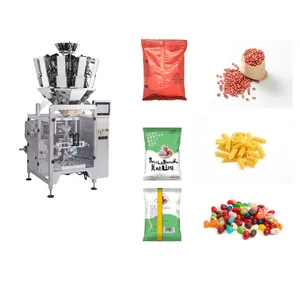
Vertical Form Fill Seal Machine
VFFS machines with quick-change seal jaws reduce maintenance downtime by 40%.
View Details →
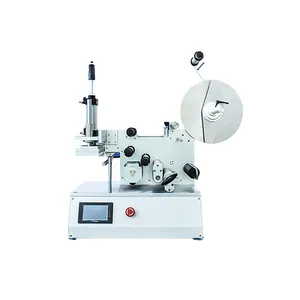
Automatic Round Bottle Wrap-Around Labeler
Auto labelers with self-diagnostic systems catch issues before they cause downtime.
View Details →Need Packaging Equipment?
SPS helps small food manufacturers source reliable packaging equipment at factory prices.
Get a Free Quote →