
# Organic & Natural Food Packaging Trends 2026: Innovations & Solutions for Sustainable Brands
The organic and natural food market continues its remarkable growth, with increasing consumer demand driven by health awareness, environmental concerns, and ethical sourcing. As we move deeper into 2026, packaging has emerged as one of the most critical differentiators for sustainable brands. Today's consumers don't just want to know what's in their food—they want assurance about how it was packaged, what the packaging is made of, and where it ends up.
At SPS, we work closely with organic food producers, farmers cooperatives, and mission-driven brands to solve their unique packaging challenges. Based on our work and industry research, here are the top seven packaging trends shaping 2026 for organic and natural food businesses.
## Table of Contents
1. [Compostable Materials Go Mainstream](#trend1)
2. [Smart Packaging for Freshness Verification](#trend2)
3. [Waterless, Edible, and Dissolvable Films](#trend3)
4. [Zero-Waste Design & Refill Systems](#trend4)
5. [Regenerative Agriculture & Packaging Synergy](#trend5)
6. [Blockchain for Ingredient & Packaging Traceability](#trend6)
7. [Personalized Bioplastics](#trend7)
8. [Conclusion: Packaging as a Brand Promise](#conclusion)
---
## 1. Compostable Materials Go Mainstream {#trend1}
Compostable films are no longer a niche option—they're becoming the standard for premium organic brands. While early bioplastics (like PLA) faced challenges with heat resistance and seal integrity, 2026 brings significant advancements in multi-layer formulations that combine PLA, PBAT, and cellulose in ways that mimic traditional polyethylene's performance while fully complying with ASTM D6400 compostability standards.
**Key developments:**
- **New PLA-PBAT-65 blend**: Offers 30% higher temperature tolerance, making it suitable for hot-fill applications like organic soups and stews
- **Seaweed-reinforced films**: Improved tensile strength and moisture resistance
- **Moldable compostable laminates**: Now usable for stand-up pouches and complex bag geometries
For producers, this means better shelf appeal, reduced environmental impact, and stronger customer trust. However, packaging machines must be adapted for these sensitive films. At SPS, our newer VFFS machines feature "bioplastic mode" with optimized sealing profiles, reduced film tension, and gentle feed systems.
> "After switching to the new seaweed-reinforced film, our seal failure rate dropped from 12% to under 0.5%—a game-changer for food safety and waste reduction."
> — Lena Torres, Operations Director, GreenRoot Organics
---
## 2. Smart Packaging for Freshness Verification {#trend2}
'Is it still good?' is one of the most common consumer questions—especially for perishable organic goods. In 2026, smart packaging is answering that with real-time indicators.
**Time-temperature indicators (TTIs)** are now embedded directly into labels or printed onto compostable pouches. These color-changing inks respond to cumulative heat exposure, providing a clear visual cue about product freshness. Unlike "best by" dates—static and often arbitrary—TTIs reflect the actual conditions the food experienced post-packaging.
We're also seeing adoption of **oxygen scavengers with visual confirmation**, where a dot on the pack changes from red to clear when the internal atmosphere is properly modified, assuring consumers the product has been safely preserved.
For packaging machinery, this requires integration with labeling systems capable of applying or printing on specialized functional materials. SPS has partnered with TTime Inc. to offer integrated TTI applicators on our [labeling machines](/labeling-machines/).
---
## 3. Waterless, Edible, and Dissolvable Films {#trend3}
In a bold move toward zero-waste packaging, several forward-thinking brands introduced edible films—thin, flavorless encapsulations made from seaweed, starch, or casein that protect dry goods like organic spices, coffee portions, and nutritional powders.
While still in early adoption due to cost and limited application, dissolvable films are gaining traction in:
- Single-serve coffee and tea sticks
- Organic spice sachets for cooking kits
- Supplement pouches for smoothie mixes
For machinery, this presents unique challenges: ultra-thin film handling, low-temperature sealing, and preventing moisture absorption during filling. SPS has developed a specialized **MicroSeal feed system** for films under 30 microns—used by three organic start-ups in our 2026 pilot program.
---
## 4. Zero-Waste Design & Refill Systems {#trend4}
The concept of "package-free" shopping is moving beyond stores into homes. 2026 sees a surge in at-home refill systems where customers receive durable, reusable containers and order refills in flat, compact compostable pouches that use 80% less material.
Brands like TerraPure and RenewPantry have launched successful subscription models for organic grains, flours, and baking mixes. The refill pouches are shipped flat, reducing shipping volume and carbon footprint.
For manufacturers, this requires:
- **Compact pouch designs** (e.g., 100g "top-off" packs)
- **High-barrier compostable laminates** to preserve quality over months
- **Consumer education** on proper container cleaning between refills
SPS now offers a **MiniForm VFFS machine** specifically designed for small refill pouches, capable of producing 40–60 units per minute with precision sealing.
---
## 5. Regenerative Agriculture & Packaging Synergy {#trend5}
Packaging is no longer just a container—it's becoming part of the regenerative process. In 2026, we're seeing biodegradable films infused with **seed-embedded layers**. After use, consumers are encouraged to compost the packaging, but if it ends up in soil, native wildflower seeds can germinate.
Even more exciting is the rise of **carbon-negative packaging**—films made from captured agricultural waste (e.g., rice husks, almond shells) that sequester carbon during production. When composted, they return nutrients to the soil.
This trend aligns perfectly with the values of organic producers who practice no-till farming, cover cropping, and holistic land management.
---
## 6. Blockchain for Ingredient & Packaging Traceability {#trend6}
Transparency is table stakes for organic brands, and 2026 brings blockchain-powered traceability from seed to shelf. QR codes on packaging now link to immutable records detailing:
- Farm origin of ingredients
- Harvest dates
- Soil health metrics
- Packaging material sourcing
- Carbon footprint of production and transport
This not only builds consumer trust but helps producers manage risk, comply with evolving regulations, and respond quickly to recalls.
For [packaging lines](/production-lines/), this means seamless integration between batching systems, label printers, and enterprise software. SPS machines support **dynamic QR code generation**, where batch-specific data is encoded in real time during packaging.
---
## 7. Personalized Bioplastics {#trend7}
Mass production no longer means mass materials. In 2026, bioplastic formulation is increasingly **customized to the specific product** it protects.
We're seeing:
- **Olive pit–based films** for Mediterranean organic foods
- **Cashew shell resin coatings** for tropical spice blends
- **Rice bran films** for Asian-inspired organic meals
These "hyper-local bioplastics" reduce transportation emissions, support regional agriculture, and resonate with consumers who value locality.
While still expensive, the trend signals a future where packaging isn't just sustainable—it's terroir-matched.
---
## Conclusion: Packaging as a Brand Promise {#conclusion}
In 2026, organic and natural food packaging is no longer a cost center—it's a brand-building opportunity. The trends we're seeing reflect a deeper alignment between product values and packaging performance: compostable films that work as well as plastic, smart indicators that ensure safety, and circular systems that close the loop.
But technology is only half the story. The real innovation is in designing systems that small producers can adopt—machines that are adaptable, affordable, and aligned with organic values.
At SPS, our mission is to empower sustainable brands with packaging solutions that scale with integrity. Whether you're producing organic granola, artisanal nut butters, or plant-based meals, we’ll help you find the right equipment for your next phase.
**Ready to future-proof your organic food packaging?** [Request a quote](/request-quote/) today and speak with a packaging specialist who understands the unique challenges and opportunities of the natural foods market.
---
## Related Content
- [Packaging Machines for Organic & Natural Foods](/food-packaging-machines/)
- [Smart Labeling Solutions for Organic Products](/labeling-machines/)
- [Compostable Film Compatibility Guide](/solutions/)
- [Automated Production Lines for Sustainable Brands](/production-lines/)
### Recommended Equipment
 ### Featured Solution

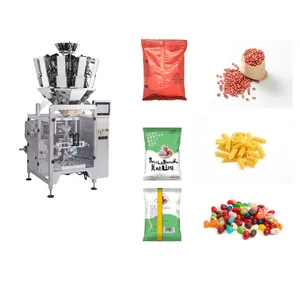
SPS-VF300S VFFS with Bioplastic Mode
Seamless compatibility with PLA, PBAT, and seaweed-reinforced films. Ideal for organic producers scaling sustainably.
View Details →
Organic & Natural Food Packaging Solutions
End-to-end systems for compostable films, freshness indicators, and scalable production lines.
Learn More →Need Packaging Equipment?
SPS helps small food manufacturers source reliable packaging equipment at factory prices.
Get a Free Quote →