
# Organic & Natural Food Packaging Solutions
The organic and natural food market is one of the fastest-growing segments in food retail, with global sales projected to exceed $300 billion annually by 2027. For small manufacturers producing certified organic or all-natural products, packaging is far more than a containment vessel—it's a critical brand touchpoint, a shelf-life enabler, and a compliance requirement. Consumers of organic foods demand transparency, sustainability, and authenticity, and your packaging must communicate those values while meeting the unique challenges of often perishable, additive-free products.
SPS has worked with numerous small organic farms, dairy cooperatives, and natural food brands to develop packaging solutions that protect product integrity, extend shelf life, and align with organic principles. This guide walks you through the five essential considerations for choosing the right packaging machinery for your organic and natural food production line.
## Table of Contents
1. [Why Organic & Natural Foods Demand Specialized Packaging](#section1)
2. [Key Packaging Challenges for Organic Producers](#section2)
3. [Machinery Selection: Features That Matter Most](#section3)
4. [Material Compatibility: Running Certified Compostable Films](#section4)
5. [Certifications, Compliance & Documentation](#section5)
6. [Scaling from Farm Gate to Retail Shelf](#section6)
7. [Conclusion](#conclusion)
---
## 1. Why Organic & Natural Foods Demand Specialized Packaging {#section1}
Organic and natural foods are fundamentally different from conventional products in their composition and handling requirements. Without artificial preservatives, synthetic antioxidants, or moisture barriers commonly found in mass-produced foods, organic products are often more perishable and sensitive to environmental factors like oxygen, light, and humidity.
This means packaging plays an outsized role in product success. A single packaging failure—a compromised seal, a micro-tear in the film, or contamination during filling—can lead to rapid spoilage, customer complaints, and reputational damage that's especially costly for small brands where word-of-mouth and online reviews drive growth.
Moreover, customers of organic goods expect more from packaging. They want:
- **Transparency** — Visible product, ingredient clarity, and sourcing information
- **Sustainability** — Compostable, recyclable, or plastic-free materials
- **Authenticity** — Packaging that looks and feels handcrafted, not mass-produced
- **Safety** — No chemical migration from plastics or inks
Your packaging machine must support all these expectations while maintaining food safety, efficiency, and regulatory compliance. This requires purpose-built features not found on standard industrial packaging equipment.
---
## 2. Key Packaging Challenges for Organic Producers {#section2}
Small organic producers face distinct packaging challenges compared to conventional manufacturers. Understanding these upfront will guide your equipment choices.
### Perishability & Shelf-Life Management
Organic foods lack synthetic preservatives, making them highly susceptible to mold, oxidation, and microbial growth. Even a 10% increase in shelf life through improved sealing or modified atmosphere packaging (MAP) can reduce spoilage and open new distribution channels (e.g., longer-distance shipping or longer shelf placement).
Look for machines with **precision sealing controls**, **gas flushing capabilities**, and **leak testing integration**. These features allow you to use natural preservation methods like vacuum sealing or nitrogen flushing to extend product freshness without additives.
### Handling Delicate, Irregular Products
Organic produce, baked goods, and artisanal cheeses often have irregular shapes, fragile textures, and variable moisture content. Standard packaging machines with aggressive feed systems can crush, bruise, or smear these products.
Choose machines with **gentle product handling systems**—think low-impact conveyors, adjustable feed screws, and soft-touch sealing jaws. For bulk powders or granola, consider **volumetric fillers with agitated hoppers** to prevent bridging without damaging grain integrity.
### Seasonal Volume Fluctuations
Many organic producers experience strong seasonality—peak harvest times, holiday demand surges, or farmers market seasons. A machine that runs efficiently at 100 units/day in winter must scale to 1,000 units/day in fall without requiring a complete line reconfiguration.
Semi-automatic machines offer the perfect balance for these fluctuations. They allow you to **scale labor up or down** based on volume, **reduce upfront investment**, and **maintain flexibility** for multiple SKUs. Many of our organic fruit and vegetable clients use SPS **semi-auto VFFS machines** during off-season and add a second operator during harvest peak to double throughput.
### Batch Integrity & Traceability
Organic certification requires traceability from farm to package. Each batch must be documented for ingredient origin, processing date, and packaging run details. Your packaging machine should support **batch labeling integration** and **data logging** so that lot numbers, certification codes, and expiration dates are automatically applied and recorded.
---
## 3. Machinery Selection: Features That Matter Most {#section3}
When evaluating packaging machines for organic and natural food production, focus on these five critical features:
### 1. Sealing Intelligence & Consistency
Inconsistent seals are the enemy of shelf life. Organic products, with no chemical backup, rely entirely on the physical integrity of the package.
Look for sealing systems with:
- **Digital temperature control** for precise, repeatable sealing (±1°C)
- **Seal verification sensors** (e.g., pressure sensors or impedance monitoring)
- **Programmable recipes** for different film types and thicknesses
- **Self-diagnostics** that alert operators to sealing bar wear or film tension issues
### 2. Gentle Feeding & Low-Impact Conveying
Fragile organic products need careful handling. Avoid machines with high-speed chutes, sharp angles, or vibrating feeders that can damage delicate items.
Instead, opt for:
- **Brush feed systems** for baked goods and produce
- **Auger fillers with variable RPM control** for powders and granola
- **Low-friction conveyor surfaces** made from FDA-approved polymers
### 3. Compatibility with Sustainable Films
Certified compostable films (e.g., PLA, PBAT, cellulose) behave differently than standard polyethylene. They’re often more brittle, less heat-resistant, and require different sealing parameters.
Ensure your machine has:
- **Adjustable sealing time and pressure** (not just temperature)
- **Film pre-conditioning** (e.g., film heaters to reduce brittleness)
- **Low-tension film handling** to prevent tearing
- **Support for multi-layer biodegradable laminates**
### 4. Clean-in-Place (CIP) or Washdown Design
Organic producers often rotate between product types—today’s berry pack, tomorrow’s nut mix. Quick and thorough cleaning between batches is essential to prevent cross-contamination and meet NOP (National Organic Program) requirements.
Choose machines with:
- **304/316 stainless steel construction**
- **IP69K-rated electrical enclosures**
- **Sloped surfaces and drainage** to prevent water pooling
- **No hidden crevices or dead zones** where organic matter can accumulate
- **Tool-free disassembly** for deep cleaning
### 5. Modularity & Future-Proofing
Start small, scale smart. Many organic startups begin with tabletop or benchtop machines and need to grow without replacing their core system.
Look for modular designs that allow you to:
- Add an **automatic film unwinder** later
- Integrate a **checkweigher** or **metal detector**
- Upgrade from **semi-automatic to automatic mode**
- Connect to upstream **product preparation** or downstream **case packing**
---
## 4. Material Compatibility: Running Certified Compostable Films {#section4}
One of the biggest mistakes organic producers make is assuming any packaging machine can handle compostable films. The reality is that these bio-based materials are far less forgiving than conventional plastics.
### Understanding Film Behavior
Compostable films like PLA (polylactic acid) have lower melting points, reduced tensile strength, and higher moisture sensitivity. At sealing temperatures above 140°C, they can degrade, bubble, or emit odors. At low humidity, they become brittle and prone to cracking.
### Machine Adjustments for Bioplastics
To run PLA, PBAT, or cellulose films successfully:
- **Reduce sealing temperatures** by 15–25°C compared to PE
- **Increase sealing dwell time** to compensate for lower heat transfer
- **Lower film tension** to prevent stretching or tearing
- **Pre-heat film** (25–30°C) to reduce brittleness in dry environments
Many SPS machines come with **pre-programmed film libraries** that automatically adjust sealing parameters based on film type, reducing setup time and trial-and-error waste.
### Real-World Performance
We worked with an organic tea company in Oregon that switched to compostable tea sachets. Their old machine could not consistently seal the PLA film, resulting in 15–20% seal failure. After upgrading to the **SPS-VF300S VFFS with bioplastic mode**, they achieved over 99% seal integrity and reduced film waste by 40%.
---
## 5. Certifications, Compliance & Documentation {#section5}
Organic food packaging must comply with multiple standards:
- **USDA Certified Organic** — Requires traceability and prevention of commingling with non-organic ingredients
- **NOP Regulations** — Cover handling, processing, and labeling
- **FDA Food Contact Compliance** — For all packaging materials and machinery
- **ASTM D6400 / EN 13432** — For compostable packaging claims
Your packaging machine itself doesn’t need organic certification, but it **must not compromise your certification**. This means:
- No shared use with non-organic products
- Clean, dedicated production runs
- Documentation of cleaning, changeover, and batch tracing
Choose suppliers who provide **documentation kits** including:
- Material certificates (e.g., FDA 21 CFR compliance)
- Equipment schematics and maintenance logs
- Electrical and pneumatic diagrams
- Food-grade lubricant specifications
We pre-package these documents with every machine for our organic clients, making audit preparation simpler.
---
## 6. Scaling from Farm Gate to Retail Shelf {#section6}
Many organic producers start by packaging at the farm or co-op level, selling directly at farmers markets. As demand grows, they need to scale to regional distribution and retail chains—each step requiring a packaging upgrade.
### Stage 1: Direct Sales (Farmers Markets, CSAs)
Start with **semi-automatic tabletop machines**. These are affordable, easy to operate, and perfect for small batch runs. Features to prioritize:
- Manual product loading
- Simple touch-screen interface
- Compatibility with compostable kraft pouches or paper films
- Footprint small enough for a processing room table
Many of our clients use the **SPS-VF200 Benchtop VFFS** at this stage, producing 5–15 bags per minute.
### Stage 2: Regional Distribution
When supplying health food stores, restaurants, or co-ops, you need higher throughput and consistent quality. Upgrade to:
- **Semi-automatic floor models** with higher output (20–30 bags/min)
- **Automatic product feeding** (e.g., multi-head weigher integration)
- **Barcode or QR code labeling** for traceability
This is where **SPS semi-auto lines** shine—offering automation benefits without the cost of fully automatic systems.
### Stage 3: National Retail Chains
Grocery chains demand high volume, batch consistency, and full traceability. At this stage, consider:
- **Fully automatic VFFS lines** with robotics
- **Integrated inspection systems** (vision, metal detection)
- **SCADA or MES integration** for production data
While a big leap, many of our clients financed this step using **lease-to-own programs** or **SBIR/STEP grants** for small food manufacturers.
---
## Conclusion {#conclusion}
Packaging organic and natural foods requires more than just a machine that seals bags. It requires a system designed for perishability, sustainability, and authenticity. The right equipment will extend shelf life, reduce waste, maintain certification integrity, and reflect your brand’s values—from the first harvest to the final customer bite.
At SPS, we specialize in helping organic producers scale efficiently with semi-automatic solutions that deliver 80% of the performance of full automation at 30–40% of the cost. Whether you're packaging organic trail mix, cold-pressed juice, or farm-fresh vegetables, we’ll help you find the right packaging solution.
**Looking for packaging equipment that matches your organic mission?** [Request a quote](/request-quote/) today and speak with a packaging specialist who understands the unique needs of natural food producers.
---
## Related Products
- [Labeling Machines](/labeling-machines/) — Organic-certified labeling solutions
- [Complete Production Lines](/production-lines/) — End-to-end organic packaging lines
- [Semi-Automatic VFFS Machines](/food-packaging-machines/vffs-machines/) — Benchtop and floor models for small batch runs
- [Compostable Film Compatibility](/solutions/) — Machines pre-configured for PLA, PBAT, and cellulose films
- [Organic Food Packaging Lines](/food-packaging-machines/) — Complete turnkey solutions with traceability integration
### Recommended Equipment
 ### Recommended Equipment

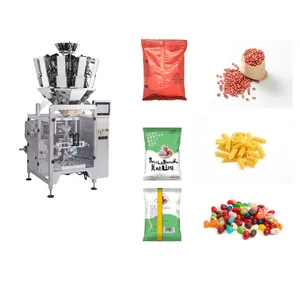
SPS-VF300S VFFS Machine
Semi-automatic VFFS designed for compostable films and gentle product handling. Ideal for organic grains, teas, and snacks.
View Details →
Organic & Natural Food Packaging Solutions
Complete systems with compostable film support, batch traceability, and NSF washdown design.
Learn More →Need Packaging Equipment?
SPS helps small food manufacturers source reliable packaging equipment at factory prices.
Get a Free Quote →