
# Packaging Machine for Juice & Smoothie: Semi-Auto Solutions for Small Beverage Producers
Juice and smoothie producers occupy one of the fastest-growing corners of the food and beverage industry. The US juice market alone generates over $20 billion annually, and the smoothie segment has grown at roughly 6% per year for the past five years. But behind every vibrant bottle of cold-pressed juice or ready-to-drink smoothie on the shelf sits a packaging process that is surprisingly complex, time-sensitive, and unforgiving. For small and mid-size juice bars, cold-pressed juice startups, and regional smoothie brands, packaging is frequently the bottleneck that limits growth.
If you're currently filling bottles by hand at a stainless steel table, struggling with inconsistent fill levels that make your products look amateurish on retail shelves, or watching perfectly good product go to waste because your capping process can't keep up with your batching schedule, you're not alone. These are the exact pain points we hear from juice and smoothie producers every week. The good news is that semi-automatic packaging equipment exists to solve each of them — and it's far more affordable than you might think.
## Table of Contents
1. [Why Juice & Smoothie Packaging Is Uniquely Challenging](#section1)
2. [Common Pain Points for Small Juice Producers](#section2)
3. [Manual vs Semi-Auto: The Real Cost of Hand Filling](#section3)
4. [Equipment Recommendations for Juice & Smoothie Operations](#section4)
5. [Cold Chain and Food Safety Considerations](#section5)
6. [ROI Insights: What Small Producers Can Expect](#section6)
7. [Conclusion](#conclusion)
---
## 1. Why Juice & Smoothie Packaging Is Uniquely Challenging {#section1}
Juice and smoothie packaging presents a distinct set of challenges compared to dry goods or solid food products. These challenges stem from the liquid nature of the product, the sensitivity of fresh ingredients, and the expectations consumers have for premium-looking beverages.
**Temperature sensitivity** is the most critical factor. Fresh juice and smoothies are living products — they contain enzymes, bacteria, and natural sugars that behave very differently depending on temperature. The faster you move from batching to sealing to refrigeration, the more shelf life and nutritional value you preserve. Every minute your product sits at ambient temperature in an open container represents measurable quality loss. Semi-automatic filling and capping equipment dramatically reduces the time between filling and sealing compared to hand operations.
**Foam and splash management** is a headache unique to juice packaging. Products containing banana, avocado, mango, or protein powders create foam during filling that can overflow containers, compromise seal integrity, and create messy production environments. Fill nozzles designed specifically for foamy liquids use slow-fill-then-fast-fill profiles and anti-drip tips that minimize splashing and foam generation. Generic liquid fillers designed for water or oil simply don't work well with juice and smoothie products.
**Viscosity variation** across a product line creates equipment flexibility requirements. A single producer might package thin, cold-pressed juices (viscosity similar to water), thick smoothies (viscosity approaching that of ketchup), and pulp-heavy blends (containing suspended solids that can clog standard filling equipment). Your equipment needs to handle this full range without extensive changeover.
**Packaging format diversity** is another reality. Juice and smoothie brands sell in PET bottles, glass bottles, pouches, cartons, and increasingly in aluminum cans. Each format requires different filling techniques, different capping or sealing mechanisms, and different labeling approaches. Semi-automatic systems that offer format flexibility give small producers the ability to serve multiple retail channels from a single packaging line.
**Shelf life pressure** means there's no room for error. Unlike shelf-stable products that can sit in a warehouse for months, fresh juice has a shelf life measured in days to weeks. Packaging errors — poor seals, inconsistent fills, improperly applied labels — don't just mean wasted product. They mean recalled product, customer complaints, and potential health risks. The precision and consistency that semi-automatic equipment provides isn't a luxury; it's a necessity.
---
## 2. Common Pain Points for Small Juice Producers {#section2}
Small juice and smoothie producers share a common set of frustrations that we encounter daily:
**Inconsistent fill levels** are the number one complaint. When filling by hand or with basic gravity fillers, fill levels can vary by 5–10% from bottle to bottle. This is immediately visible on a retail shelf — bottles at different levels look unprofessional and undermine your brand's premium positioning. More importantly, overfilling means you're giving away product (and profit), while underfilling triggers consumer complaints and potential regulatory issues. Semi-automatic piston fillers and time-pressure filling systems bring fill variation down to ±1% or better.
**Capping bottlenecks** slow down your entire operation. Hand capping is fatiguing, inconsistent (too loose means leaks; too tight means stripped threads), and painfully slow. A single operator hand-capping bottles might complete 300–400 per hour at best. A semi-automatic capping machine handles 1,200–2,000+ per hour with consistent torque every time. For producers who have invested in great juice but are bottlenecked by capping, this single upgrade transforms production capacity.
**Labeling quality** directly impacts retail success. Juice labels need to look premium — they're competing for attention in a refrigerated case full of colorful competitors. Hand-applied labels often have bubbles, wrinkles, or inconsistent placement that screams "homemade" in a negative way. Semi-automatic labeling machines deliver smooth, consistent application at production speeds that match your filling throughput.
**Waste and spillage** during hand filling represent a hidden cost that most producers underestimate. Juice is expensive to produce — cold-pressed juice can cost $2–4 per bottle in raw ingredients alone. Every ounce spilled during filling is pure margin loss. Semi-automatic fillers with drip-free nozzles, anti-overflow sensors, and controlled fill speeds reduce spillage to near zero.
**Scaling limitations** become apparent the moment a growth opportunity appears. A juice bar owner who gets an opportunity to supply 20 local grocery stores, or a smoothie brand that lands a regional distributor deal, quickly discovers that hand filling can't scale. Hiring more people to hand-fill bottles has diminishing returns — you run out of table space, your quality drops, and your labor costs spiral. Semi-automatic equipment scales your capacity by 3–4x without proportionally increasing your labor force.
---
## 3. Manual vs Semi-Auto: The Real Cost of Hand Filling {#section3}
Let's run the numbers for a small cold-pressed juice company producing 3,000 bottles per month across six SKUs (different flavors in 16 oz bottles).
**Manual filling** typically involves:
- Operators hand-pouring juice from batching containers into bottles using a pitcher or gravity spout
- Manual capping with hand-tightening
- Hand-applied shrink bands or labels
- Visual quality inspection
- Manual date coding with a handheld stamp
At 3,000 bottles per month with an average retail price of $8.99 per bottle, manual filling typically requires 2 part-time operators working 20 hours per week each. At $17/hour, that's approximately **$35,360 per year in labor costs**. Fill level variation of ±7% means roughly 210 bottles per month are either significantly overfilled (giving away product) or underfilled (risking complaints). Spillage during hand filling accounts for another 2–3% of product loss. The combined cost of overfill giveaway, spillage, and quality failures is approximately **$6,000–$9,000 per year**.
**Semi-automatic filling** with the right equipment typically involves:
- A semi-automatic piston or time-pressure filler with anti-drip nozzles
- A semi-automatic capping machine with torque control
- An automatic or semi-automatic labeling machine
- Inline date coding
This setup lets **one operator** manage the same 3,000 bottles per month in roughly 40% of the time, with fill level variation under ±1%. The annual labor cost drops to approximately **$10,000–$14,000**, and waste/shrink costs fall by 80% or more.
The equipment investment for a basic semi-automatic juice filling line typically ranges from **$20,000–$50,000** depending on bottle formats and throughput requirements, which means most small producers see a full payback within 8–14 months.
---
## 4. Equipment Recommendations for Juice & Smoothie Operations {#section4}
Here's what we recommend for different types of small juice and smoothie operations:
### For Cold-Pressed Juices in PET or Glass Bottles (8 oz, 12 oz, 16 oz)
A semi-automatic piston filler is the gold standard for cold-pressed juice. This typically includes:
- **[Semi-automatic piston filler](/food-packaging-machines/)** — Uses precision pistons to deliver exact fill volumes regardless of juice viscosity. Piston fillers handle everything from thin carrot juice to thick green smoothies with equal accuracy. Look for models with adjustable fill speed profiles (slow start to minimize foaming, fast finish for throughput) and tool-free disassembly for CIP cleaning between flavors.
- **[Semi-automatic capping machine](/food-packaging-machines/)** — Torque-limited capping ensures consistent tightness without stripping threads. For juice bottles, consistent cap torque is critical — too loose means leaks and spoilage; too tight means consumers can't open the bottle (and your brand gets a bad reputation on social media).
- **[Automatic label applicator](/labeling-machines/)** — A wrap-around or front-and-back label applicator handles cylindrical bottles with consistent placement every time. For juice brands competing on shelf appeal, label quality is non-negotiable. Look for systems that handle transparent labels (clear-on-clear) cleanly, as this is the dominant style in premium juice.
### For Smoothies and Thick Beverages
Thicker products like banana smoothies, açaí blends, and protein shakes require equipment with larger diameter fill paths and higher-viscosity capabilities:
- **High-viscosity piston filler** — Larger bore pistons and wider-diameter fill nozzles handle products up to 50,000 centipoise (think: thick milkshake consistency). Anti-drip nozzles are especially important for thick products that tend to string and drip after the fill cycle.
- **[Semi-automatic capping machine](/food-packaging-machines/)** — Same torque control benefits, but with chuck styles that grip larger caps (smoothie bottles often use 63mm or 89mm caps rather than standard 28mm).
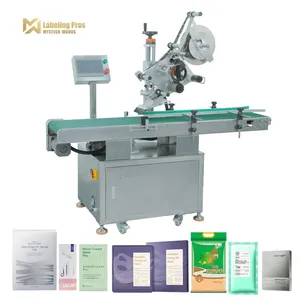
- **[Top-label applicator](/labeling-machines/)** — Smoothie bottles sometimes use top labels instead of wrap-around labels, especially for products sold in club stores or specialty retailers.
### For Juice Pouches and Drink Pouches
Juice pouches are growing rapidly, especially in the kids' juice and on-the-go smoothie segments:
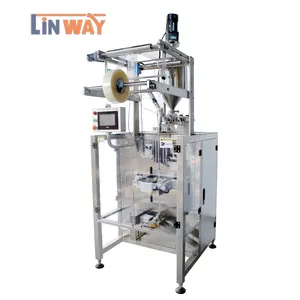
- **Pouch filling and sealing machine** — Semi-automatic systems that open pre-made pouches, fill with measured product, and heat-seal the top. These handle stand-up pouches, flat pouches, and spouted pouches with format-specific tooling.
- **Spout inserter** — For spouted pouches, an automated spout insertion and sealing station ensures consistent spout placement and leak-proof seals.
- **[Label applicator](/labeling-machines/)** — Top-label or front-label applicators for pouch branding.
### For Complete Lines
For producers ready to invest in a [complete packaging line](/production-lines/), combining a piston filler, capping station, labeler, and date coder creates a semi-automatic system that can handle 20–40 bottles per minute depending on container size and fill volume. This throughput is typically 3–5x faster than manual filling while requiring fewer operators. Many of our clients start with a single filling station and add capping and labeling equipment as their volume grows — our modular approach lets you scale incrementally.
---
## 5. Cold Chain and Food Safety Considerations {#section5}
Juice and smoothie packaging operates under stricter food safety requirements than many other food categories. The FDA classifies juice as a "high-risk" food product, and producers must comply with specific regulations.
**HACCP compliance** is mandatory for juice producers under the FDA's Juice HACCP Regulation (21 CFR Part 120). Your packaging equipment must support your HACCP plan — this means equipment that's easy to clean and sanitize, constructed from food-grade materials (stainless steel 304 or 316L for all product-contact surfaces), and designed to minimize contamination risk during the filling process.
**Material compatibility** is essential. Juice is acidic (pH typically 2.5–4.0), and this acidity can corrode certain metals over time. All product-contact surfaces on your filling equipment should be stainless steel 316L (which offers superior acid resistance compared to 304) or food-grade polymers rated for acidic products. Using equipment with incompatible materials can cause metallic off-flavors, equipment degradation, and potential contamination.
**Cleaning and sanitation** must be frequent and thorough. Juice residue is a perfect breeding ground for bacteria, and biofilm can form on equipment surfaces within hours. Semi-automatic equipment designed for juice operations features tool-free disassembly, smooth interior surfaces without crevices where product can hide, and compatibility with CIP (clean-in-place) cleaning solutions. The time and effort required to clean your packaging equipment between flavors or at the end of a shift directly impacts your production schedule and labor costs.
**Cold chain management** from fill to fridge is a packaging process issue as much as a logistics one. Equipment that minimizes the time your product spends at ambient temperature — fast filling cycles, quick capping, and efficient line flow — directly preserves shelf life and product quality. Some producers integrate their packaging line with refrigerated conveyors or chilled holding tanks to maintain temperature throughout the process.
---
## 6. ROI Insights: What Small Producers Can Expect {#section6}
Here's a realistic ROI model for a small cold-pressed juice company transitioning from manual to semi-automatic packaging:
**Current State (Manual):**
- Production: 3,000 bottles/month (36,000 bottles/year)
- Labor: 2 operators × 20 hours/week × 50 weeks × $17/hour = $34,000/year
- Overfill giveaway (7% average overfill on $3/bottle COGS): $7,560/year
- Spillage and waste (2.5%): $2,700/year
- Rework and quality failures: $1,800/year
- Total packaging cost: ~$46,060/year
**Semi-Automatic State:**
- Production: 3,000 bottles/month (with capacity for 6,000+)
- Labor: 1 operator × 12 hours/week × 50 weeks × $17/hour = $10,200/year
- Overfill giveaway (1.5% average): $1,620/year
- Spillage and waste (0.3%): $324/year
- Rework and quality failures: $300/year
- Equipment cost: $35,000 (amortized over 7 years = $5,000/year)
- Maintenance and consumables: $2,000/year
- Total packaging cost: ~$19,444/year
**Annual Savings: $26,616**
**Payback Period: ~10 months**
**7-Year Net Benefit: $151,312**
These numbers are conservative. Most small juice producers also benefit from the ability to secure retail accounts that require consistent fill levels and professional labeling (hand-filled bottles often fail retail quality inspections), the ability to run shorter production batches more frequently (reducing the freshness gap between production and sale), reduced worker compensation claims related to repetitive strain from hand capping, and the premium pricing that professional packaging enables.
---
---
### Recommended Equipment
 ---
### Recommended Equipment
---
### Recommended Equipment
 ## Conclusion {#conclusion}
Juice and smoothie packaging demands equipment that handles liquid products with precision, manages foam and splash, accommodates varying viscosities, and delivers the consistent, premium presentation that retail customers and consumers expect. Semi-automatic packaging machines offer small juice producers a realistic path to dramatically better efficiency, lower waste, and professional-quality output — without requiring the investment or floor space of fully automated beverage lines.
Whether you're a juice bar owner looking to expand into retail, a cold-pressed juice startup preparing for your first grocery chain launch, or a smoothie brand scaling from 1,000 to 10,000 bottles per month, the right semi-automatic equipment combination will pay for itself quickly while freeing your team to focus on what matters most: making exceptional juice.
**Ready to upgrade your juice and smoothie packaging operation?** [Request a free quote](/request-quote/) from SPS and let our team design a semi-automatic packaging solution tailored to your specific products, bottle formats, and production volumes.
---
## Related Resources
- [Beverage Packaging Automation Guide](/solutions/) — Our complete lineup of beverage packaging solutions
- [Semi-Automatic Packaging Machines for Small Businesses](/food-packaging-machines/) — Entry-level automation for growing juice producers
- [Labeling Machines](/labeling-machines/) — Compliance-ready labeling for juice bottles and pouches
- [Complete Production Lines](/production-lines/) — End-to-end packaging solutions for scaling juice operations
## Conclusion {#conclusion}
Juice and smoothie packaging demands equipment that handles liquid products with precision, manages foam and splash, accommodates varying viscosities, and delivers the consistent, premium presentation that retail customers and consumers expect. Semi-automatic packaging machines offer small juice producers a realistic path to dramatically better efficiency, lower waste, and professional-quality output — without requiring the investment or floor space of fully automated beverage lines.
Whether you're a juice bar owner looking to expand into retail, a cold-pressed juice startup preparing for your first grocery chain launch, or a smoothie brand scaling from 1,000 to 10,000 bottles per month, the right semi-automatic equipment combination will pay for itself quickly while freeing your team to focus on what matters most: making exceptional juice.
**Ready to upgrade your juice and smoothie packaging operation?** [Request a free quote](/request-quote/) from SPS and let our team design a semi-automatic packaging solution tailored to your specific products, bottle formats, and production volumes.
---
## Related Resources
- [Beverage Packaging Automation Guide](/solutions/) — Our complete lineup of beverage packaging solutions
- [Semi-Automatic Packaging Machines for Small Businesses](/food-packaging-machines/) — Entry-level automation for growing juice producers
- [Labeling Machines](/labeling-machines/) — Compliance-ready labeling for juice bottles and pouches
- [Complete Production Lines](/production-lines/) — End-to-end packaging solutions for scaling juice operations
High Speed Liquid Sachet Machine
High-speed liquid sachet for cold-pressed juice and RTD smoothie pouches.
View Details →
Semi-Auto Round Bottle Labeler
Semi-auto round bottle labeler — ideal for juice bottles and glass beverage containers.
View Details →Need Packaging Equipment?
SPS helps small food manufacturers source reliable packaging equipment at factory prices.
Get a Free Quote →