
# How to Choose the Right Food Packaging Machine for Your Business
Choosing the right food packaging machine is one of the most consequential decisions a small food manufacturer can make. The equipment you select will directly impact production speed, labor costs, product quality, and ultimately your bottom line. With so many options on the market—from vertical form fill seal machines to rotary pouch packagers—making the wrong choice can mean months of inefficiency and tens of thousands of dollars in wasted capital.
The good news? With a clear framework for evaluating your needs, you can confidently select a machine that aligns with your product, volume, and growth trajectory. This guide walks you through the seven key factors every small food manufacturer should consider before signing on the dotted line.
## Table of Contents
1. [Understand Your Product Characteristics](#section1)
2. [Match Machine Type to Packaging Format](#section2)
3. [Evaluate Production Volume Requirements](#section3)
4. [Budget Beyond the Purchase Price](#section4)
5. [Prioritize Sanitation and Cleanability](#section5)
6. [Assess Footprint and Facility Constraints](#section6)
7. [Plan for Service, Support, and Spare Parts](#section7)
8. [Conclusion](#conclusion)
---
## 1. Understand Your Product Characteristics {#section1}
Before you look at any machine catalogs, you need a thorough understanding of what you're packaging. Food products vary enormously in their handling requirements, and the wrong machine for your product type will cause constant headaches—or worse, product recalls.
**Physical form** is the first question. Are you packaging solids (crackers, nuts, candy), liquids (sauces, oils, beverages), semi-liquids (dips, pastes), or free-flowing powders (spice blends, protein powders)? Each category demands different feeding mechanisms, sealing technologies, and material handling specifications.
**Moisture content and oil content** matter more than most buyers realize. High-moisture products like fresh-cut fruits require machinery that handles condensation and prevents microbial growth. Oily products can gum up sealing jaws and require specialized anti-stick components. If your product contains high levels of fat or oil, look for machines with non-stick coated contact surfaces and heated sealing bars rated for oily applications.
**Particle size and shape** affect how your product flows through the machine. Irregularly shaped products like tortilla chips or dried fruit require wider feed throats and gentle handling to prevent breakage. Powders and fine granules need dust management systems to keep the machine clean and prevent foreign material contamination.
**Temperature sensitivity** is critical for products that require hot-filling or are sensitive to heat. If you're packaging hot sauce or soups, you need a machine rated for thermal processing. Conversely, frozen food packaging requires different material handling to prevent condensation inside the package.
---
## 2. Match Machine Type to Packaging Format {#section2}
Once you understand your product, the next step is matching it to the packaging format that best serves your market. The machine type and the package format are inseparable—choosing one constrains the other.
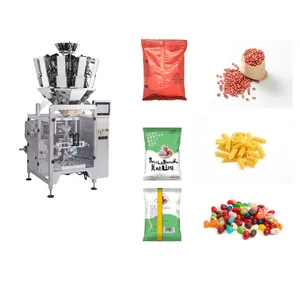
**[Vertical Form Fill Seal (VFFS) machines](/food-packaging-machines/)** create bags from a roll of flat film. The film is formed into a tube around a forming collar, the bottom is sealed, product is filled in, and the top is sealed to complete the package. VFFS is the workhorse of the small food manufacturer world because it handles a wide variety of products, uses affordable packaging materials, and comes in configurations ranging from semi-automatic benchtop units to high-speed automatic lines.
**Horizontal Form Fill Seal (HFFS) machines** are ideal for placing pre-formed pouches or flow-wrapped packages into rigid or semi-rigid containers. If you're packaging trail mix into cans or putting granola into boxes with sealed top lids, an HFFS might be your solution.
**Flow wrappers** seal products in a continuous film wrap—think candy bars, granola bars, or frozen meals. They excel at high-speed wrapping but require more changeover time when switching products.
**Rotary cup fillers and volumetric fillers** are purpose-built for liquids, pastes, and powders. They fill precise volumes at high speeds but lack the flexibility of VFFS or HFFS machines for product changeovers.
Ask yourself: What package format do my retail or foodservice customers require? Most grocery store shelf placements demand either a pillow-style bag (VFFS), a quad seal or flat bottom bag (VFFS with different forming collars), or a flow-wrapped package. Your machine must match the format your buyers expect.
---
## 3. Evaluate Production Volume Requirements {#section3}
Production volume is where many small manufacturers make expensive mistakes—usually by buying a machine designed for volumes far beyond what they actually need, or by under-buying and immediately hitting capacity walls.
**Calculate your actual volume needs** by working backward from your sales targets. If you're targeting 50,000 units per month and your machine runs at 60 units per minute, you need roughly 14 hours of production per month to hit that number. That sounds manageable until you factor in changeovers, cleaning cycles, and maintenance downtime.
**Match machine speed to realistic capacity**, not peak theoretical speed. A machine rated at 100 bags per minute might realistically produce 70–80 bags per minute in normal operation, accounting for film splicing, product refills, and minor stoppages. Always derate the theoretical speed by 20–30% when building your capacity model.
**Consider changeover frequency.** If you're running multiple SKUs with different bag sizes or formats, a machine with quick-changeover capability is worth its weight in gold. Look for machines with tool-free changeover systems, color-coded tooling, and separate temperature controls for different film types. The best changeover systems for small manufacturers can switch between two bag sizes in under 30 minutes.
**Plan for growth.** If you're projecting 30% year-over-year growth, buy a machine that can handle your projected volume in 18 months, not just today's numbers. Upgrading your packaging line six months after purchase is a costly mistake that compounds with downtime and installation costs.
---
## 4. Budget Beyond the Purchase Price {#section4}
The sticker price on a packaging machine is rarely the true cost of ownership. Savvy buyers budget for the full lifecycle cost of the equipment, which typically includes several categories often overlooked in the initial purchase decision.
**Packaging materials** represent the largest ongoing expense. VFFS film costs vary by material type, gauge, and print configuration. Multi-layer barrier films for products requiring extended shelf life can cost 3–5x more than basic polyethylene. Before buying a machine, confirm it can run the film grades your product requires and get quotes from at least three film suppliers.
**Installation and commissioning** costs are frequently underestimated. Does the machine price include installation? What about electrical hookup (480V three-phase vs. 240V single-phase)? Foundation requirements? Pneumatic air supply? A machine that seems like a bargain at $45,000 can cost another $10,000–$15,000 to install and commission.
**Training** is often bundled inadequately with the machine purchase. Ensure you get comprehensive operator and maintenance training—preferably on-site with your actual products, not just a demo with rice or plastic pellets. Budget for follow-up training sessions as you bring new operators on board.
**Preventive maintenance contracts** vary widely. Some manufacturers offer annual contracts covering parts, labor, and scheduled visits for $3,000–$8,000 per year on mid-range equipment. This is almost always cheaper than emergency repairs on critical production lines.
---
## 5. Prioritize Sanitation and Cleanability {#section5}
Food safety isn't optional, and your packaging equipment must meet the sanitation standards your customers and regulators expect. This goes beyond just having stainless steel surfaces—it's about the complete sanitation design of the machine.
**Stainless steel construction** is the baseline for food contact zones. Look for 304 stainless steel in product contact areas and 304 or 316 stainless in zones exposed to moisture or corrosive environments. Avoid machines with painted surfaces in areas where paint could chip and contaminate product.
**Ingress protection ratings** tell you how well the machine resists dust and moisture. For food production environments, look for machines with IP65 or higher ratings on electrical enclosures. This prevents moisture ingress that can cause electrical failures and creates harboring points for bacteria.
**Drainage and cleanability design** separates food-safe equipment from general industrial machinery. Look for:
- Sloped surfaces that prevent liquid pooling
- Drain holes in all sumps and bases
- Minimal horizontal surfaces where product can accumulate
- Easy disassembly for tool-free cleaning
- Smooth welds (not rough grinding marks) in product contact zones
**NSF or USDA acceptance** certifications provide third-party validation that the machine is designed for food processing environments. While not legally required for all food equipment, these certifications demonstrate the manufacturer has had its design reviewed by food safety experts.
---
## 6. Assess Footprint and Facility Constraints {#section6}
A machine that looks perfect on paper can become a nightmare if it doesn't fit in your facility or can't connect to your existing infrastructure. Before finalizing any machine selection, do a thorough site assessment.
**Measure your facility constraints first.** Get exact floor dimensions where the machine will sit, including clearance requirements for operator access, film roll changes, and product feeding. Most manufacturers recommend at least 36 inches of clearance on operator sides and 24 inches on non-operator sides. Check ceiling height—some larger VFFS machines with film unwind stands require 10+ feet of clear height.
**Electrical requirements** vary significantly between machines. Small semi-automatic VFFS machines might run on standard 240V single-phase power. High-speed automatic lines often require 480V three-phase power, which may require facility upgrades. Confirm your facility's electrical capacity before purchasing. Upgrading from single-phase to three-phase can cost $5,000–$20,000 depending on your utility provider and facility location.
**Compressed air consumption** is another common oversight. Many packaging machines use pneumatic actuators for sealing, cutting, and product handling. Confirm that your facility can supply the required CFM (cubic feet per minute) at the required PSI (pounds per square inch). A machine requiring 15 CFM at 90 PSI that your facility can only supply10 CFM at80 PSI will run poorly or not at all.
**Material handling infrastructure** includes your upstream and downstream equipment. How will product get from your mixer or processor to the packaging machine? What will happen to finished packages—do they go to a checkweigher, metal detector, case packer, or directly to a pallet? A well-designed line flows seamlessly; a poorly designed one creates bottlenecks that limit your overall throughput.
---
## 7. Plan for Service, Support, and Spare Parts {#section7}
Your packaging machine will break down eventually—it's a fact of manufacturing life. The quality of support you receive when that happens is often more important than the quality of the machine itself. A slightly more expensive machine from a manufacturer with excellent support often outperforms a cheaper machine with poor support.
**Response time commitments** should be in writing. Ask prospective suppliers: What is their typical response time for remote support? For on-site service? Do they have a 24/7 emergency hotline? For a small manufacturer running a single production line, a 48-hour response time for critical downtime can mean lost production that costs more than a year's worth of service contracts.
**Spare parts availability** is critical. Machines sit idle not because the problem is complex but because a $50 part isn't available. Ask suppliers:
- Do they stock common wear parts (sealing jaws, film rollers, sensors)?
- What is the typical lead time for non-stock parts?
- Do they offer emergency parts shipping?
**Technical documentation quality** varies enormously. A machine without clear documentation, electrical schematics, and troubleshooting guides is nearly impossible for your maintenance team to support independently. Request sample documentation as part of your evaluation process.
**Local service presence** matters for on-site support. Does the manufacturer have a service technician within200 miles of your facility? Do they work with third-party service providers? Some manufacturers sell globally but provide support only from distant locations—verify this before purchasing.
---
---
### Recommended Equipment
 ---
### Recommended Equipment
---
### Recommended Equipment
 ## Conclusion {#conclusion}
Choosing the right food packaging machine comes down to matching your specific product requirements, volume needs, and facility constraints to equipment that's built for your context. The seven factors outlined here—product characteristics, packaging format, volume requirements, total cost of ownership, sanitation design, facility fit, and support infrastructure—form the foundation of a sound purchasing decision.
No single machine is right for every small food manufacturer. A tortilla chip producer needs different equipment than a hot sauce bottler, and both need different solutions than a protein powder packager. Take the time to clearly define your requirements before engaging with suppliers, and you'll dramatically increase the odds of making an investment that serves your business for years to come.
**Ready to discuss your packaging requirements?** Our team at SPS specializes in helping small food manufacturers find the right equipment for their specific products and production volumes. [Request a quote](/request-quote/) today and let's explore the solutions that fit your operation.
---
## Related Products
- [VFFS Packaging Machines](/food-packaging-machines/) — Vertical form fill seal solutions for a wide range of food products
- [Semi-Automatic Packaging Equipment](/solutions/) — Ideal entry point for growing manufacturers
- [Complete Production Lines](/production-lines/) — End-to-end packaging line configurations
- [Automatic Packaging Lines](/food-packaging-machines/) — High-speed solutions for established production volumes
## Conclusion {#conclusion}
Choosing the right food packaging machine comes down to matching your specific product requirements, volume needs, and facility constraints to equipment that's built for your context. The seven factors outlined here—product characteristics, packaging format, volume requirements, total cost of ownership, sanitation design, facility fit, and support infrastructure—form the foundation of a sound purchasing decision.
No single machine is right for every small food manufacturer. A tortilla chip producer needs different equipment than a hot sauce bottler, and both need different solutions than a protein powder packager. Take the time to clearly define your requirements before engaging with suppliers, and you'll dramatically increase the odds of making an investment that serves your business for years to come.
**Ready to discuss your packaging requirements?** Our team at SPS specializes in helping small food manufacturers find the right equipment for their specific products and production volumes. [Request a quote](/request-quote/) today and let's explore the solutions that fit your operation.
---
## Related Products
- [VFFS Packaging Machines](/food-packaging-machines/) — Vertical form fill seal solutions for a wide range of food products
- [Semi-Automatic Packaging Equipment](/solutions/) — Ideal entry point for growing manufacturers
- [Complete Production Lines](/production-lines/) — End-to-end packaging line configurations
- [Automatic Packaging Lines](/food-packaging-machines/) — High-speed solutions for established production volumes
Vertical Form Fill Seal Machine
The most popular starting point — handles grains, powder, and snacks with minimal setup.
View Details →
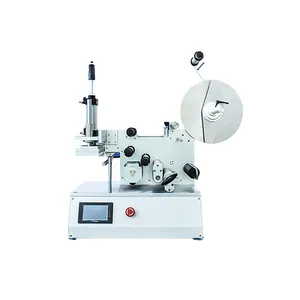
Automatic Round Bottle Wrap-Around Labeler
Automates labeling for round bottles and jars — a natural second investment after filling.
View Details →Need Packaging Equipment?
SPS helps small food manufacturers source reliable packaging equipment at factory prices.
Get a Free Quote →