
Grain & Cereal Packaging Automation: 2026 Scale-Up Guide for Small Producers
Walk through any natural foods co-op in 2026 and the grain aisle tells the story: heirloom polenta from a sixth-generation Nebraska farm, cold-rolled oats from a Vermont miller, ancient-grain blends from a two-person Oregon operation, stone-ground grits from a Carolina heritage farm, small-batch granola. Each needs packaging that protects freshness, displays clean labels, and runs on equipment that doesn't require a million-dollar warehouse lease.
That's the gap grain and cereal packaging automation fills. The right semi-automatic line lets a small miller run 15–50 retail units per minute, hit precise fill weights across radically different bulk densities, control dust, and meet FDA labeling plus FSMA preventive controls — on a working-producer budget.
This guide covers what small producers need, the equipment that solves real problems, and how to scale.

Why Grain & Cereal Packaging Is Hard
Grains look simple — pour, weigh, seal, label. Four distinct headaches make automated packaging genuinely difficult:
- Bulk density varies 10x. A 100g fill of puffed rice occupies roughly five times the volume of brown rice. A volumetric cup that works for oats under-fills buckwheat and over-fills fine flax. You need a multi-head weigher or linear net-weigh scale to hit weight targets without giving away free product.
- Dust is a worker-safety issue. Fine flour and rice dust create combustible atmospheres (OSHA 29 CFR 1910.272 applies at scale). A sealed VFFS with dust-extraction hood keeps particulate below permissible exposure limits.
- Abrasion destroys equipment. Whole grains are sharp and shred rubber seals in a season. Wetted parts need hardened tool steel, food-grade UHMW, or ceramic-coated contact surfaces.
- Insect infestation forces airtight seals. Indianmeal moths and grain weevils destroy a $40,000 pallet in a week. Bags must heat-seal completely — no pinholes, no zipper gaps. Rice and flour oxidize within weeks without oxygen-barrier film or nitrogen flushing.
Each problem has a known fix. The trick is putting them together on a line that costs less than a used delivery van.
Core Equipment Stack for a Grain & Cereal Line
Five to seven stations. Buy what you need today, add stations as SKUs and volumes grow.
1. Multi-Head Weigher (10- or 14-Head Combination Scale)
For SKUs varying more than 30% in bulk density (oats → quinoa → granola clusters), a 10-head combination weigher is the workhorse. Each head weighs a small portion, a microcontroller finds the combination summing to within ±0.5g of target, then dumps into the bag-forming tube below. Look for:
- Stainless 304 contact parts for food safety and corrosion resistance.
- Quick-change radial feeder trays for fast SKU changeovers.
- IP65 washdown-rated load cells so spilled cereal dust doesn't kill the scale head.
- Servo-driven radial feed for repeatable ±0.5g accuracy at 30+ discharges per minute.
A 14-head adds throughput above 40 units/min, but a tuned 10-head handles most small-producer volumes for 30–40% less capital.
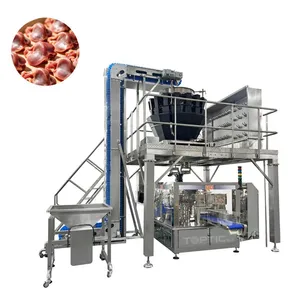
SPS-FPM2000 Multi-Head Weigher + VFFS System
10/14/16-head combination weigher with integrated VFFS for precision grain packaging. ±0.1g accuracy, 10–120 bags/min.
View Details →2. VFFS Bagger (Vertical Form Fill Seal)
The VFFS forms a bag from roll-stock film, fills, and seals in one continuous motion. For grains:
- Volumetric cup filler OR load-cell-mounted weighing bucket for stable-density products.
- Heat-sealable film capability — PE, PP, and laminates with EVOH oxygen barrier.
- Servo-driven film pull and jaw closure for accurate bag length and consistent seals.
- Nitrogen-flushing port for shelf-life extension.
VFFS machines dominate grain packaging because they're flexible — swap the forming collar and you're running pillow bags, gusseted stand-up pouches, or quad-seal boxes. For 500–2,000 units per shift, a semi-automatic VFFS hand-loaded by an operator is the sweet spot. See our VFFS bagger options and production lines catalog.
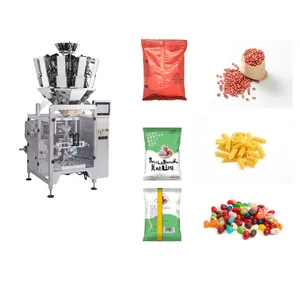
SPS-VFFS320 Vertical Form Fill Seal Machine
Flexible VFFS for pillow bags, gusseted pouches, and quad-seal boxes. Nitrogen-flush ready, servo-driven for consistent seals.
View Details →3. Nitrogen Flushing System
Rice turns rancid within 4–6 weeks once oxygen breaks down the oils. Whole-grain oats, granola, and trail mixes lose crispness when oxygen reaches them. A nitrogen-flushing system replaces 95%+ of oxygen in the bag headspace with food-grade N₂, extends shelf life 3–5x, prevents insect development, and costs $8,000–$15,000 as a VFFS bolt-on — paid back in 6 months on reduced returns.
4. Metal Detector and Checkweigher
Metal detection is non-negotiable — stones, staples from harvest equipment, and metal fragments from milling routinely enter the product stream. A horizontal reject conveyor drops contaminated bags automatically before they reach the case packer.
Checkweighing verifies label-weight compliance (FDA: 1% average negative tolerance, up to 2% on individual units). A checkweigher at line end catches drift in the multi-head weigher before it costs you a $20,000 recall.
5. Labeling and Case Packing (Phase 2)
Most producers hand-apply labels for the first 12 months. As throughput climbs, an automatic labeling machine — wraparound for cylindrical containers or top/bottom for pouches — eliminates label skew and speeds changeovers. Above 1,500 units per shift, a drop-in case packer collates bags into RSC or HSC cartons and pays for itself in under a year. Our turnkey packaging line solutions cover layout planning for grains and similar free-flowing products.
Sustainability: Compostable Films and Mono-Materials
PLA-laminated kraft pouches now run on standard VFFS machines with minor tension adjustments. They cost 25–40% more but small producers report 15–25% sales lift. Mono-material PE pouches carry How2Recycle "Store Drop-off" labels and run on existing VFFS with no modification. For foodservice, 5–25 lb bags on the same VFFS that runs 1 lb retail SKUs add high-margin refill revenue.
Food Safety: FSMA Preventive Controls
Grain and cereal producers selling across state lines fall under 21 CFR Part 117. Three equipment features matter:
- Sanitary construction — 304 or 316 stainless contact surfaces, no wood or painted metal in product zones.
- Allergen control — dedicated or color-coded change parts when milling wheat alongside oats. Wheat cross-contact is the #1 recall cause in the grain category.
- Pest-exclusion design — sealed bag closures plus IP65 electrical enclosures keep insects and rodents out.
PCQI certification for at least one staff member costs $1,500–$3,000 but unlocks retail distribution requiring GFSI-benchmarked audits (SQF, BRCGS, or FSSC 22000).
Layout, Footprint, and Throughput
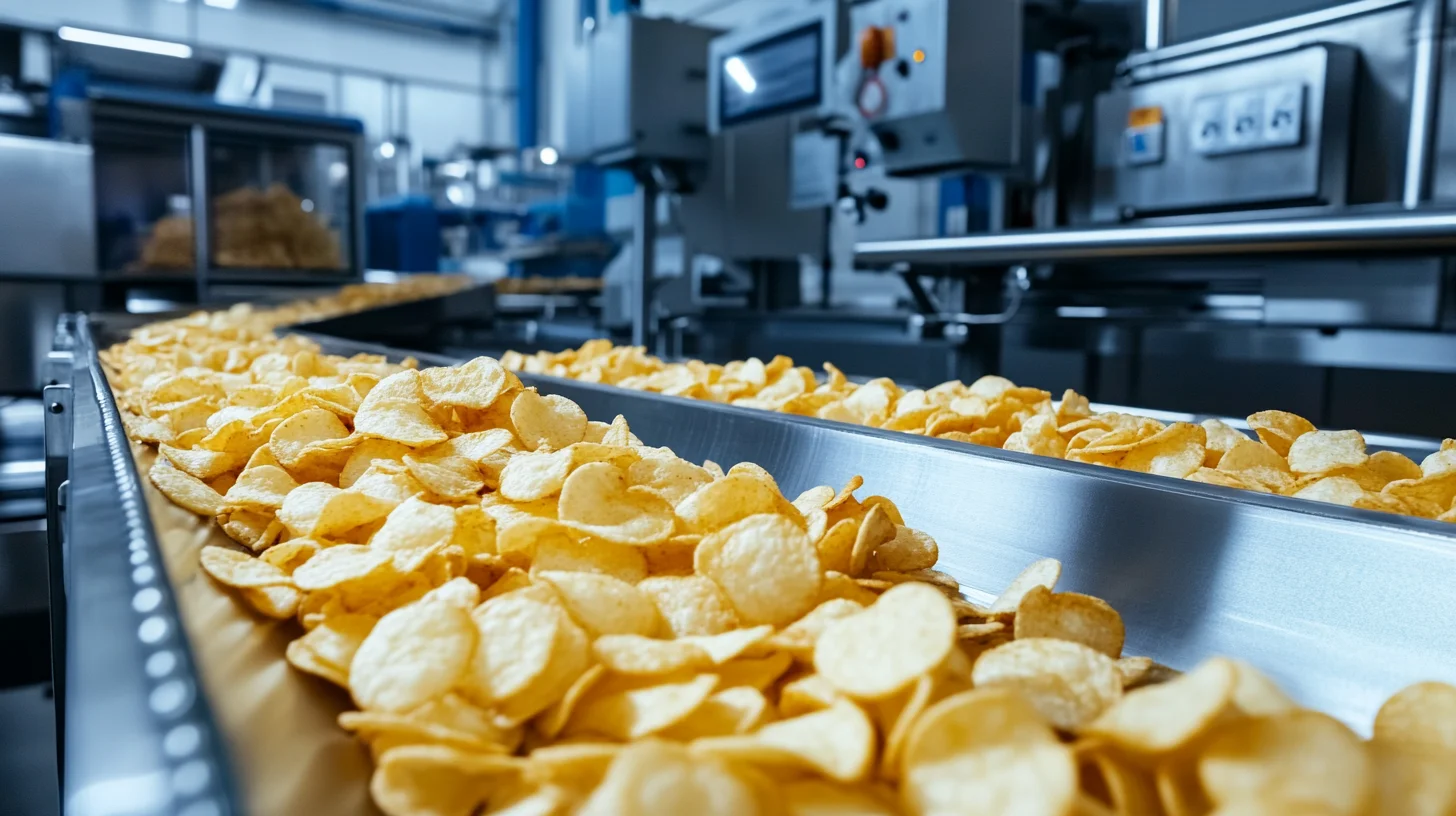
A semi-automatic line fits in 400–600 square feet with three operators: infeed hopper, multi-head weigher, VFFS bagger, nitrogen flush with metal detector, checkweigher, labeler with case packer, and palletizer. Throughput ranges from 8–15 units/min on a manual hand-load VFFS up to 25–40 units/min with a multi-head weigher, or 50–80 units/min on a fully automatic line with robotic palletizer.
Common Mistakes Small Grain Producers Make
Patterns repeat: using a volumetric cup for variable-density products, skipping the dust-collection hood, running the wrong heat-seal temperature, ignoring load-cell drift, and forgetting static electricity. Each costs money in giveaway, waste, or worker safety violations. A $4,000 hood pays back in 6 months, and anti-static ionizing bars at $400 solve static in 30 seconds.
Building the Right Line for Your Operation
Start with answerable constraints: your top SKU, bag format, volume at scale in 18 months, and distribution model. Once those are clear, most small producers land on a 10-head weigher paired with a semi-automatic VFFS, nitrogen flushing, and an integrated metal detector.
SPS helps small grain and cereal producers source reliable packaging equipment at factory prices — multi-head weighers, VFFS baggers, nitrogen-flush systems, checkweighers, and metal detectors, with engineering support for line layout, integration, and FSMA documentation.
Request a Free Quote — send us your top SKU, target throughput, and bag format, and we'll spec a line that scales with you.
Need Packaging Equipment?
SPS helps small food manufacturers source reliable packaging equipment at factory prices.
Get a Free Quote →