
---
title: "Packaging Machine for Grains & Cereals: Semi-Auto Solutions for Small Millers & Producers"
description: "Learn how small millers and grain producers can automate packaging with semi-automatic granule filling and VFFS machines that improve accuracy, reduce waste, and scale production."
category: Industry Insights
date: 2026-06-20
tags:
- grain packaging
- cereal packaging machine
- granule filling
- small miller equipment
- semi-auto packaging
- food packaging
---
# Packaging Machine for Grains & Cereals: Semi-Auto Solutions for Small Millers & Producers
The American grain and cereal industry is undergoing a renaissance. Consumer demand for whole grains, specialty flours, ancient grains, and artisan cereals has created a thriving market for small millers and producers. From stone-ground wheat flour in Vermont to stone-milled cornmeal in the Carolinas, small-scale grain producers are finding eager customers who value quality, locality, and transparency.
But packaging grains and cereals comes with its own set of challenges. These products are dusty, abrasive, and prone to settling — characteristics that wreak havoc on packaging equipment not designed for the task. They require precise weight control to meet net weight regulations, and they must be packaged in formats that protect against moisture, pests, and contamination while presenting a clean, professional appearance on the shelf.
For small millers producing between 5,000 and 50,000 units per month, semi-automatic packaging equipment offers the ideal balance of efficiency, accuracy, and affordability. This guide covers the key considerations, equipment options, and strategies for grain and cereal packaging automation.
## Table of Contents
- [The Specific Challenges of Packaging Grains and Cereals](#section1)
- [Popular Packaging Formats for Grain Products](#section2)
- [Granule Filling Technology: Precision for Dusty Products](#section3)
- [Vertical Form-Fill-Seal for High-Volume Grain Packaging](#section4)
- [Cost Comparison: Manual vs. Semi-Auto for Grain Operations](#section5)
- [Designing a Grain Packaging Line for Growth](#section6)
## The Specific Challenges of Packaging Grains and Cereals {#section1}
Grain and cereal products introduce several packaging challenges that distinguish them from other food categories:
### Dust and Abrasion
Milling produces fine particles — flour dust, bran dust, and starch residue — that settle on every surface in the packaging area. This dust can:
- **Clog filling nozzles and mechanisms**: Flour and fine grain dust accumulate on filling equipment, gradually restricting flow and causing inconsistent fills
- **Interfere with seals**: Dust particles on sealing surfaces prevent hermetic seals, compromising package integrity and shelf life
- **Create airborne hazards**: In high concentrations, grain dust is combustible and poses explosion risks (OSHA and NFPA regulations apply)
- **Accelerate equipment wear**: The abrasive nature of grain particles wears seals, bearings, and contact surfaces faster than with non-abrasive products
Equipment designed for grain packaging must include dust management features — such as dust collection ports, sealed bearings, and easy-clean filling nozzles — to operate reliably in these environments.
### Product Settling
Grains and cereals settle under their own weight after filling. A bag filled to the top during filling may appear half-full after the product settles during shipping and storage. This settling creates two problems:
- **Consumer perception**: A partially filled bag looks like short-weighted product, even if the net weight is correct
- **Headspace management**: Excessive headspace at the top of the bag can trap air, reducing shelf life for products sensitive to oxidation
Producers must account for settling by either overfilling slightly (wasting product) or using vibration tables to pre-settle product before final weighing and sealing.
### Moisture Sensitivity
Many grain products — especially whole grains, rolled oats, and granola — are hygroscopic, meaning they absorb moisture from the environment. Packaging must provide an effective moisture barrier, and the packaging process itself should minimize product exposure to ambient humidity. This is particularly critical in humid climates or during summer months.
### Weight Accuracy Requirements
The FDA's Fair Packaging and Labeling Act requires that the average weight of packages in a production run meet the declared weight, with specific tolerances for underfilled packages. For a 2 lb bag of flour, the average weight across the production run must be at least 2 lb, and no more than a defined percentage of packages can be below the stated weight minus the allowable tolerance.
Precision filling is essential for compliance, and imprecise filling forces producers to overfill every bag to stay within legal limits — a costly practice that semi-automatic equipment can dramatically reduce.
## Popular Packaging Formats for Grain Products {#section2}
The grain and cereal industry uses several dominant packaging formats:
### Pillow Bags
Pillow bags are the most common format for grain products, from small 1 lb bags of specialty flour to 5 lb bags of whole wheat. They're economical, easy to form from roll stock, and provide good protection when produced with appropriate barrier films. Pillow bags are ideal for:
- Specialty flours and baking mixes
- Whole grains and ancient grains
- Granola and muesli
- Cereal products
### Stand-Up Pouches
Stand-up pouches offer better shelf presence than pillow bags and are increasingly popular for premium grain products. The resealable zipper closure is particularly valuable for granola, oats, and cereal products that consumers open and re-close multiple times.
### Flat-Bottom Bags
Flat-bottom bags provide the highest level of shelf presence for premium grain products. Their self-standing shape and large printable surfaces make them ideal for artisan flours, specialty cereals, and high-end granola brands targeting premium retail channels.
### Paper Bags
Traditional paper bags remain common for flour and cornmeal products, particularly in farmers market and direct-to-consumer sales. However, paper provides limited moisture protection and is increasingly being replaced by laminated film options that combine the look of paper with the barrier performance of plastic.
## Granule Filling Technology: Precision for Dusty Products {#section3}
Granule filling machines are the workhorses of grain and cereal packaging. These machines are specifically designed to handle the challenges of particulate products:
### How Granule Filling Works
Granule filling machines typically use one of two approaches:
- **Volumetric filling**: Product is dispensed into measured cups or chambers of a fixed volume. This approach is fast and simple but doesn't account for density variations. For products with consistent density (like polished rice), volumetric filling works well.
- **Weight-based filling**: Product is dispensed onto a scale until the target weight is reached. This approach is more accurate but slower than volumetric filling. For products with variable density (like flour, which can compress differently depending on humidity), weight-based filling is preferred.
### Advantages for Grain Packaging
Modern granule filling machines designed for grain products include several features that address the unique challenges of this category:
- **Anti-dust design**: Sealed filling zones, dust extraction ports, and smooth internal surfaces minimize dust accumulation
- **Vibration-assisted settling**: Built-in vibration plates help settle product during filling for more accurate fills and better package appearance
- **Easy-clean construction**: Stainless steel contact surfaces with quick-release mechanisms for rapid cleaning between products
- **Variable fill speeds**: Adjustable filling rates to accommodate different product types — slower for dusty products, faster for free-flowing grains
### Precision and Throughput
A quality granule filling machine for grain packaging delivers fill accuracy of ±1–2% of target weight and throughput of 10–30 fills per minute, depending on the target weight and product characteristics. For a small mill producing 15,000 bags per month, this throughput is more than sufficient.
## Vertical Form-Fill-Seal for High-Volume Grain Packaging {#section4}
For small millers producing beyond 10,000 units per month, a vertical form-fill-seal (VFFS) machine offers significant advantages over manual or semi-auto bagging:
### How VFFS Works
A VFFS machine forms bags from a continuous roll of film, fills them with product, and seals them — all in a single vertical operation. The film is formed into a tube around a forming collar, sealed along the back edge, filled with product, and then sealed across the bottom and top to create an individual bag.
### Why VFFS Is Ideal for Grains
VFFS machines are particularly well-suited for grain and cereal packaging because:
- **High throughput**: VFFS machines can produce 20–60 bags per minute, depending on bag size and product characteristics — far exceeding manual packaging rates
- **Consistent bag formation**: Machine-formed bags have uniform dimensions, consistent seal quality, and professional appearance
- **Integrated date coding**: Most VFFS systems include provisions for inline date coding, lot numbering, and barcode printing
- **Reduced labor**: A single operator can manage a VFFS machine producing thousands of bags per hour
- **Lower per-unit packaging cost**: Forming bags from roll stock is significantly cheaper per unit than using pre-made bags
### Pairing VFFS with Multi-Head Weighing
For the highest accuracy and throughput, VFFS machines can be paired with multi-head weighers. The multi-head weigher precisely portions the product, and the VFFS machine forms the bag and fills it in one coordinated operation. This combination is the industry standard for high-volume grain packaging, delivering accuracy of ±0.5–1% at throughputs of 30–120 bags per minute.
While the combined system represents a higher initial investment ($40,000–$80,000), the ROI for producers packaging more than 20,000 units per month is compelling — typically achieving payback within 18–24 months through labor savings, product reduction, and increased throughput.
## Cost Comparison: Manual vs. Semi-Auto for Grain Operations {#section5}
Understanding the financial impact helps small millers make informed equipment decisions:
### Scenario: 20,000 Units/Month of Flour Packaging (2 lb bags)
**Manual packaging operation:**
- 4 operators, 6 hours/day: $52,800/year labor
- 3.5% product giveaway at $0.60/lb: $10,080/year
- 2.5% rejection from inconsistent seals: $7,200/year
- Equipment maintenance (sealers, scales): $2,000/year
- **Total: $72,080/year**
**Semi-auto operation (granule filler + VFFS):**
- 1 operator: $23,100/year labor
- 0.8% product giveaway: $2,304/year
- 0.3% rejection rate: $864/year
- Machine depreciation (5 years, $30,000): $6,000/year
- Maintenance and consumables: $2,500/year
- **Total: $34,768/year**
**Annual savings: $37,312** — equipment payback in approximately 10 months.
### Beyond Direct Savings
The direct cost savings are significant, but the indirect benefits are equally important:
- **Scalability**: Semi-auto equipment allows you to accept larger orders without proportional increases in labor
- **Consistency**: Machine-packaged products earn repeat orders from retail buyers who demand uniform presentation
- **Professional image**: Consistent, well-sealed packages build consumer trust and brand loyalty
- **Regulatory compliance**: Documented, consistent fill weights simplify FDA compliance
## Designing a Grain Packaging Line for Growth {#section6}
The most successful small millers think of their packaging operation as a system, not a collection of individual machines. Here's how to design a packaging line that grows with your business:
### Starting Simple
Begin with a semi-automatic granule filling machine and a tabletop sealer. This combination costs $8,000–$15,000 and handles production volumes up to 8,000 units per month. It's the ideal starting point for new or small operations.
### Step 2: Add a VFFS Machine
When your volume exceeds 10,000 units per month, upgrade to a VFFS machine that integrates with your granule filler. This adds automatic bag forming and sealing, dramatically increasing throughput while reducing labor.
### Step 3: Add Ancillary Equipment
As your line matures, add supporting equipment that improves efficiency and quality:
- **Checkweighers**: Automatically reject underfilled or overfilled packages
- **Metal detectors**: Meet retailer requirements for product safety
- **Date coders**: Add lot numbers, best-by dates, and barcodes inline
- **Conveyors**: Move bags between stations efficiently
- **Case packers**: Automate the packing of finished bags into shipping cases
### Facility Planning
Key facility considerations for a grain packaging line include:
- **Dust control**: Install dust collection systems to maintain air quality and prevent explosion hazards
- **Floor space**: Plan for 20–40 feet of linear space for a complete semi-auto line
- **Utilities**: Most VFFS machines require 220V/3-phase power and compressed air (80–100 PSI)
- **Product flow**: Design the layout so bulk product flows from storage through filling to finished goods without crossing paths
- **Climate control**: Maintain consistent temperature and humidity to product fill weight accuracy
---
### Recommended Equipment
 ## Conclusion
Grain and cereal packaging demands equipment that can handle the unique challenges of dusty, abrasive, and variable products while delivering the precision and consistency that retail buyers and consumers expect. Semi-automatic granule filling machines and VFFS systems provide small millers with the tools to compete effectively — reducing labor costs, eliminating product giveaway, and producing professional, shelf-ready packages.
The financial case is clear: most small grain producers achieve full equipment payback within 10–14 months through direct cost savings, with the additional benefit of increased production capacity that enables business growth. The transition from manual to semi-automatic packaging is often the single most impactful operational improvement a small mill can make.
At SPS Packaging, we understand the unique requirements of grain and cereal packaging. Our team works with small millers across the country to design packaging solutions that handle dusty products reliably, deliver consistent fill accuracy, and grow with your business.
**Ready to modernize your grain packaging operation?** [Request a free quote](/request-quote/) and let our packaging specialists design a solution tailored to your mill's needs.
---
## Related Resources
- [Food Packaging Machines](/food-packaging-machines/) — Explore our complete range of granule filling and form-fill-seal equipment
- [Labeling Machines](/labeling-machines/) — Add professional labels, nutrition facts, and branding to your grain packages
- [Production Lines](/production-lines/) — Design integrated packaging lines for growing milling operations
- [Solutions by Industry](/solutions/) — Discover packaging solutions tailored to grains, cereals, and other food sectors
## Conclusion
Grain and cereal packaging demands equipment that can handle the unique challenges of dusty, abrasive, and variable products while delivering the precision and consistency that retail buyers and consumers expect. Semi-automatic granule filling machines and VFFS systems provide small millers with the tools to compete effectively — reducing labor costs, eliminating product giveaway, and producing professional, shelf-ready packages.
The financial case is clear: most small grain producers achieve full equipment payback within 10–14 months through direct cost savings, with the additional benefit of increased production capacity that enables business growth. The transition from manual to semi-automatic packaging is often the single most impactful operational improvement a small mill can make.
At SPS Packaging, we understand the unique requirements of grain and cereal packaging. Our team works with small millers across the country to design packaging solutions that handle dusty products reliably, deliver consistent fill accuracy, and grow with your business.
**Ready to modernize your grain packaging operation?** [Request a free quote](/request-quote/) and let our packaging specialists design a solution tailored to your mill's needs.
---
## Related Resources
- [Food Packaging Machines](/food-packaging-machines/) — Explore our complete range of granule filling and form-fill-seal equipment
- [Labeling Machines](/labeling-machines/) — Add professional labels, nutrition facts, and branding to your grain packages
- [Production Lines](/production-lines/) — Design integrated packaging lines for growing milling operations
- [Solutions by Industry](/solutions/) — Discover packaging solutions tailored to grains, cereals, and other food sectors
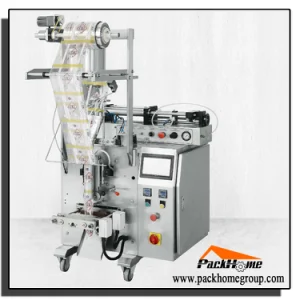
Granule Filling Machine
Purpose-built for dusty, particulate products like flour, grains, and cereals, with anti-clog design, precision weighing, and easy-clean construction for reliable daily operation.
View Details →
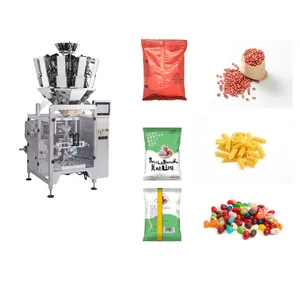
Vertical Form Fill Seal Machine
Form, fill, and seal grain and cereal bags from roll stock in one continuous operation, delivering high throughput with consistent bag quality and professional presentation.
View Details →Need Packaging Equipment?
SPS helps small food manufacturers source reliable packaging equipment at factory prices.
Get a Free Quote →