
# Food Packaging Industry Trends 2026: What Small Manufacturers Should Know
The food packaging industry never stands still. Consumer preferences shift, retailers update their requirements, new regulations come into force, and the equipment that served you well five years ago may be leaving money on the table today. For small food manufacturers, staying current on these trends isn't optional — it's the difference between growing with the market and falling behind competitors who moved first.
The trends shaping 2026 aren't a complete break from the past. Rather, they're an acceleration of forces that have been building for years: sustainability, automation, supply chain resilience, and digital integration. What makes 2026 different is the convergence of these forces into practical, deployable solutions that small manufacturers can actually adopt.
This guide walks through the most important trends and what they mean for your packaging operation — without the hype, with a focus on what's actionable for a small food manufacturer with limited capital and a small team.
## Table of Contents
1. [Sustainability Moves From Marketing to Operations](#section1)
2. [Automation Reaches the Small Manufacturer](#section2)
3. [The Reshoring and Supply Chain Resilience Wave](#section3)
4. [Smart Packaging and Digital Integration](#section4)
5. [Packaging Format Shifts: Stand-Up Pouches, Mono-Materials, and Beyond](#section5)
6. [Labor Constraints Drive Equipment Investment](#section6)
7. [Regulatory Tightening: Traceability and Labeling](#section7)
8. [Practical Priorities for 2026](#section8)
9. [Conclusion](#conclusion)
---
## 1. Sustainability Moves From Marketing to Operations {#section1}
Sustainability has been a buzzword in food packaging for years, but 2026 is the year it becomes a hard operational requirement for most small manufacturers. Three forces are driving this shift: retailer mandates, state-level regulations, and consumer willingness to pay.
**Retailer mandates** are now standard at the major chains. Walmart's Project Gigaton, Target's sustainability goals, and similar programs at Kroger, Costco, and Albertsons require suppliers to demonstrate packaging sustainability improvements. The requirements vary, but the common threads are reduced plastic use, increased recycled content, and design-for-recyclability certifications. If you supply any of these retailers — directly or through a distributor — your packaging will be evaluated against these standards.
**State-level regulations** are creating a patchwork of requirements that small manufacturers must navigate. California's SB 54 requires all packaging sold in the state to be recyclable or compostable by 2032. New York, Washington, Oregon, and Maine have similar regulations. While these requirements phase in over years, the design decisions you make in 2026 will determine whether your packaging complies in 2030.
**Consumer willingness to pay** for sustainable packaging has stabilized. A 2024 McKinsey survey found 65% of US consumers consider sustainability when making food purchases, and 30% report they will pay 5%+ more for products with demonstrably sustainable packaging. That's not a marketing opportunity to ignore.
**What this means for your packaging line:** Plan for film substrate changes in the next 18–24 months. Multi-layer barrier films (the workhorse of VFFS packaging) are increasingly under pressure to be replaced by mono-material films that are easier to recycle. Your VFFS machine may need adjustment to run the new film structures well — the seal temperatures, forming collar geometry, and tension control all may need re-tuning.
---
## 2. Automation Reaches the Small Manufacturer {#section2}
For decades, automation in food packaging was the domain of large manufacturers. The equipment was too expensive, too complex, and required too much technical support for small operations to justify. That has fundamentally changed in the past five years, and 2026 is the inflection point where automation becomes economically attractive for nearly every small manufacturer.
**The cost of equipment has dropped.** A VFFS machine that cost $80,000 in 2010 can be purchased for $30,000–$50,000 today, with better performance. Multi-head weighers have followed the same trajectory. The total cost of a complete automated packaging line has fallen roughly 40% in the past decade.
**The cost of labor has risen.** US food manufacturing wages have grown 25–35% over the past five years, depending on the region. At $20+/hour fully loaded, hand-packaging operations are increasingly uneconomical. The labor savings of automation now payback equipment investments in 6–18 months for most operations.
**The technology has become easier to use.** Modern packaging equipment features touchscreen controls, recipe-based changeovers, and remote diagnostics. The level of technical skill required to operate a VFFS line has dropped dramatically. A motivated operator can learn to run a modern packaging line in 1–2 weeks of training.
**The financing options have expanded.** Equipment leasing, equipment financing, and even equipment-as-a-service models have made automation accessible to small manufacturers who couldn't afford the upfront capital expenditure. Monthly payments on a leased VFFS line are often less than the labor cost it replaces.
**What this means for your packaging line:** If you haven't automated your primary packaging within the past three years, you're likely leaving significant money on the table. The 2026 market offers better equipment at lower prices, with easier operation and more flexible financing than at any point in history. This is the year to make the move if you've been on the fence.
---
## 3. The Reshoring and Supply Chain Resilience Wave {#section3}
The pandemic-era supply chain disruptions taught every food manufacturer a hard lesson: just-in-time inventory and globalized supply chains are vulnerable to shocks. The 2024–2025 geopolitical tensions and trade policy changes have reinforced that lesson. The 2026 trend is the continuation of reshoring and supply chain resilience investments.
**Reshoring is creating new opportunities for small US food manufacturers.** Major retailers are actively seeking US-based suppliers for products they previously imported. The "Made in USA" label has marketing value that has grown 20–30% in consumer surveys over the past three years. Small manufacturers positioned to serve these reshored supply chains are finding new customers that wouldn't have been accessible five years ago.
**Supply chain resilience means investing in flexibility.** Equipment that can be reconfigured for multiple products, packaging formats that can be adjusted without long lead times, and supplier relationships that provide backup options are all part of the resilience playbook. For small manufacturers, this often means investing in flexible equipment that supports product diversification.
**Regional distribution models** are replacing the centralized national distribution that dominated the 2010s. Small manufacturers with regional production footprints can serve these regional models more efficiently than national producers shipping from a single location.
**What this means for your packaging line:** Evaluate your equipment for flexibility. Can your VFFS machine switch between bag sizes in under 30 minutes? Can your line handle multiple product types without major changeovers? If not, equipment upgrades that improve flexibility often have strong ROI even without considering the supply chain resilience benefits.
---
## 4. Smart Packaging and Digital Integration {#section4}
"Smart packaging" was a buzzword for most of the past decade, but 2026 is the year the technology becomes practical and affordable for small food manufacturers. The key enabler is the maturation of IoT, cloud computing, and data analytics in industrial settings.
**Connected equipment** is now standard on new packaging machines. VFFS machines, multi-head weighers, and labeling machines from major manufacturers all ship with built-in networking, cloud connectivity, and remote monitoring capabilities. The data these machines generate — uptime, throughput, error rates, changeover frequency, energy consumption — is valuable for continuous improvement.
**OEE (Overall Equipment Effectiveness) dashboards** are now available at modest cost. By collecting data from your packaging line equipment, you can see real-time OEE, identify bottlenecks, and quantify the impact of process changes. Small manufacturers using OEE dashboards typically improve line effectiveness by 10–20% within the first year of implementation.
**Predictive maintenance** is moving from theory to practice. Sensors on critical components (load cells, servo motors, sealing jaws) collect vibration, temperature, and performance data. Machine learning algorithms identify patterns that precede failures, allowing maintenance to be scheduled before the failure occurs. The cost of unplanned downtime for a packaging line is $5,000–$20,000 per hour, depending on the product — so even modest improvements in uptime have significant ROI.
**Traceability and serialization** are being driven by both retailer requirements and regulatory mandates. The FDA's Food Traceability Rule, which becomes enforceable in 2027 for most producers, requires lot-level traceability for many high-risk foods. Equipment that captures and stores lot-level data automatically is becoming a competitive advantage.
**What this means for your packaging line:** When purchasing new equipment, prioritize machines with built-in connectivity and data export capabilities. The marginal cost is small, and the data infrastructure pays for itself through improved OEE, better maintenance planning, and easier regulatory compliance. Even if you don't use the data immediately, having it available for future use is increasingly valuable.
---
## 5. Packaging Format Shifts: Stand-Up Pouches, Mono-Materials, and Beyond {#section5}
The formats consumers expect to see on retail shelves continue to evolve. Three format trends are worth watching in 2026.
**Stand-up pouches** continue to take share from rigid packaging (bottles, jars, cans) in categories where they weren't previously dominant. Sauces, condiments, dry beverages, and even some frozen products are moving to stand-up pouches with reclosable features. The shelf presence is strong, the shipping economics are favorable, and consumers prefer the lighter weight.
**Mono-material films** are the response to sustainability mandates. The traditional multi-layer barrier films used in VFFS packaging combine different plastic resins (PET, PE, EVOH, etc.) to achieve barrier properties, but these combinations are difficult to recycle. Mono-material films (typically all-PE or all-PP structures) are recyclable but historically couldn't match the barrier properties of multi-layer films. New technology in 2026 has closed much of that gap, making mono-material films viable for a wider range of products.
**Recyclable paper-based packaging** is making inroads in dry products. Paper pouches with thin plastic or bio-based liners are increasingly seen in coffee, tea, snack, and dry mix categories. The challenges remain: moisture sensitivity, lower barrier properties, and higher cost. But for products that don't require long shelf life or extreme barrier performance, paper-based options are now feasible.
**What this means for your packaging line:** Format flexibility is becoming more important than ever. A VFFS machine that can run traditional multi-layer films today and switch to mono-material films in two years — without major hardware changes — protects your investment. If you're buying new equipment, prioritize machines with this kind of flexibility.
---
## 6. Labor Constraints Drive Equipment Investment {#section6}
The US food manufacturing industry faces a labor shortage that has worsened each year since 2020. The Bureau of Labor Statistics reports that food manufacturing job openings have outnumbered hires consistently for the past four years. Small manufacturers, with less to offer in wages and benefits than large companies, are particularly affected.
**The labor shortage is structural, not cyclical.** Younger workers are choosing other industries, immigration has tightened, and the physical demands of food manufacturing work make retention difficult. There's no policy solution in sight that will reverse the trend in the next 3–5 years.
**Equipment is the only scalable solution.** No amount of wage increases, benefits improvements, or recruiting efforts will solve the labor problem for most small food manufacturers. The only reliable solution is to reduce dependence on labor through automation.
**The economics of automation have flipped.** Five years ago, the labor savings of automation were often less than the equipment cost. Today, the opposite is true for most operations. The labor shortage has driven wages up, while equipment costs have continued to fall. Automation is increasingly the lowest-cost option, not just the most convenient one.
**What this means for your packaging line:** If you've been waiting for labor costs to come down or for hiring to become easier, you should reset your expectations. Equipment investment is no longer optional for small food manufacturers — it's the only sustainable way to operate. The question isn't whether to automate, but which processes to automate first.
---
## 7. Regulatory Tightening: Traceability and Labeling {#section7}
Several regulatory changes are taking effect or being implemented in 2026–2027 that will affect small food manufacturers.
**FDA Food Traceability Rule (compliance January 2026 for most producers):** The rule requires lot-level traceability for many high-risk foods, including leafy greens, melons, peppers, sprouts, finfish, crustaceans, mollusks, ready-to-eat salads, cheeses, eggs, nut butters, and other categories. The rule requires you to track Critical Tracking Events (CTEs) and maintain Key Data Elements (KDEs) at each point in the supply chain. For packaging operations, this means your equipment must generate and store lot-level data automatically.
**FDA Nutrition Facts label updates:** The "healthy" claim definition was updated in 2024, and the implementation period is phasing in through 2027. If your products carry a "healthy" claim, review the new criteria and update your labels accordingly. The changes affect both the food formulation (in some cases) and the label artwork.
**State-level packaging regulations** continue to expand. California, New York, Washington, Oregon, Maine, and other states have passed or are considering extended producer responsibility (EPR) laws, recycled content mandates, and packaging bans. If you sell into multiple states, you need a regulatory matrix tracking each state's requirements.
**Front-of-pack labeling requirements** are emerging in some markets. While no federal FOP labeling rule exists yet, several state and industry initiatives are pushing for warning labels on products with high sodium, sugar, or saturated fat content. The trend is toward more prominent disclosure.
**What this means for your packaging line:** Equipment that captures lot-level data automatically (vision systems, code dating, serialization) is moving from "nice to have" to "compliance required." Labeling equipment that supports rapid label changes (for regulatory updates) is also increasingly valuable. Plan for regulatory-driven equipment upgrades in your 2026 capital planning.
---
## 8. Practical Priorities for 2026 {#section8}
Given all the trends above, what should a small food manufacturer actually do in 2026? Here's a practical prioritization:
**Priority 1: Evaluate your primary packaging line for ROI.** If you're still hand-packaging or running equipment more than 7 years old, build a comprehensive ROI analysis. The payback periods are now short enough that waiting another year costs you more than the equipment investment.
**Priority 2: Audit your film substrates for sustainability compliance.** Contact your film supplier and ask about recyclable and mono-material options for your product. Most major film suppliers now have at least one recyclable option for each product category. Start testing these options in 2026.
**Priority 3: Build a traceability data strategy.** Whether or not your specific product is on the FDA's traceability list, lot-level data is becoming a baseline expectation. If your current equipment doesn't capture this data automatically, plan for upgrades.
**Priority 4: Invest in operator training and cross-training.** Even with automation, you need skilled operators to run and maintain the equipment. With labor markets tight, retaining and developing your existing team is one of the highest-ROI investments you can make.
**Priority 5: Plan for equipment financing or leasing.** If capital is the constraint preventing equipment investment, explore financing options. Monthly payments on leased equipment are typically less than the labor savings, so the investment pays for itself even before considering productivity gains.
---
---
### Recommended Equipment
 ---
### Recommended Equipment
---
### Recommended Equipment
 ## Conclusion {#conclusion}
The food packaging industry trends shaping 2026 are real, but they don't require a complete operational overhaul. The most important moves are: (1) evaluate your primary packaging line for automation opportunities while labor is tight and equipment is affordable; (2) audit your film substrates for sustainability compliance before retailer mandates force your hand; and (3) build lot-level data capture into your packaging operations to prepare for traceability regulations.
These three priorities, pursued in parallel, position your business for the next 3–5 years of industry evolution without requiring massive capital outlays or operational disruption. The manufacturers who move first on these trends tend to capture disproportionate share as the trends become standard.
**Want to evaluate how these trends apply to your specific operation?** SPS can help you assess your current packaging line against the trends above and identify the highest-ROI upgrades for 2026. [Request a quote](/request-quote/) and our team will discuss your specific situation.
---
## Related Products
- [Labeling Machines](/labeling-machines/) — Smart labeling for evolving packaging formats
- [Industry Solutions](/solutions/) — Trend-aligned packaging solutions by product category
- [VFFS Packaging Machines](/food-packaging-machines/vffs-machines/) — Modern equipment for film format flexibility and sustainability
- [Multi-Head Weigher + VFFS System](/food-packaging-machines/multihead-weighers/multi-head-weigher-vffs-system/) — Precision weighing with full lot code traceability
- [Production Lines](/production-lines/) — Complete line configurations for 2026 operational requirements
## Conclusion {#conclusion}
The food packaging industry trends shaping 2026 are real, but they don't require a complete operational overhaul. The most important moves are: (1) evaluate your primary packaging line for automation opportunities while labor is tight and equipment is affordable; (2) audit your film substrates for sustainability compliance before retailer mandates force your hand; and (3) build lot-level data capture into your packaging operations to prepare for traceability regulations.
These three priorities, pursued in parallel, position your business for the next 3–5 years of industry evolution without requiring massive capital outlays or operational disruption. The manufacturers who move first on these trends tend to capture disproportionate share as the trends become standard.
**Want to evaluate how these trends apply to your specific operation?** SPS can help you assess your current packaging line against the trends above and identify the highest-ROI upgrades for 2026. [Request a quote](/request-quote/) and our team will discuss your specific situation.
---
## Related Products
- [Labeling Machines](/labeling-machines/) — Smart labeling for evolving packaging formats
- [Industry Solutions](/solutions/) — Trend-aligned packaging solutions by product category
- [VFFS Packaging Machines](/food-packaging-machines/vffs-machines/) — Modern equipment for film format flexibility and sustainability
- [Multi-Head Weigher + VFFS System](/food-packaging-machines/multihead-weighers/multi-head-weigher-vffs-system/) — Precision weighing with full lot code traceability
- [Production Lines](/production-lines/) — Complete line configurations for 2026 operational requirements
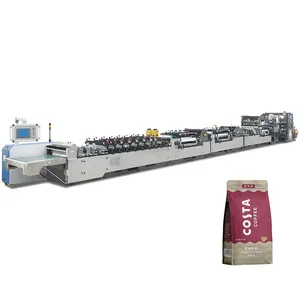
Flat-Bottom Bag Packaging Machine
Flat-bottom bags are the fastest-growing format — premium shelf presence for coffee and snacks.
View Details →
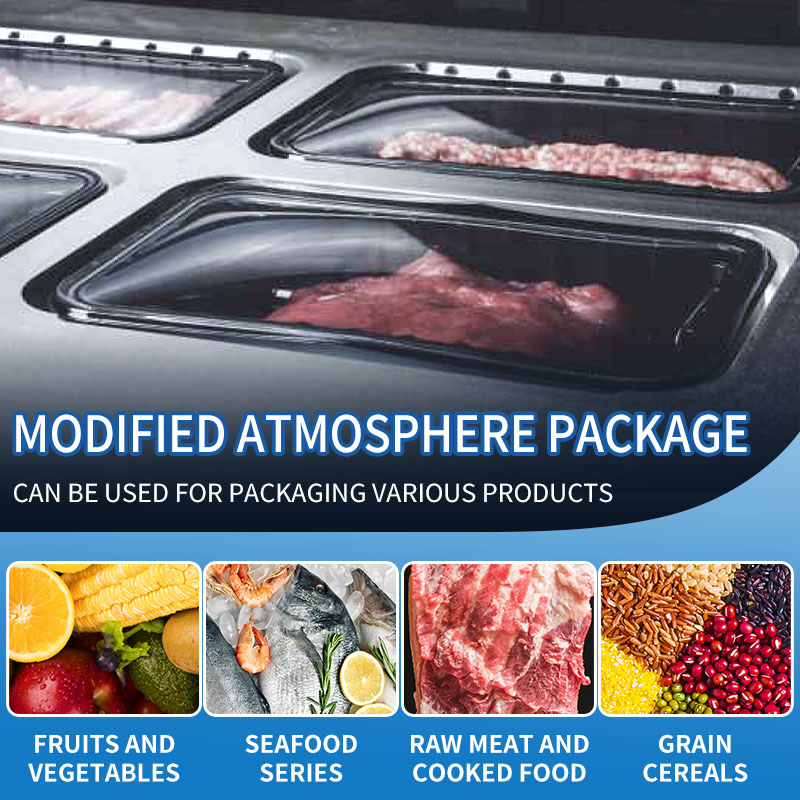
YH-320Q Airflow Nitrogen Filling MAP Packaging Machine
MAP packaging with nitrogen flush — extends shelf life without preservatives.
View Details →Need Packaging Equipment?
SPS helps small food manufacturers source reliable packaging equipment at factory prices.
Get a Free Quote →