
# FDA Compliance Guide for Food Packaging Equipment
If you package food in the United States — even at small volumes — FDA compliance isn't optional. The U.S. Food and Drug Administration enforces a complex web of regulations covering everything from the materials that touch your product to the lubricants inside your packaging machine. Non-compliance can trigger warning letters, product recalls, and shutdown orders that cost small manufacturers six figures or more to resolve.
Here's the challenge: the regulations are spread across multiple sections of federal law, and they apply differently depending on your product category, your packaging format, and whether you sell direct-to-consumer, through retail, or as a co-packer. Most small food manufacturers don't have a regulatory affairs department — and they don't need one full-time, but they do need a working understanding of which rules apply to them.
This guide explains what FDA compliance means for packaging equipment, which regulations matter most, and how to design your packaging line to meet them from day one.
## Table of Contents
1. [Why FDA Compliance Matters for Packaging Equipment](#section1)
2. [The Key Regulations You Must Understand](#section2)
3. [Food Contact Materials and the FDA's "No Migration" Standard](#section3)
4. [Hazard Analysis and Risk-Based Preventive Controls](#section4)
5. [Current Good Manufacturing Practice (cGMP) for Equipment](#section5)
6. [Allergen Controls and Cross-Contamination](#section6)
7. [Documentation, Records, and Traceability](#section7)
8. [Common Compliance Mistakes and How to Avoid Them](#section8)
9. [Conclusion](#conclusion)
---
## 1. Why FDA Compliance Matters for Packaging Equipment {#section1}
The FDA regulates food packaging under the Federal Food, Drug, and Cosmetic Act (FDCA) and a series of related regulations found in Title 21 of the Code of Federal Regulations. For small manufacturers, the practical implications are enormous: a single FDA inspection can result in a Form 483 observation, a Warning Letter, or — in severe cases — a consent decree that forces a facility to halt production.
According to FDA enforcement data, packaging and labeling violations consistently rank among the top five reasons for food facility warning letters. The most common issues include unapproved food contact substances, inadequate allergen controls, and insufficient traceability records. A single recall event triggered by a packaging-related issue averages $10 million in direct costs for a small to mid-sized food company, not counting the brand damage and lost customer trust.
Packaging equipment sits at the intersection of multiple compliance areas. The machine itself must be designed for food contact, the lubricants used in the machine must be food-grade, the cleaning procedures must be validated, and the records you keep must demonstrate ongoing compliance. Treating packaging equipment as a "purely mechanical" purchase decision is one of the most expensive mistakes small manufacturers make.
---
## 2. The Key Regulations You Must Understand {#section2}
Several FDA regulations directly affect packaging equipment selection and operation. While your regulatory consultant or food safety attorney will handle the nuances, every small manufacturer should understand these foundational rules:
**21 CFR Part 110 / 117 (Current Good Manufacturing Practice, Hazard Analysis, and Risk-Based Preventive Controls)** — The cGMP and HARPC regulations establish baseline requirements for facility design, equipment sanitation, personnel training, and recordkeeping. For packaging equipment specifically, this means the machine must be designed for cleanability, your sanitation procedures must be validated, and your records must demonstrate that you're following those procedures consistently.
**21 CFR Parts 170-199 (Food Contact Substances)** — These regulations govern any material that comes into contact with food, including packaging films, machine surfaces, gaskets, seals, and lubricants. Food contact materials must be either FDA-listed as Generally Recognized as Safe (GRAS) or specifically approved through a Food Contact Substance (FCS) notification.
**The Food Safety Modernization Act (FSMA) of 2011** — FSMA shifted the FDA's approach from reactive to preventive. For packaging equipment, the most important FSMA provision is the requirement for Hazard Analysis and Risk-Based Preventive Controls (HARPC). If you're a "facility" under FSMA (which includes most manufacturers who process or pack food), you need a written food safety plan that addresses known and reasonably foreseeable hazards.
**FDA Food Traceability Rule (effective 2027 for most producers)** — The new traceability rule requires detailed lot-level tracking for certain high-risk foods. While the rule focuses on ingredients, your packaging line plays a key role in generating the lot codes and traceability data you'll need.
**State-specific regulations** — Some states, notably California (Proposition 65), have additional requirements that go beyond federal FDA rules. If you sell into California, your packaging materials and labeling must comply with state-specific chemical disclosure and warning requirements.
---
## 3. Food Contact Materials and the FDA's "No Migration" Standard {#section3}
The FDA's central principle for food contact materials is that substances must not migrate from the packaging into the food at levels that could be harmful to health. This principle applies to everything that touches your product during the packaging process — not just the primary packaging film, but also the metal surfaces of the packaging machine, the rubber gaskets on sealing jaws, and the lubricants used in machine operation.
**Stainless steel grade matters.** For food contact surfaces, 304 stainless steel is the industry standard. It resists corrosion, handles repeated cleaning, and doesn't react with most food products. For more aggressive environments (high salt, high acid, or repeated exposure to harsh sanitizers), 316 stainless steel provides additional corrosion resistance. Avoid machines that use painted carbon steel, aluminum, or non-food-grade plastics in product contact zones.
**Sealing components require attention.** The rubber and silicone components in your sealing jaws and gaskets must be food-grade. Look for FDA-compliant EPDM, silicone, or Viton compounds. These materials are formulated to minimize extractables and prevent chemical migration into the product. A machine that uses generic industrial rubber in product contact zones is not FDA-compliant, regardless of the rest of the machine's design.
**Food-grade lubricants are non-negotiable.** Every lubricant that could potentially contact food — including greases on bearings near the product path and hydraulic fluids in actuators — must be NSF H1 registered or equivalent. H1 lubricants are formulated for use in food processing environments where incidental contact with food is possible. Using standard industrial lubricants in a food packaging machine is a direct FDA violation.
**Packaging film compliance is the manufacturer's responsibility.** If you're buying packaging film from a supplier, ask for documentation of FDA compliance — typically a compliance letter stating the film meets 21 CFR requirements for intended use. The FDA holds the food manufacturer (you) responsible for ensuring the packaging is appropriate for the food being packaged, not just the film supplier.
---
## 4. Hazard Analysis and Risk-Based Preventive Controls {#section4}
Under FSMA, every food facility must implement a written food safety plan that includes a hazard analysis and risk-based preventive controls. For packaging operations, the typical hazards fall into four categories:
**Biological hazards** include pathogens from operator handling, environmental contamination, and cross-contamination from previous products run on the line. A well-designed packaging line has clear separation between product zones and non-product zones, foot-operated or sensor-activated handwashing stations, and validated cleaning procedures that address pathogens of concern.
**Chemical hazards** include cleaning agent residues, lubricant migration, and packaging component extractables. Your preventive controls should specify which cleaning agents are approved for use on each piece of equipment, the required rinse steps, and the validation evidence that your cleaning procedures effectively remove chemical residues.
**Physical hazards** include foreign objects from equipment wear (metal shavings, broken plastic pieces, frayed belt materials). Your packaging line should include detection equipment — typically a metal detector or X-ray system — as a final check before product leaves the facility. Document the validation of your detection equipment and the procedures for handling rejected product.
**Radiological hazards** are unlikely in most food packaging operations but must still be addressed in your hazard analysis. A brief statement that radiological hazards are not reasonably foreseeable is sufficient for most manufacturers.
The hazard analysis must be documented, reviewed periodically, and updated whenever you introduce new products, new equipment, or significant process changes. Many small manufacturers use a qualified food safety consultant to develop the initial plan and then update it internally as operations evolve.
---
## 5. Current Good Manufacturing Practice (cGMP) for Equipment {#section5}
The cGMP regulations (21 CFR Part 117 Subpart B) establish specific requirements for equipment used in food operations. For packaging equipment, the most important requirements include:
**Equipment design and construction** — All food contact surfaces must be smooth, non-absorbent, and free of pits, crevices, and loose scale. Equipment must be designed to allow for thorough cleaning and inspection. Welds in food contact zones must be smooth and continuous — not ground in a way that creates surface roughness.
**Equipment installation** — Machines must be installed in a way that allows cleaning around and underneath them. Adequate clearance from walls, other equipment, and the floor is essential. Floor-mounted equipment should have sealed base plates or be raised to allow floor cleaning.
**Equipment maintenance and cleaning** — Written sanitation procedures must exist for every piece of equipment, with cleaning frequency, cleaning agents used, and verification steps. Maintenance activities must be logged, and any maintenance that affects food contact surfaces (such as replacing a gasket) must be documented.
**Calibration and accuracy** — Equipment used for measuring, weighing, or detecting must be calibrated regularly. Your multi-head weigher, checkweigher, metal detector, and temperature/pressure sensors all require documented calibration procedures and records.
**Lubricant management** — As mentioned above, food-grade lubricants must be used in all areas where incidental food contact is possible. The storage and use of lubricants must be controlled to prevent contamination of food-grade lubricants with non-food-grade products.
---
## 6. Allergen Controls and Cross-Contamination {#section6}
Undeclared allergens are the single most common reason for food recalls in the United States. FDA data shows that allergen-related recalls consistently outnumber pathogen-related recalls, and packaging equipment plays a critical role in allergen control.
**Equipment dedication vs. validated cleaning.** The gold standard for allergen control is dedicated equipment for each allergen class. If you run a peanut product on Monday and a tree nut product on Tuesday on the same machine, even a thorough cleaning may not remove all allergen residue. The FDA's threshold of concern for most allergens is very low — parts per million levels can trigger reactions in highly sensitive individuals.
If you must run multiple allergen products on the same line, your cleaning validation must demonstrate that allergen residue is reduced to acceptable levels. This typically involves swab testing with ELISA kits or equivalent analytical methods. Document your validation study and the specific cleaning procedures that achieve acceptable results.
**Packaging materials can be allergen vectors.** Ink, adhesives, and coatings on packaging films can contain allergenic proteins (especially in milk and egg-based coatings). Your film supplier should provide documentation that the inks and adhesives are food-grade and allergen-free as relevant to your product.
**Label verification is your last line of defense.** Even with excellent allergen controls, the final check on every package must be label verification. This is typically done with vision systems or barcode scanners that confirm the correct label has been applied. An automated [labeling machine](/labeling-machines/) with vision inspection can prevent the worst kind of recall — one where a product is packaged in the wrong container and shipped to consumers.
---
## 7. Documentation, Records, and Traceability {#section7}
The FDA's old saying, "If it isn't documented, it didn't happen," applies to every aspect of your packaging operation. The records you keep — and how you keep them — are often the difference between a successful inspection and a warning letter.
**Production records** should capture, at minimum: product name and code, batch/lot number, production date, equipment used, operator name, start and stop times, any deviations from standard procedures, and the signature of the responsible person. Many small manufacturers use electronic batch records (EBR) systems that automate much of this documentation.
**Equipment logs** should record all maintenance activities, cleaning activities, calibration activities, and any unscheduled downtime. The log should also capture the identity of the person performing each activity.
**Training records** must show that every operator has been trained on the equipment they operate, the procedures they follow, and the food safety principles relevant to their role. Refresher training should be documented at defined intervals.
**Supplier documentation** for packaging materials, cleaning agents, and lubricants should be maintained and reviewed periodically. The documentation should include certificates of analysis (COAs), FDA compliance letters, and allergen statements.
**Traceability records** must allow you to trace any product back to its ingredients and forward to its customers within a defined time window. The FDA's new Food Traceability Rule (with compliance dates phasing in through 2027) requires lot-level traceability for many high-risk foods. Even if your product isn't on the traceability list, building lot-level traceability now is best practice.
---
## 8. Common Compliance Mistakes and How to Avoid Them {#section8}
After reviewing hundreds of FDA inspection reports and recall events, certain compliance mistakes appear again and again. Here are the most common and how to avoid them:
**Mistake 1: Treating equipment as a pure mechanical purchase.** The cheapest machine that meets your speed requirements may fail on food contact materials, lubricant specifications, or cleanability. Always evaluate FDA compliance as a primary criterion, not an afterthought.
**Mistake 2: Using non-food-grade lubricants to save money.** Food-grade lubricants cost 20–40% more than industrial lubricants. The savings are trivial compared to the cost of a recall triggered by lubricant contamination. Use NSF H1 lubricants throughout the product path.
**Mistake 3: Inadequate allergen validation.** If you run multiple products with different allergen profiles on the same line, you need a validated cleaning procedure with analytical verification. Wishful thinking is not a cleaning validation.
**Mistake 4: Poor recordkeeping discipline.** Operators who skip documentation, supervisors who don't review records, and managers who don't audit the system create exposure during FDA inspections. Build recordkeeping into the workflow, not on top of it.
**Mistake 5: Skipping label verification.** A packaging line without a final label verification step is one operator error away from a recall. Vision systems and barcode scanners integrated into your [labeling equipment](/labeling-machines/automatic-labeling/) catch errors that human inspection misses.
**Mistake 6: Ignoring state regulations.** California Prop 65, state labeling laws, and state-specific food safety requirements add another layer of compliance. If you sell across state lines, you need a regulatory matrix covering each state's requirements.
---
---
### Recommended Equipment
 ---
### Recommended Equipment
---
### Recommended Equipment
 ## Conclusion {#conclusion}
FDA compliance for packaging equipment isn't a one-time checkbox — it's an ongoing operational discipline. The good news is that most compliance requirements are well-established and achievable with proper equipment selection, documented procedures, and disciplined recordkeeping. The cost of building compliance into your packaging line from the start is a fraction of the cost of remediating problems after an FDA inspection or recall.
Start with food-grade materials and lubricants in the equipment you buy, design your line for cleanability, build a written food safety plan that addresses the real hazards in your operation, and keep thorough records. These four steps will carry you through most FDA inspections and protect you from the most common compliance failures.
**Need help designing an FDA-compliant packaging line?** SPS equipment is designed from the ground up for food safety, with food-grade contact surfaces, NSF H1 lubricants, and documentation that supports your regulatory needs. [Request a quote](/request-quote/) to discuss your requirements with our team.
---
## Related Products
- [Automatic FFS Packaging Machine](/food-packaging-machines/ffs-machines/automatic-ffs-packaging-machine/) — Stainless steel construction with food-grade contact surfaces
- [Multi-Head Weigher + VFFS System](/food-packaging-machines/multihead-weighers/multi-head-weigher-vffs-system/) — Precision weighing with full lot code traceability
- [FDA-Compliant Packaging Solutions](/solutions/) — Complete solutions designed for regulatory compliance
- [Automatic Wrap-Around Labeling Machine](/labeling-machines/automatic-labeling/automatic-wrap-around-labeling-machine/) — Vision system integration for label verification
- [Complete Production Lines](/production-lines/) — End-to-end FDA-compliant packaging line configurations
## Conclusion {#conclusion}
FDA compliance for packaging equipment isn't a one-time checkbox — it's an ongoing operational discipline. The good news is that most compliance requirements are well-established and achievable with proper equipment selection, documented procedures, and disciplined recordkeeping. The cost of building compliance into your packaging line from the start is a fraction of the cost of remediating problems after an FDA inspection or recall.
Start with food-grade materials and lubricants in the equipment you buy, design your line for cleanability, build a written food safety plan that addresses the real hazards in your operation, and keep thorough records. These four steps will carry you through most FDA inspections and protect you from the most common compliance failures.
**Need help designing an FDA-compliant packaging line?** SPS equipment is designed from the ground up for food safety, with food-grade contact surfaces, NSF H1 lubricants, and documentation that supports your regulatory needs. [Request a quote](/request-quote/) to discuss your requirements with our team.
---
## Related Products
- [Automatic FFS Packaging Machine](/food-packaging-machines/ffs-machines/automatic-ffs-packaging-machine/) — Stainless steel construction with food-grade contact surfaces
- [Multi-Head Weigher + VFFS System](/food-packaging-machines/multihead-weighers/multi-head-weigher-vffs-system/) — Precision weighing with full lot code traceability
- [FDA-Compliant Packaging Solutions](/solutions/) — Complete solutions designed for regulatory compliance
- [Automatic Wrap-Around Labeling Machine](/labeling-machines/automatic-labeling/automatic-wrap-around-labeling-machine/) — Vision system integration for label verification
- [Complete Production Lines](/production-lines/) — End-to-end FDA-compliant packaging line configurations
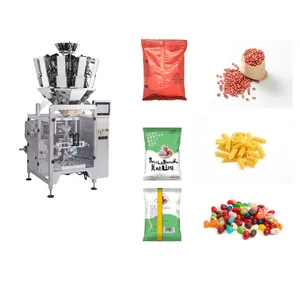
Vertical Form Fill Seal Machine
All-stainless 304 construction with food-contact-grade seals — FDA-compliant by design.
View Details →
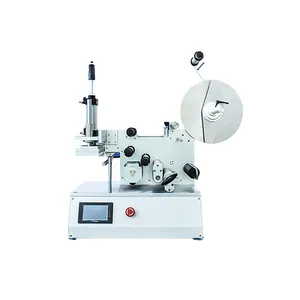
Automatic Round Bottle Wrap-Around Labeler
Stainless steel labeling system meeting FDA traceability and GMP labeling requirements.
View Details →Need Packaging Equipment?
SPS helps small food manufacturers source reliable packaging equipment at factory prices.
Get a Free Quote →