---
title: "Packaging Machine for Dairy & Cheese: Semi-Auto Solutions for Small Creameries"
description: "Discover how small creameries can streamline dairy and cheese packaging with semi-automatic machines that improve consistency, reduce waste, and scale production affordably."
category: Industry Insights
date: 2026-06-20
tags:
- dairy packaging
- cheese packaging machine
- small creamery equipment
- semi-auto packaging
- food packaging
---
# Packaging Machine for Dairy & Cheese: Semi-Auto Solutions for Small Creameries
Small creameries across the United States are experiencing a golden era. The American artisan cheese market has grown by over 20% in the past five years, with consumers increasingly demanding locally sourced, high-quality dairy products. However, this growth brings a significant challenge: how do you scale production without sacrificing quality or blowing your budget on industrial-grade equipment?
Packaging remains one of the most critical bottlenecks for small dairy producers. Whether you're wrapping blocks of cheddar, filling pouches with fresh mozzarella, or packaging specialty cream cheese in premium flat-bottom bags, the right packaging machine can transform your operation — saving labor costs, reducing product waste, and delivering a consistent, professional look that earns shelf space in retail stores and specialty shops.
This guide explores the most practical semi-automatic packaging solutions available to small creameries and dairy producers today.
## Table of Contents
- [Why Dairy Packaging Is Uniquely Challenging](#section1)
- [Key Packaging Formats for Dairy Products](#section2)
- [Semi-Auto vs. Fully Automated: What Makes Sense for Small Creameries?](#section3)
- [Pre-Made Pouch vs. Flat-Bottom Bag Solutions](#section4)
- [ROI and Cost Analysis for Small Dairy Operations](#section5)
- [Choosing the Right Equipment for Your Creamery](#section6)
## Why Dairy Packaging Is Uniquely Challenging {#section1}
Dairy products present a set of packaging challenges that few other food categories can match. The primary concern is **perishability** — cheese and fresh dairy products have a limited shelf life, meaning every second spent in the packaging process is a second of potential contamination or temperature exposure.
Beyond shelf life, dairy producers must navigate several specific packaging requirements:
- **Hygiene and food safety compliance** — FDA and USDA regulations require food-contact-grade materials and sanitary machine design. Equipment must be easy to disassemble and clean to prevent bacterial growth, particularly with soft cheeses and fresh dairy.
- **Variable product shapes and weights** — Unlike uniform products like grains or powders, cheese comes in blocks, wheels, slices, crumbles, and spreads. A packaging solution must handle these variations without constant manual reconfiguration.
- **Premium presentation** — Artisan and specialty dairy consumers expect packaging that communicates quality. A wrinkled vacuum seal or an unevenly filled pouch undermines the premium price point these producers command.
- **Resealability and barrier protection** — Cheese releases moisture and gases as it ages. Packaging must provide an oxygen and moisture barrier while often including resealable features for the end consumer.
These challenges mean that investing in the right packaging equipment isn't just about speed — it's about protecting your product and your brand.
## Key Packaging Formats for Dairy Products {#section2}
The dairy industry uses several dominant packaging formats, each suited to different product types and market positioning:
### Pre-Made Pouches
Pre-made pouches have become the go-to format for specialty cheese producers. They offer a premium, retail-ready appearance with options for stand-up display, resealable zippers, and custom printing. Pre-made pouches work exceptionally well for:
- Shredded and crumbled cheese (5 oz – 2 lb)
- Fresh mozzarella and burrata
- Cream cheese and flavored spreads
- Specialty butter portions
The advantage of pre-made pouches is their professional appearance straight off the line. Unlike form-fill-seal pouches, pre-made pouches are manufactured with high-quality printing and finishes already applied, giving even the smallest creamery a retail-ready product.
### Flat-Bottom Bags
Flat-bottom bags (also called box pouches) are rapidly gaining popularity in the dairy sector. They stand upright on retail shelves, offer a large printable surface area for branding, and provide excellent barrier properties when produced with multi-layer laminates. These bags are ideal for:
- Premium cheese blocks (8 oz – 2 lb)
- Value-added cheese assortments
- Gift packs and seasonal offerings
- Cheese curds and specialty dairy snacks
Flat-bottom bags communicate quality and craftsmanship — exactly the message small creameries want to send.
### Vacuum-Sealed Packaging
While vacuum sealing remains common in dairy, it's increasingly being supplemented by modified atmosphere packaging (MAP) and stand-up formats that offer better retail presentation without sacrificing shelf life.
## Semi-Auto vs. Fully Automated: What Makes Sense for Small Creameries? {#section3}
For most small creameries producing fewer than 50,000 units per month, semi-automatic equipment represents the sweet spot between manual labor and full automation. Here's why:
### The True Cost of Manual Packaging
Many small creameries start by hand-filling and hand-sealing bags. While this approach has zero equipment cost, the hidden costs add up quickly:
- **Labor cost**: A single operator hand-filling pouches typically produces 200–400 units per hour. At a fully loaded labor cost of $22/hour, that's roughly $0.055–$0.11 per unit in labor alone.
- **Inconsistency**: Hand-filling leads to weight variation. Overfilling wastes product (a common issue with cheese where overfilling by just 1 oz per package across 10,000 units/month means over $500 in lost product at $8/lb).
- **Fatigue and turnover**: Repetitive packaging work leads to operator fatigue, errors, and employee turnover — costs that are difficult to quantify but very real.
### The Semi-Auto Advantage
Semi-automatic packaging machines bridge the gap. An operator loads the product or positions the bag, and the machine handles filling, sealing, and sometimes labeling. Key benefits include:
- **3–5x throughput increase** compared to manual packaging
- **Consistent fill weights** that reduce product giveaway
- **Professional seals** that meet retail standards
- **Lower capital investment** — typically $8,000–$35,000 versus $100,000+ for fully automated lines
- **Easy operator training** — most semi-auto machines can be learned in a single shift
For a creamery producing 10,000 units per month, upgrading from manual to semi-automatic packaging typically pays for itself within 6–12 months through labor savings and reduced product giveaway alone.
## Pre-Made Pouch vs. Flat-Bottom Bag Solutions {#section4}
Both pre-made pouch machines and flat-bottom bag machines serve the dairy market, but they address slightly different needs. Understanding the difference helps you invest in the right solution.
### Pre-Made Pouch Fill & Seal Machines
A pre-made pouch fill and seal machine takes pre-printed, pre-formed pouches from a magazine, opens them, fills them with product, and seals them. This approach is ideal when:
- You want the highest possible print quality on your packaging
- You need a wide variety of pouch sizes across your product line
- You're packaging irregularly shaped products (like cheese curds or burrata)
- Your production volume doesn't justify a form-fill-seal setup
Pre-made pouch machines are particularly forgiving for small operators because the pouches come ready to use — no film rolls to thread, no forming collars to adjust. Changeovers between pouch sizes typically take 10–15 minutes.
### Flat-Bottom Bag Packaging Machines
Flat-bottom bag machines offer a middle ground between pre-made pouches and form-fill-seal systems. They form the bag from a roll of film, fill it, and seal it, creating a premium flat-bottom package that stands upright on shelves. Advantages include:
- **Lower per-unit packaging cost** — forming bags from roll stock is cheaper than buying pre-made pouches
- **Faster changeovers** for different bag widths
- **On-demand bag forming** — no need to pre-order custom pre-made pouches in large minimum quantities
- **Integrated printing flexibility** — some systems allow inline date coding and batch marking
For dairy producers who want premium shelf presence but need to manage packaging material costs, flat-bottom bag machines offer an excellent compromise.
## ROI and Cost Analysis for Small Dairy Operations {#section5}
Understanding the financial impact of packaging automation helps small creameries make confident investment decisions. Here's a realistic ROI scenario for a mid-sized artisan creamery:
### Scenario: 25,000 Units/Month
**Current state (manual packaging):**
- 3 operators, 6 hours/day packaging: $39,600/year in labor
- 3% product giveaway due to inconsistent fill weights: $14,400/year at $8/lb average
- 2% rejection rate from inconsistent seals: $4,800/year
**Total annual packaging cost: $58,800**
**After semi-automatic upgrade:**
- 1 operator + semi-auto machine: $23,100/year in labor
- 0.5% product giveaway with precision filling: $2,400/year
- 0.3% rejection rate: $720/year
- Machine depreciation (5-year life, $25,000 machine): $5,000/year
- Maintenance and consumables: $2,000/year
**Total annual packaging cost: $33,220**
**Annual savings: $25,580** — meaning the equipment pays for itself in approximately 12 months and generates ongoing savings of $25,000+ per year thereafter.
These numbers don't account for the additional revenue from winning retail accounts that require consistent, professional packaging — a benefit that can be even more significant than direct cost savings.
## Choosing the Right Equipment for Your Creamery {#section6}
Selecting the right packaging equipment for your dairy operation comes down to several key factors:
1. **Product characteristics**: Soft, moist cheeses may require modified atmosphere packaging. Dry cheese crumbles and blocks are more straightforward. Consider whether you need specialized filling systems.
2. **Package format preference**: Decide between pre-made pouches (higher per-unit cost, premium appearance, smaller minimum orders) and roll-stock solutions (lower cost, more setup, higher throughput).
3. **Production volume and growth trajectory**: If you're currently at 5,000 units/month but expect to grow to 20,000 within two years, size your equipment for where you'll be — not where you are today.
4. **Floor space and utilities**: Semi-auto machines typically require 4–8 feet of floor space and standard electrical connections. Plan your facility layout to accommodate current and future equipment.
5. **Cleaning and sanitation**: Dairy equipment must be washdown-capable. Look for machines constructed from stainless steel with tool-free disassembly for cleaning.
6. **Future flexibility**: The best semi-auto machines can grow with you. Consider equipment that offers optional upgrades — like additional weigh heads, label applicators, or conveyor integration — so you can add capabilities without replacing your entire line.
---
### Recommended Equipment
 ## Conclusion
The dairy and cheese packaging landscape is evolving rapidly, and small creameries that invest in the right semi-automatic equipment gain a decisive competitive advantage. Whether you choose a pre-made pouch system for its retail-ready convenience or a flat-bottom bag machine for its versatility and lower per-unit cost, the key is to match your equipment to your current production needs and future growth plans.
At SPS Packaging, we work with small creameries across the country to identify and configure the ideal packaging solution for their specific products and operational requirements. Our team can help you evaluate your options, calculate your ROI, and design a complete packaging line that grows with your business.
**Ready to streamline your dairy packaging operation?** [Request a free quote](/request-quote/) today and let our packaging specialists design a solution tailored to your creamery's needs.
---
## Related Resources
- [Food Packaging Machines](/food-packaging-machines/) — Browse our complete range of semi-automatic and automatic food packaging equipment
- [Labeling Machines](/labeling-machines/) — Add professional labels to your dairy products for retail compliance
- [Production Lines](/production-lines/) — Explore integrated packaging line configurations for growing operations
- [Solutions by Industry](/solutions/) — Discover packaging solutions tailored to specific food industry sectors
## Conclusion
The dairy and cheese packaging landscape is evolving rapidly, and small creameries that invest in the right semi-automatic equipment gain a decisive competitive advantage. Whether you choose a pre-made pouch system for its retail-ready convenience or a flat-bottom bag machine for its versatility and lower per-unit cost, the key is to match your equipment to your current production needs and future growth plans.
At SPS Packaging, we work with small creameries across the country to identify and configure the ideal packaging solution for their specific products and operational requirements. Our team can help you evaluate your options, calculate your ROI, and design a complete packaging line that grows with your business.
**Ready to streamline your dairy packaging operation?** [Request a free quote](/request-quote/) today and let our packaging specialists design a solution tailored to your creamery's needs.
---
## Related Resources
- [Food Packaging Machines](/food-packaging-machines/) — Browse our complete range of semi-automatic and automatic food packaging equipment
- [Labeling Machines](/labeling-machines/) — Add professional labels to your dairy products for retail compliance
- [Production Lines](/production-lines/) — Explore integrated packaging line configurations for growing operations
- [Solutions by Industry](/solutions/) — Discover packaging solutions tailored to specific food industry sectors
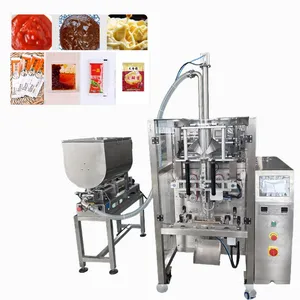
Pre-Made Pouch Fill & Seal Machine
Ideal for packaging shredded cheese, fresh mozzarella, and specialty dairy products in premium pre-made pouches with consistent seals and professional presentation.
View Details →
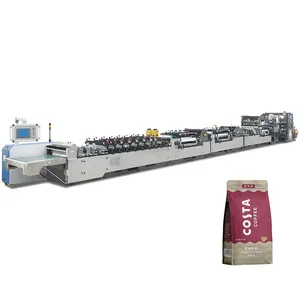
Flat-Bottom Bag Packaging Machine
Create premium flat-bottom bags for cheese blocks, curds, and dairy gift packs with eye-catching shelf presence and excellent barrier protection.
View Details →Need Packaging Equipment?
SPS helps small food manufacturers source reliable packaging equipment at factory prices.
Get a Free Quote →