---
title: "Packaging Machine for Cosmetics & Personal Care: Semi-Auto Solutions"
date: 2025-06-20
description: "Explore semi-automatic packaging solutions for cosmetics and personal care brands. From lotion bottles to sample sachets, learn how labeling and pouch machines help indie brands scale."
category: "Industry Insights"
author: "SPS Packaging Team"
---
# Packaging Machine for Cosmetics & Personal Care: Semi-Auto Solutions
In the cosmetics and personal care industry, packaging isn't just protection—it's the product's first impression. A sleek bottle of face serum or an elegantly labeled jar of moisturizer communicates luxury, efficacy, and brand identity before the consumer ever touches the product inside. For indie beauty brands and contract manufacturers, this presents both an opportunity and a challenge: consumers expect boutique-quality presentation at scale.
The U.S. cosmetics and personal care market exceeds $100 billion annually, with the indie and "clean beauty" segment growing at 12–15% per year. These small and emerging brands are capturing market share from legacy players—but they're doing it on tight budgets with lean teams. Many are hand-filling bottles, applying labels by hand, and packing samples in their garage or small production suite.
The transition from manual to semi-automated packaging is often the make-or-break moment for a growing cosmetics brand. Too slow, and you can't fulfill the orders that retail placement brings. Too fast, and you've overinvested in equipment you don't yet need. The sweet spot is semi-automatic equipment that delivers professional results, scales with your volume, and fits your budget.
## Table of Contents
- [Why Cosmetics Packaging Demands Precision](#section1)
- [Semi-Auto Labeling for Professional Brand Presentation](#section2)
- [Premade Pouch Packaging for Samples and Sachets](#section3)
- [The Economics of Semi-Auto vs. Manual Packaging](#section4)
- [Packaging Formats That Drive Cosmetics Sales](#section5)
- [Choosing the Right Equipment for Your Brand](#section6)
## Why Cosmetics Packaging Demands Precision {#section1}
Cosmetics packaging operates at a level of precision that food and beverage producers rarely encounter:
**Visual perfection.** A cosmetics consumer expects the label to be perfectly straight, centered, and wrinkle-free. Unlike food packaging where minor imperfections are tolerated, cosmetics packaging flaws immediately signal "cheap" to the buyer.
**Material sensitivity.** Cosmetics come in glass, plastic, metal, wood, and composite containers. Each material requires different labeling approaches, adhesives, and handling procedures. A label that works on a HDPE bottle may not adhere to a glass jar.
**Small batch flexibility.** Cosmetics brands often launch with small batches—500–2,000 units per SKU. Equipment must handle frequent changeovers between product types, label designs, and container sizes without wasting an entire run on setup.
**Regulatory labeling.** FDA regulations for cosmetics labeling are specific and enforced. Ingredient lists (INCI nomenclature), net weight, manufacturer information, warnings, and batch coding must all be legible and correctly placed. Labeling errors can trigger FDA warning letters and product seizures.
**Sample and travel-size packaging.** The cosmetics industry relies heavily on samples, travel sizes, and subscription box inserts. These require miniature sachets, vials, and pouches that demand precision filling and sealing.
A 2024 survey by Beauty Packaging magazine found that 67% of indie beauty brands cited "packaging quality and consistency" as their top operational challenge—and 45% said they'd lost retail accounts due to packaging presentation issues.
## Semi-Auto Labeling for Professional Brand Presentation {#section2}
For cosmetics brands selling through retail, professional labeling is non-negotiable. A crooked label on a $48 face cream instantly undermines the brand story that took months to build.
**Why semi-auto labeling is the ideal first investment:**
- **Consistency:** Machine-applied labels are straight, centered, and bubble-free every time
- **Speed:** 15–30 containers per minute vs. 3–5 by hand
- **Multi-surface capability:** Handle round bottles, jars, tubes, and cylindrical containers
- **Adhesive precision:** Consistent pressure ensures full label adhesion without edge lifting
- **Changeover:** Adjust for different container sizes in minutes, not hours
The Automatic Round Bottle Wrap-Around Labeler is a workhorse for cosmetics brands using round containers—serum bottles, lotion bottles, toner jars, and cylindrical tubes. It handles containers from 1" to 6" in diameter and applies labels with the precision that retail buyers and consumers expect.
**Key features for cosmetics applications:**
- Stainless steel construction resists cosmetic product chemicals and cleaning agents
- Adjustable speed for delicate glass containers
- Label sensor detects label position for accurate start/stop placement
- Footprint fits on a standard workbench (typically 3' × 2')
- Single-operator design minimizes labor costs
For brands using non-round containers (square bottles, oval tubes, flat compacts), flat-label applicators handle these formats. The investment in semi-auto labeling typically pays for itself within 4–8 months through labor savings and eliminated rework.
The difference between a hand-labeled bottle and a machine-labeled bottle is immediately visible to consumers. In blind testing, products with machine-applied labels were rated 23% higher on "perceived quality" than identical products with hand-applied labels.
## Premade Pouch Packaging for Samples and Sachets {#section3}
Sachets and sample pouches are the lifeblood of cosmetics marketing. They drive trial, generate subscription box content, and introduce new products to consumers at minimal cost.
**Common cosmetics sachet applications:**
- Sample sachets of serums, moisturizers, and cleansers
- Single-use sheet mask pouches
- Travel-size shampoo, conditioner, and body wash packets
- Subscription box inserts and gift-with-purchase packaging
- Trial sizes for new product launches
**Why semi-auto sachet machines matter:**
Hand-filling and sealing sachets is painfully slow—typically 2–3 per minute. At this rate, producing 1,000 sample sachets takes 5–7 hours of labor. A semi-auto sachet machine increases throughput to 15–25 sachets per minute, cutting the same production run to 40–67 minutes.
The Pre-Made Pouch Fill & Seal Machine handles pre-formed sachets, pillow pouches, and flat bags. For cosmetics, this is ideal because:
- Pre-made pouches come in premium finishes (matte, metallic, transparent) that align with brand aesthetics
- Fill accuracy ensures consistent product amounts in each sachet (critical for cost control and customer experience)
- Heat-sealed closures provide tamper-evident security
- Quick changeover between different pouch sizes and designs
For brands producing 5,000+ sample sachets per month, the pre-made pouch machine is transformative. It converts a labor-intensive manual process into an efficient semi-automated operation while maintaining the presentation quality that cosmetics consumers expect.
## The Economics of Semi-Auto vs. Manual Packaging {#section4}
Let's model the costs for a cosmetics brand producing 5,000 labeled bottles and 2,000 sachets per week:
### Manual Packaging
- 2 workers × 8 hours × $16/hour × 5 days = $1,280/week in labeling labor
- 1 worker × 6 hours × $16/hour × 5 days = $480/week in sachet packing
- Mislabel waste: ~$200/week (relabeling, damaged containers)
- Sachet waste: ~$100/week (inconsistent fills, seal failures)
- **Total weekly cost: $2,060**
### Semi-Auto Labeler + Pre-Made Pouch Machine
- 1 worker × 4 hours × $16/hour × 5 days = $320/week in labeling labor
- 1 worker × 2 hours × $16/hour × 5 days = $160/week in sachet packing
- Mislabel waste: ~$10/week
- Sachet waste: ~$20/week
- Machine amortization (5 years on $45,000): ~$173/week
- **Total weekly cost: $683**
**Annual savings: $71,556**
**Payback period: approximately 8 months**
Beyond the direct cost savings, semi-automated packaging unlocks revenue opportunities:
- **Retail readiness:** Professional labeling satisfies retailer vendor requirements
- **Faster time-to-market:** New products can be packaged and shipped in days, not weeks
- **Scalability:** Handle 2–3× current volume without proportional labor increases
- **Brand consistency:** Every unit looks identical, reinforcing brand identity across channels
For a cosmetics brand growing at 30%+ annually (common in the indie beauty space), semi-auto packaging equipment isn't just a cost savings—it's a growth enabler.
## Packaging Formats That Drive Cosmetics Sales {#section5}
Understanding which packaging formats resonate with cosmetics consumers helps you choose the right equipment:
**Lotion and serum bottles (round, glass or plastic):**
- Automatic wrap-around labeling with full-coverage or partial labels
- Clear or frosted labels for minimalist aesthetics
- Foil stamping or embossing for premium positioning
**Jar packaging (moisturizers, masks, scrubs):**
- Top-label or wrap-around labeling depending on jar design
- Tamper-evident seals for safety and consumer confidence
- Window labels that let consumers see the product color and texture
**Sachets and sample pouches:**
- Matte or metallic pre-made pouches for premium feel
- Transparent pouches for products where color/texture is a selling point
- Multi-pack pouches for retail (3-pack cleanser samples, for example)
**Sheet masks:**
- Flat pouches sealed with product-specific atmosphere
- Full-coverage labeling with usage instructions and ingredients
- High-volume sachet sealing for subscription box inserts
**Travel and minis:**
- Small-format labeling (1"–2" labels on miniature containers)
- Sachet packaging for airline-compliant sample sizes
- Gift set packaging combining multiple labeled products
The cosmetics consumer is visual and detail-oriented. Every label edge, every seal, every package element is evaluated. Semi-auto equipment delivers the consistency that meets these expectations.
## Choosing the Right Equipment for Your Brand {#section6}
Select packaging equipment based on your current needs and 12–18 month growth projections:
**1. Container assessment.** Inventory every container type, size, and material you currently use—and plan to use in the next year. Ensure your labeler handles all of them.
**2. Label compatibility.** Test your label materials on your containers before purchasing. Different adhesives (permanent, removable, repositionable) perform differently on different surfaces.
**3. Product viscosity.** If you're filling sachets or pouches, viscosity determines whether you need piston fillers (thick creams), gravity fillers (thin liquids), or peristaltic fillers (sensitive or precious liquids).
**4. Throughput alignment.** Don't overbuy. A machine rated at 40 containers per minute is unnecessary if you currently pack 10 per minute. Buy for where you'll be in 12 months, not where you'll be in 5 years.
**5. Cleanability.** Cosmetics formulations (especially natural/organic) can leave residues that build up on equipment. Choose machines with smooth, accessible surfaces for easy cleaning.
**6. Expansion path.** Select equipment that integrates with future automation—a labeler that can be conveyor-mounted later, or a pouch machine that accepts automatic product feeding.
The cosmetics industry rewards brands that look professional and move fast. Semi-automatic labeling and pouch packaging equipment delivers both—professional results at a speed and price point that growing brands can afford.
---
### Recommended Equipment
 ## Conclusion
Cosmetics and personal care brands live or die by their presentation. Semi-automatic labeling and premade pouch packaging equipment delivers the professional, consistent results that retail buyers and consumers demand—without the capital investment of a fully automated line. For growing indie brands, this is the investment that unlocks the next stage of growth.
Ready to elevate your cosmetics packaging? [Request a quote](/request-quote/) and our packaging specialists will help you find the right semi-auto solution for your brand's unique needs.
---
## Related Resources
- [Food Packaging Machines](/food-packaging-machines/) — Pouch, sachet, and filling machines adaptable for personal care
- [Labeling Machines](/labeling-machines/) — Automatic and semi-auto labeling for every container type
- [Production Lines](/production-lines/) — Complete packaging line design for cosmetics operations
- [Solutions](/solutions/) — Custom packaging solutions for cosmetics and personal care
## Conclusion
Cosmetics and personal care brands live or die by their presentation. Semi-automatic labeling and premade pouch packaging equipment delivers the professional, consistent results that retail buyers and consumers demand—without the capital investment of a fully automated line. For growing indie brands, this is the investment that unlocks the next stage of growth.
Ready to elevate your cosmetics packaging? [Request a quote](/request-quote/) and our packaging specialists will help you find the right semi-auto solution for your brand's unique needs.
---
## Related Resources
- [Food Packaging Machines](/food-packaging-machines/) — Pouch, sachet, and filling machines adaptable for personal care
- [Labeling Machines](/labeling-machines/) — Automatic and semi-auto labeling for every container type
- [Production Lines](/production-lines/) — Complete packaging line design for cosmetics operations
- [Solutions](/solutions/) — Custom packaging solutions for cosmetics and personal care
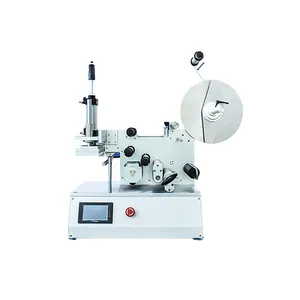
Automatic Round Bottle Wrap-Around Labeler
Precision wrap-around labeling for round cosmetic containers—serum bottles, lotion jars, and toner bottles with retail-perfect results.
View Details →
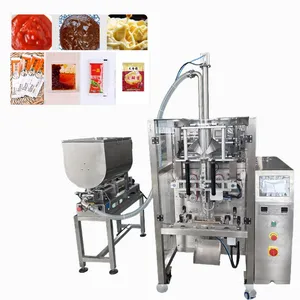
Pre-Made Pouch Fill & Seal Machine
Semi-auto pouch filling and sealing for cosmetics sachets, samples, and travel-size products with premium presentation.
View Details →Need Packaging Equipment?
SPS helps small food manufacturers source reliable packaging equipment at factory prices.
Get a Free Quote →