---
title: "Packaging Machine for Coffee & Tea: Semi-Auto Solutions for Small Roasters & Blenders"
description: "Learn how small coffee roasters and tea blenders can automate packaging with semi-automatic machines that preserve freshness, improve consistency, and reduce labor costs."
category: Industry Insights
date: 2026-06-20
tags:
- coffee packaging
- tea packaging machine
- small roaster equipment
- semi-auto packaging
- food packaging
---
# Packaging Machine for Coffee & Tea: Semi-Auto Solutions for Small Roasters & Blenders
The specialty coffee and tea market in the United States has exploded over the past decade. With over 3,000 small-batch roasters now operating across the country and artisan tea blenders carving out premium niches, the competition for shelf space — both physical and digital — has never been fiercer.
For these small producers, packaging isn't just a logistics step. It's a brand statement. The bag sitting on a retail shelf or arriving at a customer's doorstep must communicate freshness, quality, and craftsmanship. But achieving that level of presentation at scale requires more than manual labor and a impulse sealer.
Whether you're roasting single-origin beans in a garage or blending custom tea blends for an online subscription service, semi-automatic packaging equipment can transform your operation — delivering consistent, professional results while keeping your costs manageable and your hands free to focus on what matters most: the product itself.
## Table of Contents
- [The Freshness Imperative in Coffee & Tea Packaging](#section1)
- [Understanding Packaging Formats for Coffee and Tea](#section2)
- [Why Semi-Auto Is the Sweet Spot for Small Roasters](#section3)
- [Flat-Bottom Bags: The Gold Standard for Premium Coffee](#section4)
- [Sachet Packaging for Single-Serve Tea and Sample Packs](#section5)
- [Building a Packaging Line That Grows With Your Roastery](#section6)
## The Freshness Imperative in Coffee & Tea Packaging {#section1}
Freshness is the single most critical factor in coffee and tea packaging. A freshly roasted coffee bean begins losing its aromatic compounds within hours of roasting, and improperly sealed packaging can turn a premium single-origin into a stale commodity in a matter of days.
This creates a unique packaging challenge for small roasters and tea blenders:
- **One-way degassing valves** — Freshly roasted coffee releases CO₂ for up to two weeks after roasting. Packaging must incorporate one-way valves that allow gas to escape without letting oxygen in. Handling and sealing bags with valves requires specialized equipment that a simple impulse sealer cannot replicate.
- **Modified atmosphere considerations** — Nitrogen flushing before sealing can extend shelf life dramatically. Semi-auto systems with nitrogen flush capability give small roasters a significant competitive advantage.
- **High-barrier film requirements** — Coffee and tea packaging requires multi-layer films (typically with aluminum or metallized barriers) that protect against oxygen, moisture, light, and odor migration. These stiffer, thicker films are more difficult to handle manually and benefit greatly from machine-assisted filling and sealing.
- **Resealable features** — Consumers expect zip-lock or tin-tie closures. Applying these features consistently by hand is time-consuming and error-prone, but automated systems handle them with precision.
The takeaway is clear: as your roastery grows, manual packaging becomes the bottleneck that limits your ability to deliver consistent freshness at scale.
## Understanding Packaging Formats for Coffee and Tea {#section2}
The coffee and tea industry uses several dominant packaging formats, each with distinct advantages:
### Stand-Up Pouches with Zipper
Stand-up pouches with resealable zippers are the workhorse of the specialty coffee world. They offer a good balance of shelf appeal, barrier properties, and consumer convenience. Common sizes range from 4 oz (half pound) to 2 lb for retail, with bulk formats up to 5 lb for wholesale.
### Flat-Bottom Bags (Box Pouches)
Flat-bottom bags have become the premium packaging format for specialty coffee. Their box-like shape provides:
- Superior shelf stability — they stand upright without leaning
- Maximum branding surface — four sides plus the bottom for labels and printing
- Premium perceived value — consumers associate flat-bottom bags with higher quality
- Excellent barrier performance — multi-layer construction protects flavor integrity
For roasters targeting specialty retail accounts, farmers markets, and direct-to-consumer sales, flat-bottom bags are increasingly becoming the expected standard.
### Stick Packs and Sachets
For single-serve tea sachets, coffee sample packs, and trial-size offerings, stick packs and sachets provide a cost-effective, portion-controlled format. Single-serve formats are particularly important for subscription services, hotel amenities, and product sampling programs.
### Pillow Bags
Pillow bags remain common for value-oriented coffee and tea products. While they lack the premium presentation of flat-bottom bags, they're economical and work well for high-volume production.
## Why Semi-Auto Is the Sweet Spot for Small Roasters {#section3}
For roasters producing between 1,000 and 30,000 units per month, semi-automatic equipment delivers the best return on investment. Here's the breakdown:
### The Manual Packaging Reality
Many small roasters begin with hand-filling bags on a scale and sealing with a tabletop impulse sealer. This works for the first few hundred bags, but the limitations quickly become apparent:
- **Speed**: An experienced operator can fill and seal roughly 150–250 bags per hour manually. At 5,000 bags per month, that's 20–33 hours of pure packaging labor.
- **Consistency**: Hand-filling leads to weight variation. Underfilled bags violate label claims; overfilled bags waste product. For coffee at $12–$20/lb, even a half-ounce of giveaway per bag adds up to $1,500–$3,000 annually at 5,000 units/month.
- **Seal quality**: Manual sealing often produces inconsistent seal strength, leading to packages that open during shipping or fail to maintain freshness. Each failed seal is a lost customer.
- **Scalability**: The linear relationship between volume and labor hours means doubling your sales requires doubling your packaging labor — until you automate.
### Semi-Auto Advantages
Semi-automatic packaging machines increase throughput to 600–1,200 bags per hour (depending on the system and bag size) while dramatically improving consistency. The operator typically positions the bag or loads product into a hopper, and the machine handles the rest — precise filling, valve application, and hermetic sealing.
The capital investment for semi-auto coffee and tea packaging equipment typically ranges from $12,000 to $40,000, with most roasters achieving full ROI within 8–14 months through labor savings and product reduction alone.
## Flat-Bottom Bags: The Gold Standard for Premium Coffee {#section4}
If your brand identity is built on quality — and for most small roasters, it is — flat-bottom bag packaging machines deserve serious consideration. Here's why they're worth the investment:
### Brand Differentiation
In a crowded retail environment, flat-bottom bags stand out. Their clean, geometric shape and large printable surfaces allow roasters to tell their brand story directly on the packaging. Studies consistently show that consumers perceive products in flat-bottom bags as higher quality than the same product in pillow bags.
### Shelf Presence
Flat-bottom bags stand upright on retail shelves without leaning, tipping, or falling over. This self-standing property is critical for independent grocery stores, specialty food shops, and coffee bars where your packaging is competing for attention alongside dozens of other brands.
### Cost Efficiency Over Time
While flat-bottom bag machines require a higher upfront investment than simple sealers, the per-unit packaging cost is lower when using roll stock. A flat-bottom bag machine forming bags from film rolls costs approximately $0.03–$0.08 per bag in materials, compared to $0.08–$0.15 for pre-made pouches. At 10,000 bags per month, that difference alone saves $500–$700 monthly.
### Operational Benefits
Modern flat-bottom bag machines feature quick-changeover designs that allow roasters to switch between bag sizes (e.g., from 8 oz to 1 lb to 2 lb) in 10–15 minutes. This flexibility is essential for roasters who offer multiple product lines and sizes.
## Sachet Packaging for Single-Serve Tea and Sample Packs {#section5}
The single-serve market continues to grow, driven by consumer demand for convenience and variety. For tea blenders and coffee roasters, sachet packaging opens up several lucrative channels:
- **Subscription boxes**: Pre-portioned single-serve sachets are perfect for monthly subscription services
- **Hotel and hospitality**: Single-serve formats are the standard for hotel amenity programs
- **Product sampling**: Sachets allow roasters to distribute samples at a fraction of the cost of full-size bags
- **Office and workplace**: Single-serve sachets are ideal for office coffee and tea programs
Vertical sachet fill and seal machines can produce 30–80 sachets per minute, depending on the machine configuration and sachet size. For small producers, this represents a significant capability that would be impossible to achieve manually.
The key consideration for sachet packaging is the fill accuracy. Coffee and tea sachets typically contain 7–15 grams of product, and consistency is critical both for regulatory compliance and consumer satisfaction. Semi-auto sachet machines with volumetric or auger filling systems deliver the precision needed at these small fill weights.
## Building a Packaging Line That Grows With Your Roastery {#section6}
The smartest approach to packaging automation is to think in terms of a line, not a single machine. Even if you're starting with one semi-automatic machine today, planning for future integration ensures your investment remains valuable as you grow.
### Current Needs Assessment
Start by answering these questions:
- How many units do you pack per month, and what's your projected volume in 12–24 months?
- How many bag sizes and formats do you offer, and are you planning to add new products?
- What are your most important retail channels, and what packaging requirements do they impose?
- How much floor space and electrical capacity do you have available?
### Building Blocks for Growth
A well-designed semi-auto packaging line might start with a single flat-bottom bag machine and grow to include:
- A **date coder** for lot numbers, roast dates, and best-by dates
- A **checkweigher** to catch underfills and overfills automatically
- A **conveyor system** to move bags from the packager to a boxing station
- A **label applicator** for regulatory compliance and additional branding
- A **nitrogen flush module** for extended freshness in high-barrier bags
Each of these components can be added incrementally as your volume justifies the investment, creating a semi-automated line that approaches fully automated performance at a fraction of the cost.
---
### Recommended Equipment
 ## Conclusion
For small coffee roasters and tea blenders, the right packaging equipment is more than a production tool — it's a brand investment. Flat-bottom bag machines deliver the premium presentation that specialty retailers and consumers demand, while sachet packaging systems open up high-value single-serve and sampling channels. Together, these semi-automatic solutions provide the versatility and quality that small producers need to compete with larger brands without sacrificing their artisan identity.
At SPS Packaging, we specialize in helping small roasters and tea blenders find the ideal packaging equipment for their specific products and growth plans. From single-machine solutions to fully integrated packaging lines, our team has the expertise to guide your investment.
**Ready to upgrade your coffee or tea packaging?** [Request a free consultation](/request-quote/) and let us help you design a packaging solution that matches your craft.
---
## Related Resources
- [Food Packaging Machines](/food-packaging-machines/) — Explore our complete lineup of semi-automatic food packaging equipment
- [Labeling Machines](/labeling-machines/) — Add professional labels, date codes, and branding to your coffee and tea packages
- [Production Lines](/production-lines/) — Design integrated packaging lines for growing roasteries
- [Solutions by Industry](/solutions/) — Discover packaging solutions tailored to coffee, tea, and other food sectors
## Conclusion
For small coffee roasters and tea blenders, the right packaging equipment is more than a production tool — it's a brand investment. Flat-bottom bag machines deliver the premium presentation that specialty retailers and consumers demand, while sachet packaging systems open up high-value single-serve and sampling channels. Together, these semi-automatic solutions provide the versatility and quality that small producers need to compete with larger brands without sacrificing their artisan identity.
At SPS Packaging, we specialize in helping small roasters and tea blenders find the ideal packaging equipment for their specific products and growth plans. From single-machine solutions to fully integrated packaging lines, our team has the expertise to guide your investment.
**Ready to upgrade your coffee or tea packaging?** [Request a free consultation](/request-quote/) and let us help you design a packaging solution that matches your craft.
---
## Related Resources
- [Food Packaging Machines](/food-packaging-machines/) — Explore our complete lineup of semi-automatic food packaging equipment
- [Labeling Machines](/labeling-machines/) — Add professional labels, date codes, and branding to your coffee and tea packages
- [Production Lines](/production-lines/) — Design integrated packaging lines for growing roasteries
- [Solutions by Industry](/solutions/) — Discover packaging solutions tailored to coffee, tea, and other food sectors
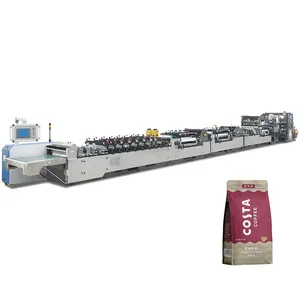
Flat-Bottom Bag Packaging Machine
Create premium flat-bottom bags for coffee beans and tea blends with outstanding shelf presence, integrated sealing, and flexible bag-size changeovers.
View Details →
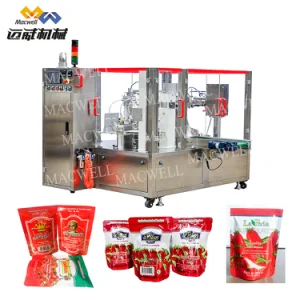
Vertical Sachet Fill & Seal Machine
Perfect for producing single-serve tea sachets, coffee sample packs, and portion-controlled servings with precise fill weights and consistent seals.
View Details →Need Packaging Equipment?
SPS helps small food manufacturers source reliable packaging equipment at factory prices.
Get a Free Quote →