# Packaging Machine for Chemical & Household Products
Chemical and household product packaging operates in a world of strict safety regulations, hazardous material handling requirements, and zero tolerance for leaks or spills. From cleaning solutions and laundry detergents to pesticides, pool chemicals, and industrial lubricants, every product in this category demands packaging equipment that handles corrosive, volatile, or viscous materials with precision and safety.
For small chemical and household product manufacturers, the packaging challenge is compounded by the diversity of their product lines. A single facility might package thin, watery cleaning sprays alongside thick, gel-based detergents—all requiring different filling speeds, nozzle configurations, sealing pressures, and container types. Manual and semi-manual packaging processes create safety risks, inconsistent fills, and production bottlenecks that limit growth.
Semi-automatic and integrated packaging equipment designed for chemical applications addresses these challenges with purpose-built components: corrosion-resistant contact surfaces, precision volumetric and net-weight filling, and sealed systems that protect operators from exposure. This guide explores the specific requirements of chemical and household product packaging and the practical equipment solutions that make small-batch production safe, efficient, and profitable.
## Table of Contents
1. [Why Chemical Packaging Requires Specialized Equipment](#section1)
2. [Regulatory and Safety Requirements](#section2)
3. [Common Packaging Challenges for Small Chemical Manufacturers](#section3)
4. [Equipment Solutions for Chemical and Household Products](#section4)
5. [Integrated Lines vs. Standalone Machines](#section5)
6. [ROI Analysis for Chemical Packaging Automation](#section6)
7. [Conclusion](#conclusion)
---
## 1. Why Chemical Packaging Requires Specialized Equipment {#section1}
Packaging chemical and household products is fundamentally different from packaging food, pharmaceuticals, or consumer goods. The products themselves create unique equipment requirements.
**Chemical compatibility** is the primary concern. Many household chemicals—bleach, ammonia-based cleaners, acid-based descalers, and solvent-based products—are corrosive to standard metals and can degrade rubber seals, gaskets, and plastic components. Packaging equipment must use chemically resistant materials like stainless steel (316 grade), PTFE, Viton, or polypropylene for all product-contact surfaces. Using equipment with standard materials in a chemical environment leads to seal failures, contamination, and potentially dangerous equipment degradation.
**Viscosity range** demands flexible filling systems. Chemical products span an enormous viscosity range—from thin, water-like liquids (1–10 cP) to thick gels and pastes (10,000–100,000+ cP). A filling machine designed for water-thin liquids will struggle with thick detergents, while a piston filler calibrated for viscous gels will overfill or drip with thin products. Equipment with adjustable filling parameters and interchangeable nozzle systems handles this range.
**Volatile and flammable products** create safety requirements that extend to equipment design. Products containing solvents or volatile organic compounds (VOCs) may require explosion-proof components, grounding systems, and sealed filling environments. Even non-flammable chemicals may produce fumes that require ventilation integration.
**Foaming tendency** is a common challenge with detergents, soaps, and surfactant-based products. Filling equipment must minimize turbulence and air introduction to prevent foam from overflowing containers or compromising fill accuracy. Bottom-up filling, slow-fill nozzles, and anti-drip systems address this issue.
---
## 2. Regulatory and Safety Requirements {#section2}
Chemical and household product packaging operates under a complex web of regulations.
**OSHA workplace safety requirements** govern how employees interact with chemical packaging equipment. Filling stations must minimize operator exposure to chemical products, with appropriate guarding, ventilation, and personal protective equipment (PPE) protocols. Equipment that reduces manual handling of chemical products directly supports OSHA compliance.
**EPA regulations** apply to products containing pesticides, herbicides, and other regulated chemicals. These regulations may specify packaging types, labeling requirements, and container specifications that your equipment must accommodate.
**DOT shipping requirements** govern how packaged chemical products can be transported. Container integrity, closure security, and packaging durability must meet DOT standards for the applicable hazard class. Inadequate seals or inconsistent closures can result in shipping violations and product recalls.
**State and local regulations** add additional layers, particularly for household cleaning products, pool chemicals, and automotive chemicals. Some states require specific labeling content, safety data sheet (SDS) availability, or ingredient disclosure that your packaging process must support.
**UL and FM certifications** may be required for equipment used in environments with flammable or volatile chemicals. Explosion-proof ratings, grounding requirements, and sealed electrical components ensure equipment safety in hazardous environments.
---
## 3. Common Packaging Challenges for Small Chemical Manufacturers {#section3}
Small chemical and household product manufacturers report consistent operational challenges.
**Fill accuracy across product range.** A manufacturer packaging 15 different cleaning products—from thin glass cleaner to thick toilet bowl gel—needs filling equipment that handles each product accurately without extensive recalibration. Manual filling creates significant overfill waste: 5–15% excess product per container is common with hand filling of liquids, representing thousands of dollars in annual product giveaway.
**Container variety.** Chemical products are packaged in an enormous range of containers: spray bottles, trigger sprayers, squeeze bottles, jugs, pouches, sachets, drums, and pails. Each container type requires different handling, filling, and capping configurations. Manual processes handle this variety through brute force labor, but semi-automatic systems with quick-change components handle it through smart engineering.
**Labeling compliance complexity.** Chemical product labels must include product identity, signal words (DANGER, WARNING, CAUTION), hazard statements, precautionary statements, manufacturer information, SDS references, and often ingredient disclosure. These labels frequently cover multiple panels of the container and must be applied consistently and legibly.
**Operator safety.** Manual pouring and filling of chemical products exposes workers to splashes, fumes, and prolonged contact with potentially hazardous substances. Every incident is a safety risk, a potential workers' compensation claim, and a productivity disruption. Equipment that minimizes operator exposure to chemical products is both a safety imperative and a cost-saving measure.
---
## 4. Equipment Solutions for Chemical and Household Products {#section4}
Purpose-built chemical packaging equipment addresses the unique demands of this industry.
**Liquid sachet machines** are ideal for single-use chemical packets—detergent pods, cleaning concentrate pouches, and chemical sampling packets. A Vertical Liquid Sachet Machine forms, fills, and seals liquid sachets with precision dosing, keeping the product contained and the operator protected. These machines handle a range of liquid viscosities and can be configured for different sachet sizes.
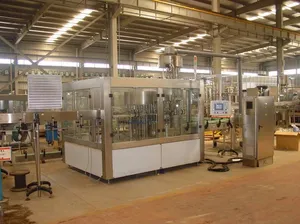
**Integrated filling and packaging lines** are the gold standard for growing chemical manufacturers. A Filling + Packaging Integrated Line combines filling, container handling, capping, labeling, and coding into a single coordinated system. The operator loads product and containers at the beginning of the line and retrieves finished, labeled products at the end. This integration eliminates the bottlenecks and handling risks of standalone stations.
**Piston filling systems** handle viscous products like gels, creams, and thick detergents with precision. These systems use a piston-driven mechanism that delivers consistent volumetric fills regardless of product viscosity changes throughout a batch.
**Gravity filling systems** work well for thin liquids like cleaning sprays and dilutable concentrates. They're simpler, faster, and more affordable than piston fillers for products that flow freely.
---
## 5. Integrated Lines vs. Standalone Machines {#section5}
Choosing between standalone machines and an integrated line depends on your current volume, product range, and growth plans.
**Standalone machines** make sense when you're packaging fewer than 1,000 units per day or running a wide variety of products in small batches. A liquid sachet machine for concentrated packets, combined with a semi-automatic labeling station, provides excellent capability at a lower investment. The downside is that operators must move products between stations, creating handling risks and production delays.
**Integrated lines** become cost-effective when you're packaging 1,000+ units per day of the same or similar products. The higher upfront investment is offset by dramatically higher throughput, reduced labor requirements, and improved safety. An integrated line with one operator can produce what previously required 4–5 workers at hand-packing stations.
**Hybrid approach.** Many successful small chemical manufacturers start with standalone machines for their highest-volume product and add integrated capabilities as volume grows. This phased approach lets you prove the business case for each investment before committing to the next level of automation.
**Changeover considerations.** Chemical manufacturers with diverse product lines should prioritize equipment with quick-change components. Machines that allow nozzle, fill volume, and container size changes in under 10 minutes maintain flexibility while still delivering automation benefits.
---
## 6. ROI Analysis for Chemical Packaging Automation {#section6}
The return on investment for chemical packaging equipment is driven by labor savings, product recovery, and safety improvements.
**Product overfill elimination.** Manual filling of liquid chemicals typically results in 8–15% overfill. For a manufacturer packaging 500 gallons per day at $4 per gallon, a 10% overfill represents $200/day or $50,000/year in free product. Automated filling reduces overfill to 1–2%, recovering most of this loss.
**Labor cost reduction.**
- Manual filling operation: 4 operators × $16/hour × 8 hours = $512/day
- Semi-automatic operation: 2 operators × $16/hour × 8 hours = $256/day
- Integrated line: 1 operator × $16/hour × 8 hours = $128/day
- **Annual savings (semi-auto vs. manual): $64,000**
- **Annual savings (integrated vs. manual): $96,000**
**Workers' compensation reduction.** Chemical product exposure incidents are among the most expensive workers' compensation claims. Reducing manual handling of chemical products can lower your experience modification rate (EMR) and reduce insurance premiums by $5,000–$15,000 annually.
**Throughput increases.** Semi-automatic equipment typically doubles or triples production capacity compared to manual filling. This increased capacity allows you to take on new customers, fill larger orders, and respond faster to demand—without adding headcount.
**Typical payback period:** Small chemical manufacturers report 6–12 month payback on semi-automatic equipment and 12–18 months on integrated filling and packaging lines, depending on volume and product mix.
---
### Recommended Equipment
 ## Conclusion {#conclusion}
Chemical and household product packaging demands equipment that prioritizes safety, handles diverse product characteristics, and meets stringent regulatory requirements. Manual and semi-manual processes expose workers to hazards, waste product through overfill, and cap your production capacity. Semi-automatic and integrated packaging lines solve these problems with purpose-built systems that pay for themselves through labor savings, product recovery, and reduced safety incidents.
The investment in proper chemical packaging equipment isn't just about efficiency—it's about protecting your workers, your customers, and your business. With payback periods measured in months and safety benefits that compound over time, the case for upgrading is clear.
**Ready to improve your chemical packaging operation?** [Request a free quote](/request-quote/) from SPS Packaging. Our team will evaluate your product line, container types, and volume requirements to recommend equipment that makes your operation safer, faster, and more profitable.
---
## Related Resources
- [Food Packaging Machines](/food-packaging-machines/) — Liquid sachet, VFFS, and filling machines adaptable for chemical products
- [Labeling Machines](/labeling-machines/) — Compliance-ready labeling for chemical containers and pouches
- [Production Lines](/production-lines/) — Integrated filling and packaging lines for chemical manufacturers
- [Solutions by Industry](/solutions/) — Packaging automation organized by industry and application
## Conclusion {#conclusion}
Chemical and household product packaging demands equipment that prioritizes safety, handles diverse product characteristics, and meets stringent regulatory requirements. Manual and semi-manual processes expose workers to hazards, waste product through overfill, and cap your production capacity. Semi-automatic and integrated packaging lines solve these problems with purpose-built systems that pay for themselves through labor savings, product recovery, and reduced safety incidents.
The investment in proper chemical packaging equipment isn't just about efficiency—it's about protecting your workers, your customers, and your business. With payback periods measured in months and safety benefits that compound over time, the case for upgrading is clear.
**Ready to improve your chemical packaging operation?** [Request a free quote](/request-quote/) from SPS Packaging. Our team will evaluate your product line, container types, and volume requirements to recommend equipment that makes your operation safer, faster, and more profitable.
---
## Related Resources
- [Food Packaging Machines](/food-packaging-machines/) — Liquid sachet, VFFS, and filling machines adaptable for chemical products
- [Labeling Machines](/labeling-machines/) — Compliance-ready labeling for chemical containers and pouches
- [Production Lines](/production-lines/) — Integrated filling and packaging lines for chemical manufacturers
- [Solutions by Industry](/solutions/) — Packaging automation organized by industry and application
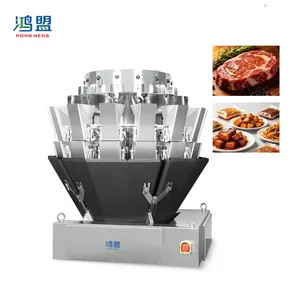
Vertical Liquid Sachet Machine
Form-fill-seal machine for liquid chemical sachets — handles detergent concentrates, cleaning packets, and single-dose chemical portions.
View Details →
Filling + Packaging Integrated Line
Complete filling, capping, labeling, and coding in one coordinated system — designed for high-volume chemical and household product packaging.
View Details →Need Packaging Equipment?
SPS helps small food manufacturers source reliable packaging equipment at factory prices.
Get a Free Quote →