---
title: "Beverage Packaging Automation: How Small Drink Producers Can Scale"
date: 2025-06-20
description: "Learn how small beverage producers can automate their packaging lines with liquid sachet machines and labeling systems. Practical ROI analysis and machine recommendations."
category: "Industry Insights"
author: "SPS Packaging Team"
---
# Beverage Packaging Automation: How Small Drink Producers Can Scale
The craft beverage industry is booming. From cold-pressed juices and kombucha to protein shakes and functional waters, small drink producers are capturing an outsized share of the $200+ billion U.S. beverage market. But there's a bottleneck that threatens every growing beverage brand: packaging.
Most small producers start with pre-filled bottles and a manual labeling station. It works—until it doesn't. Orders grow, retail accounts multiply, and suddenly your two-person labeling line can't keep up with demand. You're losing shelf space because your packaging speed can't match your production speed. Your labels are crooked on 10% of the bottles. Your back aches from eight hours of hand-labeling.
This is the inflection point where smart beverage producers invest in packaging automation. And the good news: you don't need a $500,000 line to get there. The right combination of liquid sachet packaging and semi-automatic labeling can take your throughput from 500 units a day to 5,000—at a fraction of the cost you might expect.
## Table of Contents
- [The Small Beverage Producer's Packaging Dilemma](#section1)
- [Liquid Sachet Packaging: The Growth Channel Most Producers Overlook](#section2)
- [Semi-Auto Labeling: The First Automation Step](#section3)
- [Cost Analysis: Manual vs. Semi-Auto vs. Fully Auto](#section4)
- [Scaling Your Packaging Line as Your Brand Grows](#section5)
- [Choosing the Right Equipment for Your Beverage Operation](#section6)
## The Small Beverage Producer's Packaging Dilemma {#section1}
Beverage producers face unique packaging challenges that food manufacturers don't:
**Liquid handling.** Unlike dry goods, liquid products spill, splash, and drip. Fill accuracy is critical—overfilling wastes product and reduces margins; underfilling violates labeling laws. A 16 oz bottle with 1 oz of overfill costs you $0.05–$0.10 per unit. At 5,000 units per day, that's $250–$500 daily in wasted product.
**Container variety.** Beverage producers juggle glass bottles, plastic bottles, aluminum cans, cartons, and increasingly, single-serve sachets. Each format requires different filling and labeling approaches.
**Label quality.** Beverage consumers are label-driven. They pick up a bottle, read the label, and decide. Crooked, wrinkled, or poorly applied labels signal low quality—regardless of what's inside.
**Speed-to-market.** The beverage industry moves fast. A limited-edition seasonal flavor or a new SKU for a retail buyer needs to go from concept to shelf in weeks, not months. Your packaging line needs to handle changeovers quickly.
According to the National Beverage Marketing Association, small and mid-sized beverage companies that invest in basic packaging automation see an average 35% increase in annual production capacity within the first year—without adding floor space or significant headcount.
## Liquid Sachet Packaging: The Growth Channel Most Producers Overlook {#section2}
While bottles and cans dominate the shelf, single-serve liquid sachets are one of the fastest-growing packaging formats in beverages. Energy shots, juice shots, protein drinks, probiotic waters, and functional beverage concentrates are increasingly packaged in sachets.
**Why sachets make sense for small producers:**
- **Lower material cost:** A sachet uses 60–70% less packaging material than a bottle
- **Ship flat, fill later:** Pre-made sachets take up minimal warehouse space
- **High perceived value:** Single-serve sachets command premium per-ounce pricing
- **Sampling and trial:** Sachets are the ideal format for new product launches and subscription box inserts
- **Shelf life:** Properly sealed sachets with nitrogen flushing can achieve 12+ month shelf life without refrigeration
The challenge has always been filling speed and seal quality. Hand-filling sachets with liquid is messy, slow, and inconsistent. A purpose-built liquid sachet machine changes the equation entirely.
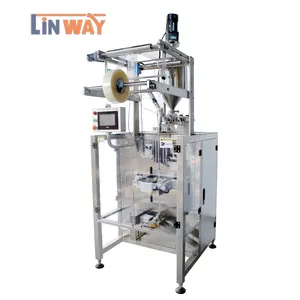
The High Speed Liquid Sachet Machine is designed specifically for this application. It handles free-flowing liquids including juice, energy drinks, flavored water, and liquid supplements. With speeds up to 60 sachets per minute and integrated sealing, it transforms sachet packaging from a manual bottleneck into a production advantage.
For a producer packaging 1,000 energy shots per day, the math is straightforward:
- **Manual:** 2 operators × 8 hours = 16 labor hours
- **Semi-auto sachet machine:** 1 operator × 2.5 hours = 2.5 labor hours
- **Annual labor savings at $16/hour:** approximately $44,700
## Semi-Auto Labeling: The First Automation Step {#section3}
For beverage producers still labeling by hand or with basic dispensers, semi-automatic labeling is the single highest-impact upgrade you can make.
**What semi-auto labeling delivers:**
- **Consistency:** Every label is applied straight, with uniform placement, every time
- **Speed:** 15–30 bottles per minute vs. 3–5 per minute by hand
- **Versatility:** Modern semi-auto labelers handle round bottles, square containers, and flat surfaces
- **Professional appearance:** Eliminates the "craft producer" look that signals amateur to retail buyers
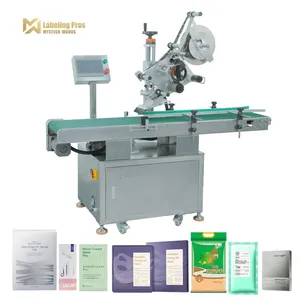
The Semi-Auto Round Bottle Labeler is an ideal first step for beverage producers. It handles round bottles and cans, accommodates labels up to 6 inches wide, and can be operated by a single person with minimal training.
**Key features for beverage producers:**
- Adjustable for different bottle diameters (typically 1"–6")
- Consistent label tension for wrinkle-free application
- Quick changeover between label sizes and bottle formats
- Stainless steel and food-grade components for wet environments
- Compact footprint fits on existing workbenches
Many beverage producers are surprised by how much label quality affects retail placement. A buyer at a regional grocery chain reported that they weed out 30% of incoming products based solely on packaging appearance—before ever tasting the product. Professional labeling isn't a luxury; it's the cost of entry.
## Cost Analysis: Manual vs. Semi-Auto vs. Fully Auto {#section4}
Here's what the automation investment looks like for a beverage producer scaling from 2,000 to 10,000 units per week:
### Manual Labeling + Hand Sachet Filling
- **Equipment cost:** $500–$2,000
- **Labor:** 2 workers × 40 hours/week at $16/hour = $1,280/week
- **Waste (mislabeling, spills):** ~$200/week
- **Throughput:** ~2,000 units/week maximum
- **Total weekly cost:** **$1,480**
### Semi-Auto Labeler + Liquid Sachet Machine
- **Equipment cost:** $30,000–$60,000
- **Labor:** 1 worker × 20 hours/week at $16/hour = $320/week
- **Waste:** ~$50/week
- **Throughput:** ~10,000 units/week
- **Machine amortized (5 years):** ~$230/week
- **Total weekly cost:** **$600**
### Fully Automatic Line
- **Equipment cost:** $150,000–$400,000
- **Labor:** 1 worker × 10 hours/week at $18/hour = $180/week
- **Throughput:** 30,000+ units/week
- **Machine amortized (5 years):** ~$1,500/week
- **Total weekly cost:** **$1,680**
The semi-auto tier delivers the best cost-per-unit for producers in the 3,000–15,000 units/week range. The fully automatic line only makes financial sense above 20,000 units/week, where labor savings and throughput gains justify the capital investment.
## Scaling Your Packaging Line as Your Brand Grows {#section5}
Smart beverage producers plan their packaging evolution in stages rather than making one massive capital investment upfront:
**Stage 1 — Manual with quality control ($0–$2,000)**
- Hand-fill and hand-label
- Focus on product quality and brand building
- Track labor costs per unit to know when to invest
**Stage 2 — Semi-auto labeling + sachet machine ($30,000–$60,000)**
- Add semi-auto round bottle labeling for bottles
- Add liquid sachet machine for single-serve formats
- Target: 3,000–10,000 units/week
**Stage 3 — Integrated semi-auto line ($60,000–$120,000)**
- Add automatic capping and date coding
- Consider conveyor integration
- Target: 10,000–20,000 units/week
**Stage 4 — Full automation ($150,000+)**
- Automatic filling, capping, labeling, and case packing
- Minimal labor, maximum throughput
- Target: 20,000+ units/week
Each stage should pay for itself through labor savings and reduced waste before you move to the next. This staged approach minimizes financial risk while ensuring your packaging never becomes the bottleneck to growth.
The beverage industry is projected to grow at 4.8% CAGR through 2030. Small producers who invest in scalable packaging infrastructure today will be positioned to capture that growth rather than watching it go to competitors with faster, more consistent packaging.
## Choosing the Right Equipment for Your Beverage Operation {#section6}
When evaluating packaging equipment for a beverage operation, prioritize these factors:
**1. Fill accuracy.** For liquid sachets, fill accuracy directly impacts your cost per unit. Look for machines with volumetric or flow-meter filling that maintains ±1% accuracy.
**2. Seal integrity.** Liquid sachets must seal perfectly—any leak means a ruined product and a damaged brand. Test seal strength on your specific liquid (viscosity, acidity, temperature).
**3. Speed matching.** Don't buy a 100 sachets/minute machine if your upstream production only yields 2,000 sachets per shift. Match your packaging speed to your production speed.
**4. Label compatibility.** Confirm your labeler handles your label material (paper, film, BOPP) and your bottle shape (round, square, oval). Some labelers need specific liner materials.
**5. Clean-in-place capability.** Beverage operations need equipment that can be thoroughly cleaned between product runs, especially for producers handling multiple flavors or product types.
**6. Support and parts availability.** When your labeler goes down at 6 AM and you have a 10 AM retail delivery, you need responsive support. Choose a supplier with domestic service capability and common parts in stock.
The right packaging equipment transforms a growing beverage startup into a scalable brand. It's not just about speed—it's about consistency, presentation, and professionalism that earns and keeps retail shelf space.
---
### Recommended Equipment
 ## Conclusion
Beverage packaging automation isn't a luxury reserved for large producers with unlimited budgets. With semi-auto labeling and liquid sachet machines, small drink brands can dramatically increase throughput, reduce waste, and present a professional image that earns retail shelf space. The investment pays for itself through labor savings alone—typically within 6–12 months.
Ready to scale your beverage packaging? [Request a quote](/request-quote/) and our packaging specialists will match the right equipment to your product, volume, and growth plan.
---
## Related Resources
- [Food Packaging Machines](/food-packaging-machines/) — Explore our full catalog of packaging equipment
- [Labeling Machines](/labeling-machines/) — Semi-auto and automatic labeling for every container type
- [Production Lines](/production-lines/) — Complete packaging line design and installation
- [Solutions](/solutions/) — Custom packaging solutions for your industry
## Conclusion
Beverage packaging automation isn't a luxury reserved for large producers with unlimited budgets. With semi-auto labeling and liquid sachet machines, small drink brands can dramatically increase throughput, reduce waste, and present a professional image that earns retail shelf space. The investment pays for itself through labor savings alone—typically within 6–12 months.
Ready to scale your beverage packaging? [Request a quote](/request-quote/) and our packaging specialists will match the right equipment to your product, volume, and growth plan.
---
## Related Resources
- [Food Packaging Machines](/food-packaging-machines/) — Explore our full catalog of packaging equipment
- [Labeling Machines](/labeling-machines/) — Semi-auto and automatic labeling for every container type
- [Production Lines](/production-lines/) — Complete packaging line design and installation
- [Solutions](/solutions/) — Custom packaging solutions for your industry
High Speed Liquid Sachet Machine
Purpose-built for beverages—fill and seal liquid sachets at up to 60 packs/minute with precision volumetric dosing and clean operation.
View Details →
Semi-Auto Round Bottle Labeler
Professional-grade label application for round bottles and cans—the fastest way to upgrade your beverage packaging presentation.
View Details →Need Packaging Equipment?
SPS helps small food manufacturers source reliable packaging equipment at factory prices.
Get a Free Quote →