
---
title: "Baby Food Packaging Automation: Complete Guide for Small Producers"
description: "Learn how small baby food producers can automate packaging with semi-automatic machines that ensure safety, consistency, and compliance, while reducing labor costs and scaling production efficiently."
category: Industry Insights
date: 2026-06-24
tags:
- baby food packaging
- baby food packaging machine
- puree packaging
- organic baby food packaging
- food packaging
---
# Baby Food Packaging Automation: Complete Guide for Small Producers
The baby food market has evolved far beyond traditional jarred puree. Parents today seek fresh, organic, and nutritionally complete meals for their infants and toddlers, fueling demand for small-batch producers who offer clean-label, ingredient-transparent products.
Yet for small producers, scaling while maintaining safety, consistency, and compliance is challenging. Manual packaging can't meet the demands of commercial baby food production as operations grow beyond the pilot phase. This is where semi-automatic packaging automation becomes essential.
Whether you're a small family-run kitchen making organic purees or a startup launching toddler meals, semi-automatic equipment lets you maintain quality while reducing labor costs, improving throughput, and meeting food safety standards.
## Table of Contents
- [Why Baby Food Packaging Requires Precision and Safety](#section1)
- [Common Baby Food Packaging Formats and Considerations](#section2)
- [The Limitations of Manual Packing](#section3)
- [How Semi-Automatic Equipment Solves the Challenge](#section4)
- [Pouch Packaging: The Fast-Growing Choice for Baby Food](#section5)
- [Cup and Jar Filling for Toddler Meals and Purees](#section6)
- [Designing a Line That Scales With Your Brand](#section7)
## Why Baby Food Packaging Requires Precision and Safety {#section1}
Baby food is among the most safety-sensitive consumer products. Unlike other food categories, there is zero tolerance for contamination, mislabeling, or variability. For small producers, every step of production and packaging must be executed with meticulous care.
Key requirements include:
- **FDA and USDA compliance**: All equipment must meet food-contact surface standards (e.g., stainless steel grades 304/316) and be designed for cleanability. Documentation such as Certificates of Conformance must be available.
- **Allergen control**: Equipment must support rigorous cleaning to prevent cross-contamination, especially when producing multiple recipes or allergen-containing products.
- **Consistent fill weights**: Underfilled product is a labeling violation and can trigger regulatory scrutiny. Overfilled product eats into already tight margins. Precision filling is non-negotiable.
- **Seal integrity**: Any breach can lead to spoilage, microbial growth, or leakage — unacceptable for infant products. Hermetic, consistent seals are required.
- **Shelf-life preservation**: Baby food often needs extended shelf life without preservatives. Modified atmosphere packaging (MAP) and nitrogen flushing are common practices, requiring compatible equipment.
Semi-automatic packaging machines address each of these requirements, bridging manual labor and full automation.
## Common Baby Food Packaging Formats and Considerations {#section2}
The baby food industry has shifted dramatically toward flexible, convenient formats that prioritize nutrition, portion control, and ease of use. The most common packaging types include:
### Retort Pouches
Retort pouches have become the dominant format for baby food due to their lightweight nature, long shelf life, and consumer convenience. These multi-layer laminated pouches can withstand sterilization (retorting) and are ideal for purees and liquid meals.
Benefits:
- Lightweight and portable — ideal for on-the-go feeding
- Excellent barrier properties against oxygen, moisture, and light
- Retortable — withstands high-temperature sterilization
- Resealable options available for multi-serve portions
### Cups with Film Seals
Cups with thermally sealed films are a staple for thicker purees, blended fruits, and toddler meals. Often made from PP or PET, these cups are stable and microwave-safe.
Benefits:
- Familiar and easy for parents to open and serve
- Stackable for efficient storage
- Compatible with hot-fill and cold-fill processes
- Films can include date coding, product info, and peel-off tabs
### Glass and Plastic Jars
While less common today due to safety and environmental concerns, some artisan producers still use glass or BPA-free plastic jars for premium positioning. These require capping and labeling equipment in addition to filling.
### Stick Packs and Sachets
For dry baby foods like cereals, rice blends, and powdered supplements, stick packs and single-serve sachets offer portion control and convenience for travel and daycare settings.
## The Limitations of Manual Packing {#section3}
Many small baby food makers start in their kitchens with handheld portioners, spatulas, and manual sealers. This works at low volumes but quickly proves inadequate as distribution grows:
- **Inconsistent fill weights**: Hand-scooping puree leads to wide variation — a 4 oz pouch could contain anywhere from 3.5 oz to 4.5 oz, violating FTC and FDA labeling rules.
- **Cross-contamination risk**: Manual tools are difficult to clean thoroughly between batches, especially with sticky purees.
- **Slow throughput**: An operator might pack 100–200 pouches per hour manually — a major bottleneck when demand increases.
- **Seal variability**: Handheld sealers often produce weak or inconsistent seals, increasing spoilage rates and customer complaints.
- **Scalability issues**: Growth requires more labor, but training new staff takes time and oversight.
As a result, manual packing limits market reach and makes compliance audits a significant risk.
## How Semi-Automatic Equipment Solves the Challenge {#section4}
Semi-automatic packaging machines address these pain points directly while remaining accessible to small producers. The operator performs key tasks like loading pouches or positioning containers, while the machine handles critical safety and quality steps:
- **Piston or auger filling systems** ensure precise, repeatable fill volumes — typically within ±0.5% accuracy.
- **Integrated sealing jaws** apply consistent, hermetic seals under temperature and time control.
- **Clean-in-place (CIP) designs** with stainless steel contact surfaces allow for thorough sanitation between batches.
- **Modular construction** makes it easy to upgrade with coding, labeling, or checkweighing systems later.
For small operations producing 500 to 10,000 units per week, semi-automatic systems typically deliver 300–800 units per hour, reduce labor needs by 60–80%, and cut material waste significantly.
The return on investment is compelling: many producers see full ROI within 6–12 months through labor savings alone, not counting reductions in product giveaway and spoilage.
## Pouch Packaging: The Fast-Growing Choice for Baby Food {#section5}
Pouch filling and sealing machines are among the most valuable investments for baby food producers. Designed for pre-made retort pouches, these semi-auto systems:
- Fill viscous or chunky purees consistently using adjustable piston fillers
- Pre-stretch pouch mouths to prevent snagging during filling
- Apply nitrogen flush to displace oxygen and extend freshness
- Seal with temperature-controlled jaws to ensure reliability
- Integrate with foot pedals or hand switches for operator control
For small to medium producers, running pouch sizes from 3 oz to 8 oz with quick changeovers is critical. Many systems switch pouch types in under 10 minutes, making it easy to pack breakfast blends, dinners, and snacks efficiently.
Professional-looking pouches with clean seals project quality and safety — key differentiators in a crowded market.
## Cup and Jar Filling for Toddler Meals and Purees {#section6}
For producers offering thicker meals, purees, or portion-controlled cups, semi-automatic cup filling and sealing machines offer a scalable solution. These systems typically include volumetric or piston filling, indexing turntables for multi-head filling, automatic film feeding with thermal sealing, and optional date and lot coding.
Cup fillers are especially useful for producers expanding into toddler meals or organic side dishes, handling viscous, chunky, or layered products that require controlled dispensing.
For jar-based packaging, semi-auto rotary fillers and tabletop cappers can dramatically increase speed and consistency while supporting traditional product presentations.
## Designing a Line That Scales With Your Brand {#section7}
The most successful baby food brands plan for growth from the start by thinking beyond a single machine to an integrated, modular packaging line:
Start by assessing your current output, pouch/cup sizes, retail requirements, and available floor space and utilities.
### Building Blocks for the Future
Start with a core machine — such as a pouch filler — and plan for these future additions:
- **In-line checkweigher**: Automatically reject underfilled or overfilled units
- **Date and lot coder**: Apply batch tracing information required for recalls
- **Label applicator**: Add nutritional panels, ingredients, or branding elements — see our **[labeling machines](/labeling-machines/)** for semi-auto options
- **Conveyor system**: Streamline product flow from filler to boxing
- **Nitrogen flush module**: Extend shelf life without preservatives
Each component can be added incrementally, allowing you to grow your line in line with your business.
---
### Recommended Equipment
 ## Conclusion
For small baby food producers, packaging automation is a necessity for safety, compliance, and growth. Semi-automatic equipment delivers the precision, consistency, and scalability needed to move from kitchen batches to commercial production without sacrificing quality.
From pouch fillers to cup sealers, these machines empower small brands to meet the high expectations of parents while building efficient, profitable operations.
**Ready to automate your baby food packaging?** [Request a free consultation](/request-quote/) from SPS Packaging today and let us help you design a safe, scalable solution for your brand.
---
## Related Resources
- [Food Packaging Machines](/food-packaging-machines/) — Semi-automatic solutions for pouches, cups, jars, and more
- [Solutions by Industry](/solutions/) — Packaging systems for organic food, dairy, and specialty producers
- [FDA Compliance Guide](/blog/fda-compliance-guide) — Equipment requirements for food contact and sanitation
- [Production Lines](/production-lines/) — Scalable packaging systems for growing baby food brands
- [Labeling Machines](/labeling-machines/) — Semi-automatic label applicators for pouches, cups, and jars
## Conclusion
For small baby food producers, packaging automation is a necessity for safety, compliance, and growth. Semi-automatic equipment delivers the precision, consistency, and scalability needed to move from kitchen batches to commercial production without sacrificing quality.
From pouch fillers to cup sealers, these machines empower small brands to meet the high expectations of parents while building efficient, profitable operations.
**Ready to automate your baby food packaging?** [Request a free consultation](/request-quote/) from SPS Packaging today and let us help you design a safe, scalable solution for your brand.
---
## Related Resources
- [Food Packaging Machines](/food-packaging-machines/) — Semi-automatic solutions for pouches, cups, jars, and more
- [Solutions by Industry](/solutions/) — Packaging systems for organic food, dairy, and specialty producers
- [FDA Compliance Guide](/blog/fda-compliance-guide) — Equipment requirements for food contact and sanitation
- [Production Lines](/production-lines/) — Scalable packaging systems for growing baby food brands
- [Labeling Machines](/labeling-machines/) — Semi-automatic label applicators for pouches, cups, and jars
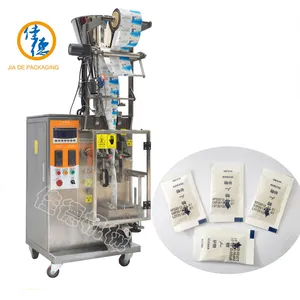
Pouch Filler & Sealer Machine
Fill and hermetically seal pre-made pouches with baby food purees and blends using piston filling and nitrogen flush support.
View Details →
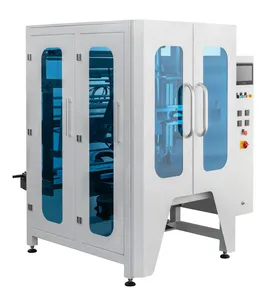
Cup Filler & Sealer Machine
Automate filling and sealing of plastic or paper cups with baby food purees, toddler meals, and portion-controlled servings.
View Details →Need Packaging Equipment?
SPS helps small food manufacturers source reliable packaging equipment at factory prices.
Get a Free Quote →